Small-kitchen soup regulars
You make soup often but need to check whether the cooker will fit on your worktop or in a cupboard, and whether you can lift it out comfortably.


A pressure multicooker with a sauté function lets you prepare the soup base and cook dried peas in one pot. For a small kitchen, check the appliance’s external dimensions and lid clearance before choosing a bowl capacity; a larger model is worth considering only if its portions and additional functions justify the space it takes.
You make soup often but need to check whether the cooker will fit on your worktop or in a cupboard, and whether you can lift it out comfortably.
You want to sauté vegetables before cooking the peas without moving the soup between pans.
You make several portions at once and have space to cool, refrigerate or freeze the leftovers.
Check the space available for the appliance and its lid, then decide which cooking functions and portion size you will use.
| Concern | What to check | Who this matters to |
|---|---|---|
| One-pot soup making | Look for pressure cooking and a sauté or brown function if you want to cook the vegetable base in the same pot. | If I soften vegetables before adding the peas, I would rather use one appliance than wash another pan; around 37% of consumers put that one-pot workflow first. |
| Fit and storage | Measure depth, width and height, allowing room to open the lid; consider weight if you will move the cooker for each use. | With little cupboard or worktop space, I need a cooker I can place, use and lift comfortably; physical fit comes first for around 36% of consumers. |
| Portions and leftovers | Compare stated bowl capacity with the manual’s pressure-cooking fill limit, and check the cleaning instructions for the removable parts. | When I make several meals’ worth of soup, I need a batch size I can cool and store safely; roughly 27% of consumers prioritise portions and leftovers. |
A roomy bowl does not tell you how much worktop or cupboard space the cooker needs. SharkNinja UK lists the Ninja OL750UK at 50.19 × 41.61 × 45.49 cm and 14.8 kg; Instant Pot UK lists the Duo 5.7L at 33.5 × 31 × 31.7 cm and 5.4 kg.
Measure the intended location, allow space to open the lid and follow the appliance’s steam-clearance instructions. If it will live in a cupboard, consider whether you can lift it out safely.
Air-frying and grilling functions do not replace the pressure-cook and sauté functions needed for the proposed one-pot soup routine. A hybrid appliance may also take more space.
Check the soup functions and physical dimensions first. Consider additional modes if you expect to use them regularly.
A larger pot can produce more soup than you can promptly cool and store. GOV.UK advises eating leftovers within two days or freezing them if that will not be possible.
Divide the cooked soup into smaller portions for cooling, then refrigerate or freeze it in line with GOV.UK food-storage guidance.
A safety report about one electric pressure cooker does not establish a problem with every model. The UK Office for Product Safety and Standards has reported a serious fire risk involving the plug and fuse of a particular 6L cooker.
Identify the model you intend to buy and check it against the Office for Product Safety and Standards alerts, reports and recalls before purchase.
The Duo 5.7L is a pressure multicooker for cooks who want sautéing and several other cooking functions in one appliance.
The Express CSC051 is a 5.6L pressure multicooker with a brown/sauté function for preparing a soup base in the pot.
The Turbo Cuisine CY756140 offers a stated 4.8L bowl and dial-led controls for cooks considering a smaller-capacity pressure multicooker.
The Foodi MAX OL750UK combines pressure cooking with air frying and other modes for households planning to use those functions as well as make soup.
These models offer stated 3.8L or 5.7L capacities for cooks considering a sauté-then-pressure-cook soup routine. Check each appliance’s external dimensions, lid clearance and dried-pea fill instructions against your kitchen and recipe.
 Image unavailable
Consider this for a one-pot soup routine that starts with sautéing and finishes with pressure cooking.
The product name states a 5.7L capacity and ceramic non-stick coating. Check its external measurements and the manual’s maximum-fill instructions before making split pea soup.
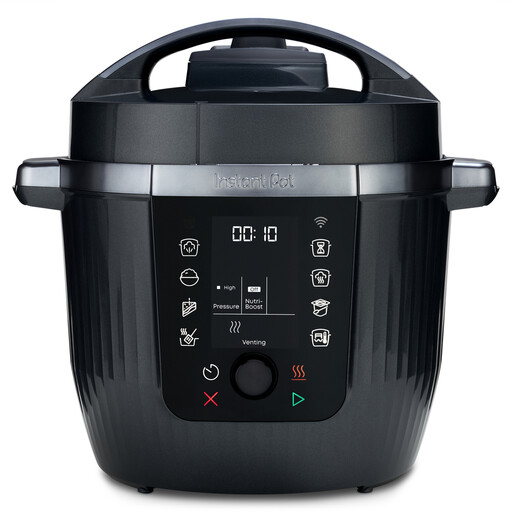 Image unavailable
Consider this if you want to sauté a soup base before pressure cooking a batch in the same appliance.
The stated capacity is 5.7L. Check the external dimensions, lid clearance, pot-cleaning instructions and the manual’s dried-pea fill limit for this Pro model.
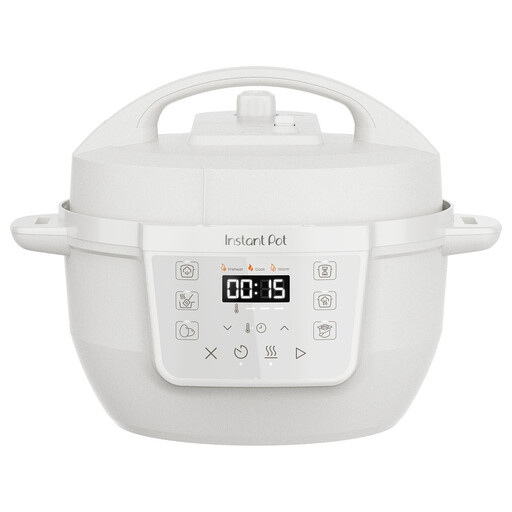 Image unavailable
Consider the stated 3.8L capacity if you usually make smaller soup batches and want to sauté before pressure cooking.
A smaller bowl does not establish that the appliance will fit your space. Check its external dimensions, lid clearance, cleaning instructions and the manual’s dried-pea fill limit.
A dedicated soup programme is not the main feature to look for: prioritise pressure cooking if that is your intended method, and sauté or brown if you want to prepare the vegetable base in the same pot. Follow the instructions for the exact cooker and recipe, particularly its liquid and maximum-fill guidance.
No: stated litres describe bowl capacity, not the appliance’s external size. Measure your available worktop or cupboard space and check the cooker’s dimensions, lid operation and required steam clearance before deciding.
Plan how you will cool and store the portions before making a large batch. GOV.UK advises eating leftovers within two days or freezing them if that will not be possible; dividing soup into smaller portions helps it cool before storage.
Search for the exact brand and model in the UK Office for Product Safety and Standards alerts, reports and recalls before buying or continuing to use it. Its report identifying a serious fire risk from the plug and fuse of one particular 6L cooker does not apply to pressure multicookers as a whole.