Morning exercisers who want fizz
If a training session or active commute is part of the morning, the choice is between a carbonated product explicitly described as isotonic and a fizzy soft drink that merely looks similar on the shelf.


For an ordinary weekday breakfast, water is a straightforward hydration choice: the NHS recommends it for hydration, while the British Dietetic Association says people following a general fitness programme can meet their carbohydrate needs through a normal diet. If you want fizz around morning exercise, Costco UK describes Emerge Isotonic Orange as both carbonated and isotonic. Check the exact product type before buying: Sainsbury’s describes Lucozade Energy Orange as a sparkling glucose drink, which is distinct from Lucozade Sport.
If a training session or active commute is part of the morning, the choice is between a carbonated product explicitly described as isotonic and a fizzy soft drink that merely looks similar on the shelf.
If the drink is mainly for breakfast rather than exercise, consider whether water alongside a normal meal meets the need before choosing a sports-drink formulation.
A familiar brand name does not identify the formulation of every drink in its range. Check the exact product type and nutrition declaration, particularly when buying the same drink regularly.
Start with the reason for the drink, then check whether the exact product is isotonic, carbonated, or neither. For a regular breakfast purchase, compare the pack’s nutrition information as well as its drink type.
| Priority | What to check | Your needs |
|---|---|---|
| Drink type | Read the exact product description for “isotonic” or a carbohydrate-and-electrolyte formulation. Do not use the brand or orange flavour as a substitute: Sainsbury’s describes Lucozade Energy Orange as a sparkling glucose drink, while Lucozade positions Sport as an isotonic exercise drink. | I want to know whether I am picking up a sports drink or a sparkling glucose drink. |
| Morning activity | Consider whether the drink is for an exercise session or ordinary breakfast hydration. The NHS identifies water as a hydration choice; the British Dietetic Association says a normal diet can meet carbohydrate needs for a general fitness programme. | On mornings without a particular exercise-related reason for a sports drink, water alongside breakfast may be what I am looking for. |
| Fizz | Look for an explicit carbonated description on the exact product, as well as its drink type. Costco UK describes Emerge Isotonic Orange as both carbonated and isotonic; carbonation alone does not identify a sports drink. | If I choose a sports drink, I would prefer it fizzy rather than still. |
| Nutrition and pack | Compare energy, carbohydrate, sugars and salt on the chosen pack, using per 100ml and per-serving figures where shown. Check the serving size and how many bottles the pack contains before buying a case. | For a drink I might buy on several weekday mornings, I want to compare the actual pack rather than rely on the name of the range. |
Sainsbury’s calls Lucozade Energy Orange a sparkling glucose drink with sugars and sweeteners. Lucozade describes Sport separately as an isotonic drink for sports and exercise; the shared brand does not make the two products interchangeable.
Read the drink type on the exact bottle or listing. If you are shopping for an isotonic sports drink, check that the description applies to the product you are buying.
A weekday breakfast does not, by itself, establish a need for a carbohydrate-and-electrolyte drink. The NHS recommends water for hydration, and the British Dietetic Association says a normal diet can meet carbohydrate needs for general fitness.
Choose according to what the morning involves, rather than assuming every breakfast calls for an exercise drink.
An isotonic description does not confirm carbonation. Costco UK explicitly describes Emerge Isotonic Orange as carbonated, but a sports-drink category listing alone does not establish that another product has fizz.
Check for “carbonated” or “sparkling” on the exact product. Confirm the bottle size and pack quantity before committing to a multipack.
The name of a drinks range does not give you the sugars, carbohydrate or salt amounts for the particular bottle in your basket.
Use that pack’s nutrition declaration to compare quantities per 100ml and per serving, alongside its ingredients and product description.
These references distinguish specific drink formats; they do not mean that every product from a brand is sparkling or that the products below are available from the same retailer.
Costco UK describes Emerge Isotonic Orange as a carbonated orange-flavour isotonic soft drink, listed as a 12 × 500ml case.
Lucozade positions Sport as an isotonic drink for sports and exercise.
Gatorade UK describes its Hydration Booster as a carbohydrate-and-electrolyte product; the range includes sachets mixed with water.
Tesco Groceries lists Powerade Golden Mango in its UK sports-drinks range.
This listed option is a carbonated isotonic drink for shoppers who want fizz around a morning exercise occasion. Its product type does not make a sports drink necessary for an ordinary weekday breakfast.
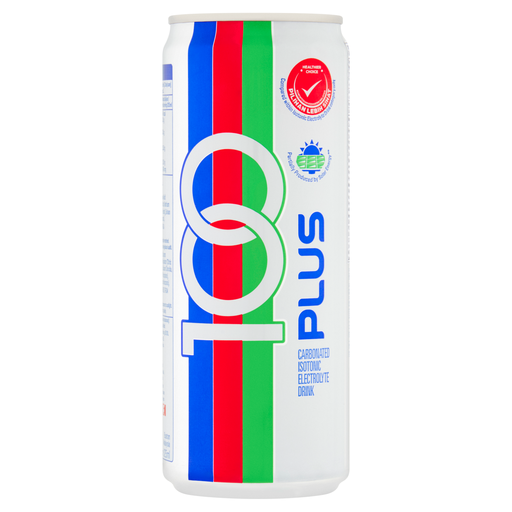 No image available
The carbonated isotonic drink format fits a preference for fizz around morning exercise. The product name specifies a 325ml drink; compare the exact pack’s nutrition declaration if considering it for regular weekday mornings.
Do not treat it as a default breakfast replacement. The NHS identifies water as a hydration choice, and the British Dietetic Association says people following a general fitness programme can meet their carbohydrate needs through a normal diet. Consider a sports drink in relation to the exercise occasion, not simply because it is morning.
Read the exact product description for both carbonation and an isotonic sports-drink description. Costco UK uses both terms for Emerge Isotonic Orange; Sainsbury’s instead describes Lucozade Energy Orange as a sparkling glucose drink. A shared flavour or familiar brand name does not settle the distinction.
Check the product type and ingredients, then compare the nutrition declaration for energy, carbohydrate, sugars and salt. Use per 100ml figures for comparison and per-serving figures, where shown, to understand the stated serving size.