What matters when choosing?
Start with the drink’s purpose: ordinary hydration, planned carbohydrate during exercise or your established hypo treatment. Then compare the label for the amount you would actually drink.
| Priority |
What to check |
Your needs |
| Routine hydration |
Check whether the drink is water, a sugar-free soft drink or a carbohydrate-containing sports drink. If you want fizz, the NHS suggests sparkling water as an alternative to still water. |
I want a fizzy drink for ordinary exercise without choosing carbohydrate simply because the label says ‘sports’. |
| Carbohydrate and sugar |
Compare carbohydrate and sugars per 100ml and for the amount you will drink. Coca-Cola GB lists 4.1g of each per 100ml for Powerade Berry & Tropical Fruits; a Philip Dennis Foodservice listing gives 6.3g carbohydrate and 3.5g sugars per 100g for Lucozade Sport Still Orange. These different measurement bases should not be treated as identical. |
If carbohydrate is part of my activity plan, I need to know how much my chosen drink supplies, rather than assume all isotonic drinks have the same contents. |
| Drink type |
Read the product description and ingredients, not just the brand or whether it is carbonated. Sainsbury’s describes Lucozade Energy Orange as a sparkling glucose drink containing glucose syrup and caffeine, with 8.6g carbohydrate per 100ml; it is not Lucozade Sport. |
I like fizz, but I do not want to mistake a sparkling energy drink for a sports drink or a sugar-free refreshment. |
| Exercise plan |
Consider the activity’s duration, your medication and your glucose response. Diabetes UK suggests considering a snack, sports drink or gel for swimming lasting over an hour; that example does not make a carbohydrate drink necessary for every session. |
For longer activity, I need a carbohydrate choice that fits my own plan rather than a standard drink for every workout. |
| Hypo treatment |
Keep your established hypo-treatment option separate from routine refreshments. Diabetes UK advises using fizzy sugary drinks to treat hypos rather than as everyday drinks; a sugar-free drink does not provide that sugar. |
I want a sugar-free drink for ordinary refreshment without confusing it with the drink or carbohydrate I use to treat a hypo. |
Brand and product-type references
These named drinks illustrate why a sparkling energy drink, a still sports drink and a sugar-free alternative should not be treated as interchangeable.
Powerade
Coca-Cola GB describes the Powerade variants discussed here as still isotonic sports drinks.
- Powerade Berry & Tropical Fruits has a stated carbohydrate value of 4.1g per 100ml, which can be checked against a planned carbohydrate amount.
- Coca-Cola GB also lists 4.1g sugars per 100ml for that variant. It is neither sparkling nor a sugar-free routine refreshment.
Lucozade Sport
The Lucozade Sport Still Orange product listed by Philip Dennis Foodservice is a still isotonic drink containing sugars and sweeteners.
- Its listing states 6.3g carbohydrate and 3.5g sugars per 100g, values to consider if carbohydrate is part of an exercise plan.
- This listed Orange variant is still, not a sparkling choice; check the current pack label for the product you buy.
Lucozade Energy
Lucozade Energy Orange is a sparkling glucose drink in the Sainsbury’s listing, not the same product as Lucozade Sport.
- The Orange listing clearly identifies the drink as sparkling for shoppers comparing drink types.
- Sainsbury’s lists glucose syrup, caffeine and 8.6g carbohydrate per 100ml for this variant. Do not select it as a sugar-free everyday drink because it has fizz.
Joybuy options for routine fizz
These sparkling water and soft-drink options address a preference for fizz during ordinary refreshment. They are not substitutes for a planned carbohydrate-containing sports drink or hypo treatment; check each current pack label against your needs.
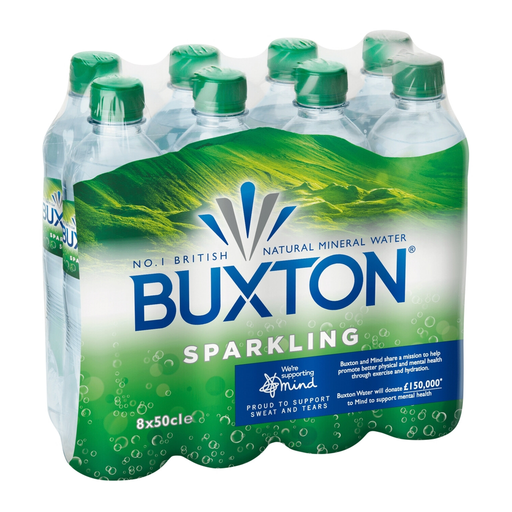 Image unavailable
Buxton Sparkling, 8 × 500ml
Sparkling water is an option when you want fizz for routine hydration, as the NHS suggests. This is an eight-bottle pack, not a carbohydrate drink for exercise or hypo treatment.
View on Joybuy
 Image unavailable
7UP Zero, 24 × 330ml
A flavoured fizzy option for routine refreshment rather than sports fuelling. Compare the current can label’s carbohydrate, sugars and ingredients with your needs; a sugar-free refreshment is not hypo treatment.
View on Joybuy
 Image unavailable
Woongjin Nature's Marlin Peach Zero PET
A peach-flavoured fizzy option to consider for ordinary refreshment. Check the current bottle’s carbohydrate and sugars declaration; this is not a sports-fuelling drink or hypo treatment.
View on Joybuy
 Image unavailable
Tango Apple Sugar-Free, 24 × 330ml
A sugar-free apple-flavoured option for routine fizz, supplied as 330ml cans. Sugar-free does not necessarily mean carbohydrate-free, so check the current per-can carbohydrate value if it affects your plan; this is not a sports drink or hypo treatment.
View on Joybuy
Questions about drinks and exercise
Does sparkling mean a sports drink is suitable for someone with diabetes?
No. Carbonation tells you nothing about carbohydrate or sugar. Sainsbury’s lists 8.6g carbohydrate per 100ml for sparkling Lucozade Energy Orange, which it describes as a glucose drink; Coca-Cola GB describes the Powerade sports-drink variants discussed here as still. Check the drink type and nutrition panel for your intended use.
What if I want fizz during an ordinary workout?
Choose water for routine hydration; the NHS suggests sparkling water if you prefer fizz. A sugar-free sparkling drink is another refreshment option when carbohydrate is not part of your activity plan, as reflected in Diabetes UK’s advice on everyday drinks.
When might a carbohydrate sports drink be relevant?
It may be relevant when your individual exercise plan calls for carbohydrate. Diabetes UK suggests considering a snack, sports drink or gel when swimming for over an hour. The appropriate choice depends on the activity, medication and your glucose response; discuss a new plan with your diabetes team if you use insulin or medicines that can cause hypos.
Can a sugar-free sparkling drink treat a hypo?
No. A sugar-free drink does not supply the sugar used to treat a hypo. Diabetes UK distinguishes sugary fizzy drinks used for hypo treatment from drinks chosen for everyday use; follow your established hypo-treatment plan.
What should I compare on the label?
Compare carbohydrate and sugars per 100ml and for the amount you intend to drink, then check the ingredients and product description. A drink labelled sugar-free may still declare some carbohydrate, while a sparkling energy drink and a still isotonic sports drink serve different purposes.


