Who is choosing?

Adults with diabetes drinking during light activity

If your glucose plan does not call for carbohydrate during a walk or gentle workout, you may want to compare drinks without sugars added to your activity. Diabetes UK recommends sugar-free alternatives to sugary drinks for ordinary drinking, while noting that activity can affect blood glucose differently from person to person.

People planning around insulin or glucose-lowering medication

Hydration, exercise fuel and hypo treatment are different decisions. Your activity and glucose-management plan matter: NHS guidance calls for fast-acting sugar when blood glucose is low, which a zero-sugar drink cannot provide.

Shoppers who prefer a drink mixed with water

Tablets and sachets offer an alternative to carrying a ready-to-drink bottle. Compare the exact product’s sugar claim, ingredients, water quantity and serving instructions before choosing a format.

What should you check?

Ready-to-drink zero-sugar option

Consider it: when you want a drink without preparation for light activity and your plan does not require carbohydrate.

Trade-off: it will not provide the fast-acting sugar needed for a hypo.

Sugar-free tablets or sachets

Consider them: when carrying a small pack and mixing a drink later suits your activity.

Trade-off: you need water and must follow the product’s preparation instructions.

A carbohydrate source

Consider it: when your exercise plan calls for carbohydrate, or use the fast-acting sugar specified in your hypo plan when blood glucose is low.

Trade-off: a carbohydrate-containing sports drink does not meet a goal of avoiding drink sugars, and is not automatically the right hypo treatment or amount for you.

PriorityWhat to checkYour needs
Sugars and carbohydrate Read both values per 100 ml and per serving on the exact product. Check whether figures for a mix refer to the prepared drink. I want to avoid drink sugars during ordinary hydration without confusing a no-added-sugar claim with the drink’s actual nutrition values.
Reason for drinking Separate routine hydration from exercise fuelling and hypo treatment. Diabetes UK says activity can raise or lower blood glucose; NHS guidance calls for fast-acting sugar when it is low. For this activity, does my glucose plan call for carbohydrate? If I am treating a hypo, I need my advised fast-acting sugar, not a zero-sugar drink.
Ingredients Check the stated electrolytes, sweeteners and serving instructions for the exact flavour and variant. Do not assume products with similar names have the same formula. I want to know what is in the drink and whether its flavour and ingredients suit my preferences.
Preparation and carrying Compare a ready-to-drink bottle with the water quantity and mixing directions required for a tablet or sachet. Will I have water available to make the drink, or would a bottle be simpler to carry for this activity?

What can go wrong?

  • Assuming every sports drink is low in sugar

    Variants within one range can have different purposes. Sainsbury’s lists 15.7 g carbohydrate and 8.8 g sugars per 100 ml for standard Lucozade Sport Orange, while ASDA lists 0 g sugars per 100 ml for Lucozade Sport Zero Sugar Orange & Peach.

    Compare sugars and carbohydrate per 100 ml and per serving on the variant you intend to buy.

  • Using a zero-sugar drink for a hypo

    A zero-sugar hydration drink cannot supply the fast-acting sugar needed to raise low blood glucose.

    Keep the hypo treatment in your care plan available. NHS guidance includes a sugary drink as one option if you have hypo symptoms or a reading below 4 mmol/L.

  • Reading “low sugar” as “zero sugar”

    Gatorade UK describes its Hydration Booster as low in sugar and as a carbohydrate-and-electrolyte powder. Those descriptions do not mean it contains zero sugar.

    Use the nutrition panel and ingredients for the exact UK product, rather than relying on a similar product name from another market.

  • Choosing a drink mix without checking its directions

    A tablet or sachet needs water and preparation, unlike a ready-to-drink bottle.

    Check the required water quantity, serving instructions and pack size before choosing one for use away from home.

Brand and product references

These examples illustrate different drink formats and formulations; a brand name alone does not identify the sugars or carbohydrate in a particular product.

Lucozade Sport

UK retailer listings distinguish Zero Sugar Orange & Peach, described by Sainsbury’s for low-intensity exercise, from carbohydrate-containing standard Orange.

  • ASDA lists 0 g sugars per 100 ml and added sodium for Zero Sugar Orange & Peach.
  • Sainsbury’s lists 15.7 g carbohydrate and 8.8 g sugars per 100 ml for standard Orange; do not treat the variants as interchangeable.

Liquid I.V.

Its UK Sugar-Free product is a sachet mixed with water rather than a bottled sports drink.

  • Liquid I.V. says the product contains sodium, potassium, magnesium and calcium and directs users to mix a sachet with 500 ml water.
  • It requires preparation; check individual suitability if you have a medical condition or take medication.

fourfive

Hydro Plus offers a tablet format to mix into a drink.

  • fourfive describes Hydro Plus as sugar free and containing five electrolytes.
  • Check the exact flavour’s ingredients and serving directions rather than treating the tablet as a ready-to-drink product.

Gatorade

Gatorade UK describes Hydration Booster as a low-sugar carbohydrate-and-electrolyte powder.

  • The UK product description identifies its powder format and carbohydrate content.
  • “Low sugar” does not mean zero sugar; check the nutrition panel for the exact UK product.

Powerade

Tesco lists Powerade sports-drink multipacks in the UK, including Golden Mango and Berry & Tropical Fruits variants.

  • The listed variants give shoppers identifiable UK products whose labels can be compared.
  • Do not apply a Powerade Zero nutrition panel from another market to a UK multipack; check the exact pack.

Joybuy product options

This option is an electrolyte tablet to mix with water, for shoppers considering that format rather than a ready-to-drink sports drink. Check its label against your carbohydrate needs and diabetes plan.
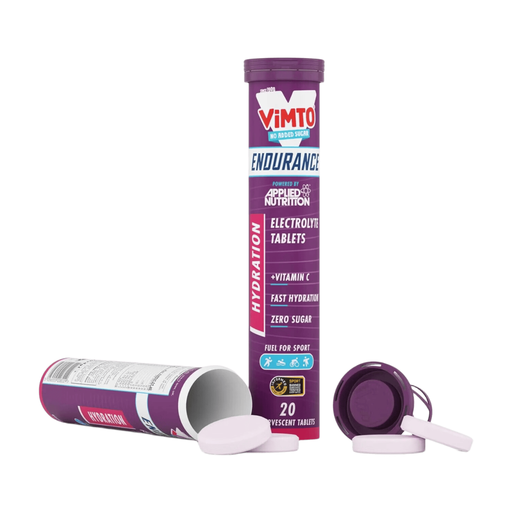
Applied Nutrition Vimto effervescent electrolyte tablets, pack of 20

Applied Nutrition Vimto Effervescent Electrolyte Tablets (20 tablets)

For someone who prefers to prepare an electrolyte drink with water instead of carrying a ready-to-drink bottle. This is an effervescent tablet pack of 20; check the pack’s sugars, mixing directions and suitability alongside your individual diabetes plan. Do not use a zero-sugar hydration drink in place of your advised hypo treatment.

View on Joybuy

Common questions

Can a zero-sugar sports drink treat a hypo?

No. It cannot provide the fast-acting sugar needed to raise low blood glucose. NHS guidance says that if you have diabetes and hypo symptoms or a reading below 4 mmol/L, take fast-acting sugar, such as a sugary drink, and recheck after 10 to 15 minutes; follow your own care plan.

Is a sugar-free drink suitable for every activity if I have diabetes?

Not automatically. Diabetes UK says activity can raise or lower blood glucose depending on factors including the type of activity and effort. Match your drink and any carbohydrate to your glucose-management plan, particularly if you use insulin or glucose-lowering medication or are changing your activity.

How do I compare a no-added-sugar drink with a zero-sugar one?

Read the sugars and total carbohydrate values on the exact product’s nutrition panel, per 100 ml and per serving. A front-of-pack phrase alone does not tell you how much carbohydrate you will drink; also check whether a powder’s values describe the mix or the prepared drink.

Why choose a carbohydrate-containing sports drink?

It may have a role when your individual exercise plan calls for carbohydrate, rather than when you simply want routine hydration without drink sugars. For comparison, Sainsbury’s lists 15.7 g carbohydrate per 100 ml for standard Lucozade Sport Orange. A sports drink is not automatically the right treatment or amount for a hypo; follow your care plan.

What matters when buying electrolyte tablets or sachets?

Check the water quantity, serving directions, ingredients and sugars for the exact variant. Liquid I.V. UK, for example, directs users to mix one Sugar-Free sachet with 500 ml water; another product may have different instructions.