For ordinary holiday drinking, choose water, in line with NHS guidance. For a prolonged active session when you want carbohydrate and electrolytes alongside fluid, consider an isotonic sports drink; NHS Tayside describes isotonic drinks as providing both during exercise. Choose a sparkling version for the fizz, not an assumed exercise benefit: small studies published in the International Journal of Sport Nutrition in 1992 and 1994 found no significant advantage from carbonation in the outcomes they measured.
Who is choosing the drink?
People planning long, active sessions
On a long ride, run, walk or organised sports session, you may want to consider a drink that supplies carbohydrate and electrolytes as well as fluid. NHS Tayside describes these as components of isotonic drinks used during exercise.
People buying casual holiday refreshments
For sightseeing, travel days and less demanding activity, water is a straightforward choice. The NHS recommends water for replacing lost fluids; choose sparkling water if you want fizz without choosing a sports-drink formulation.
Parents buying drinks for children
A sports drink need not become an everyday holiday drink. The NHS recommends water and milk for children and advises against sugary fizzy drinks.
What should you check?
Water or sparkling water
Choose when: The day involves ordinary drinking, sightseeing or less demanding activity; the NHS recommends water for replacing lost fluids.
Trade-off: Water does not supply the carbohydrate and electrolytes provided by an isotonic sports drink.
Still isotonic drink
Choose when: You want carbohydrate and electrolytes alongside fluid during a prolonged active session.
Trade-off: Check sugars on the label rather than treating it as an everyday substitute for water.
Sparkling sports drink
Choose when: You prefer fizz and the exact drink’s label has the carbohydrate and electrolyte content you want.
Trade-off: Small exercise studies published in the International Journal of Sport Nutrition in 1992 and 1994 did not establish a performance advantage from carbonation.
| Priority | What to check | Your needs |
|---|
| Activity |
Consider how long and demanding the activity will be. Check whether you want carbohydrate and electrolytes alongside fluid, rather than choosing a sports drink solely because it is hot. |
For a sightseeing day, I would take water. For a long, active session, I may want the carbohydrate and electrolytes described in NHS Tayside’s guidance on isotonic drinks. |
| Fizz |
Check that the exact fizzy product is labelled as a sports drink and read its carbohydrate and electrolyte information. Carbonation alone does not tell you its formulation. |
I like sparkling drinks, but I would choose the fizz for taste rather than assume it improves exercise hydration. Small studies published in the International Journal of Sport Nutrition in 1992 and 1994 found no significant advantage in the outcomes they measured. |
| Carbohydrate and sugars |
Compare the per-100ml figures and the volume you expect to drink. Tesco lists 6.3g carbohydrate and 3.5g sugars per 100ml for Lucozade Sport Orange, and 4.1g of each per 100ml for Powerade Golden Mango. |
If I want carbohydrate during a sustained session, the label helps me choose an amount. For casual sipping, I would check sugars rather than assume every sports drink has the same composition. |
| Children’s drinks |
Read the exact product’s sugar information and any age guidance. The NHS recommends water and milk for children and advises against sugary fizzy drinks. |
For a child’s everyday holiday drink, I would choose water or milk rather than make a sugary fizzy drink the default. |
Common buying mistakes
-
Assuming fizz makes a drink better for exercise
Carbonation does not tell you whether a drink contains carbohydrate or electrolytes. The small exercise studies published in the International Journal of Sport Nutrition in 1992 and 1994 did not establish an advantage from carbonation in the outcomes they measured.
Read the nutrition panel and product description for the formulation, then decide whether you want a sparkling drink during your activity.
-
Using a sports drink for all-day casual sipping
The Lucozade Sport Orange, Powerade Golden Mango and Gatorade Cool Blue labels listed by Tesco all include sugars. The NHS recommends water for replacing lost fluids and water or milk as children’s everyday drinks.
Take water for ordinary holiday drinking and choose a sports-drink formulation when its carbohydrate and electrolyte content fits a particular activity.
-
Assuming all sports drinks contain the same amount of sugar
Tesco’s listings give different per-100ml figures: 3.5g sugars for Lucozade Sport Orange, 4.1g for Powerade Golden Mango and 4g for Gatorade Cool Blue.
Compare the current per-100ml label and the bottle volume, not just the sports-drink wording on the front.
-
Counting on a product listing before departure
A listing does not guarantee that a drink will be available when you need it. Tesco’s Gatorade Cool Blue listing was marked out of stock on 2 October 2026.
Check current delivery, collection or local shop availability before planning a holiday purchase.
Brand and product references
These label examples help compare specific drinks; a brand name alone does not establish whether another variant is sparkling or has the same nutrition information.
Lucozade Sport
Tesco lists Lucozade Sport Orange in a 4 × 500ml pack as a carbohydrate-electrolyte sports drink.
- Tesco lists 6.3g carbohydrate, including 3.5g sugars, and 50mg sodium per 100ml for this variant.
- Check the exact variant’s label if carbonation or sweetener information matters to your choice.
Powerade
Tesco and Sainsbury’s describe Powerade Golden Mango as a still isotonic drink.
- Tesco lists 4.1g carbohydrate and 4.1g sugars per 100ml for Golden Mango.
- This Golden Mango listing is for a still drink, not a sparkling option.
Gatorade
Tesco lists Gatorade Cool Blue as a 500ml sports drink.
- Tesco lists 6g carbohydrate and 4g sugars per 100ml for Cool Blue.
- Do not assume Cool Blue is sparkling from its sports-drink description; check the exact bottle and current availability.
A sparkling option on Joybuy
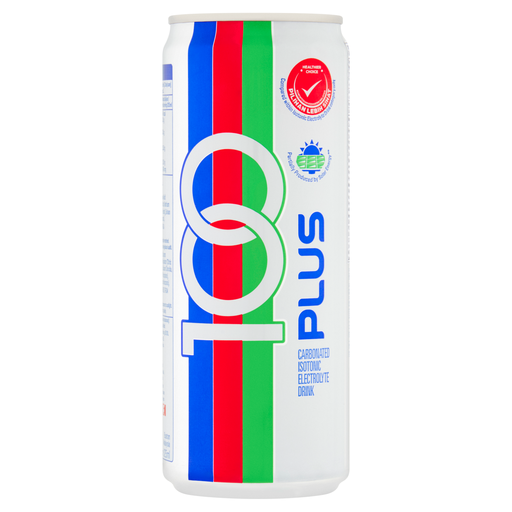
This Joybuy option is a carbonated isotonic drink for shoppers who want a fizzy format; it does not replace the choice between water and a sports drink for different holiday activities.
 No image available
F&N 100 Plus Malaysian Carbonated Isotonic Electrolyte Drink, 325ml
A 325ml carbonated isotonic electrolyte drink for someone choosing fizz for an active holiday session. Check the current label for carbohydrate, sugars and electrolyte quantities if these affect your choice; carbonation itself does not establish an exercise benefit.
View on Joybuy
Questions about holiday drinks
Does fizz make a sports drink better for exercise in the heat?
A benefit from carbonation has not been established. Small controlled studies published in the International Journal of Sport Nutrition in 1992 and 1994 found no significant differences in the exercise outcomes they measured between carbonated drinks and their comparators. Choose fizz if you like it, and check the exact drink’s formulation separately.
When should I choose water instead of an isotonic drink?
Choose water for ordinary holiday drinking and less demanding activity; the NHS recommends it for replacing lost fluids. A drink containing carbohydrate and electrolytes is a different choice for a prolonged active session when you want those ingredients alongside fluid.
Should a sports drink be my child’s everyday holiday drink?
Do not make it the default. The NHS recommends water and milk for children and advises against sugary fizzy drinks. Check the exact sports-drink label for sugars and any age guidance rather than assuming all variants are alike.
What should I do with a sports drink after opening it?
Follow the storage and use-by instructions on the particular bottle. The Tesco listings for Lucozade Sport Orange and Gatorade Cool Blue direct shoppers to refrigerate those drinks after opening, but their stated consumption periods differ, so check the pack you have bought.


