Parents packing an everyday holiday lunch
The main choice is a drink for a child’s ordinary lunch, not fuel for a sports session. The NHS identifies water and milk as the best drinks for children.


For an ordinary child’s school-holiday lunch, choose water or milk rather than selecting a sports drink for its packaging: the NHS identifies water and milk as the best drinks for children. If you prefer glass, choose a suitable reusable bottle for water and check whether glass containers are permitted where the lunch will be eaten.
The main choice is a drink for a child’s ordinary lunch, not fuel for a sports session. The NHS identifies water and milk as the best drinks for children.
If a child has a prolonged or intense activity planned, consider the drink in the context of that activity rather than assuming a sports drink belongs in every lunch.
A reusable glass bottle lets you choose the container separately from the drink. Check whether it is suitable for the child and permitted at the lunch setting.
Decide what the child will drink before comparing bottle materials; then check the label or container against the planned activity and lunch setting.
| Priority | What to check | Your needs |
|---|---|---|
| Everyday drink | For a routine lunch, start with the NHS guidance on water and milk for children. If considering a packaged drink, read its sugars per 100ml and the amount in the full bottle. | I’m packing an ordinary lunch and want to choose the drink for that occasion, rather than for a sports claim or a glass-bottle appearance. |
| Activity and formulation | Check whether the planned exercise calls for a carbohydrate-electrolyte drink. Compare the exact product’s carbohydrate, sugars and sodium per 100ml; Tesco lists 3.8g sugars and 72mg sodium per 100ml for Powerade Defend 500ml. | If lunch follows a demanding sports session, I want to assess that activity separately. A sports drink need not be the routine lunch drink. |
| Container | Check the bottle’s material, capacity and lid for carrying lunch. Ask the school, holiday club or other setting whether glass is permitted. | Glass is my container preference, but I can fill a suitable reusable bottle with water instead of choosing a different drink for its packaging. |
The container does not change a drink’s ingredients or nutrition label. A glass preference and a lunch-drink choice are separate decisions.
Choose the drink first, then check whether a reusable glass bottle suits the child and the setting.
Sports-drink formulations can contain sugars. Tesco lists 3.8g sugars per 100ml for Powerade Defend 500ml; that figure belongs to this variant, not every sports drink.
For an ordinary lunch, follow the NHS guidance on water and milk. If exercise changes the decision, compare the exact drink label with the activity.
A bottle suitable for use at home may not be permitted at a school or holiday club.
Check that setting’s current drink and container policy before packing a glass bottle.
An isotonic sports-drink range with 500ml and multipack products listed by Tesco.
Coca-Cola Great Britain describes Powerade as an isotonic sports-drink range formulated for exercise.
Gatorade UK gives mixing instructions for Hydration Booster sachets.
This bottle is an option for carrying water when glass is your container preference. It is not a ready-to-drink sports drink; check whether glass is suitable for the child and permitted at the lunch setting.
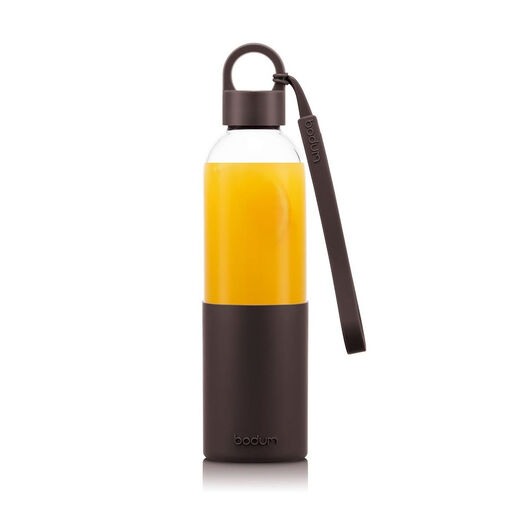 Image unavailable
A 0.5L glass water bottle for carrying a drink chosen separately, such as water. Glass can break, so check that the bottle is suitable for the child and that the lunch setting permits glass containers.
For an ordinary lunch, choose water or milk: the NHS identifies these as the best drinks for children. Consider a sports-drink formulation in relation to a specific activity, not because its packaging appeals.
Assess the drink against the activity rather than assuming every sports session calls for one. Coca-Cola Great Britain describes Powerade as formulated to replace fluid and energy lost during exercise; that brand description does not establish a need for it at an ordinary child’s lunch.
No. A reusable glass water bottle lets you choose the container separately and fill it with water. Check that its capacity and handling suit the child and that glass is permitted where lunch will be eaten.
Ask the individual school or holiday club before packing one. Check its current container and drink policy rather than assuming that a bottle used at home will be accepted there.
Compare carbohydrate, sugars and sodium per 100ml, then check how much the bottle contains. Tesco lists 3.8g sugars and 72mg sodium per 100ml for Powerade Defend 500ml; use the label of the exact variant you are considering.