Who is choosing the drink?
The purpose of the drink changes the choice: a snack break is different from a prolonged exercise session.
Parents packing everyday half-term snacks
For snacks, outings and ordinary play, start with water or milk. The NHS identifies these as the preferred drinks for children, while Wirral Community Health and Care NHS Foundation Trust warns that sports and diet drinks can be acidic and contribute to tooth wear.
Families planning a prolonged sports session
A long endurance session raises a different question from a routine snack: is carbohydrate intake during exercise needed? Tesco’s Gatorade Cool Blue listing describes its carbohydrate-electrolyte formulation in the context of prolonged endurance exercise, not everyday drinking.
Adults looking for a zero-sugar exercise drink
A zero-sugar option may fit someone who wants a flavoured drink around light exercise without the sugars in a regular sports drink. Tesco describes Lucozade Sport Zero Sugar Orange & Peach as designed for low-intensity exercise; it is not a substitute for a carbohydrate drink when carbohydrate intake is the aim.
What matters when choosing?
Decide whether the occasion is an ordinary snack or exercise that calls for a sports-drink formulation. Then compare the exact bottle’s sugars, ingredients and stated use.
Water or milk
Choose for: Children’s routine snacks, outings and ordinary play, in line with NHS guidance.
Trade-off: These are not carbohydrate-electrolyte sports drinks; that formulation is not the reason for choosing a drink with an ordinary snack.
Zero-sugar sports drink
Consider for: An adult who wants a flavoured sports-drink format around light exercise without sugar.
Trade-off: Zero sugar does not mean acid-free or make the drink suitable as a routine children’s snack; it also does not provide the carbohydrate in a regular sports drink.
Regular sports drink
Consider for: A prolonged endurance exercise occasion where carbohydrate intake during activity is relevant, as described for Gatorade Cool Blue on Tesco’s product listing.
Trade-off: Regular formulations contain sugars, making them a different choice from water or milk at snack time.
| Priority |
What to check |
When it matters to me |
| Everyday drinking |
Identify whether the drink is for a snack or for exercise. For children’s routine drinks, the NHS recommends water or milk. |
I’m packing drinks for a snack, a journey or ordinary play, rather than an endurance session. |
| Carbohydrate and sugars |
Compare sugars per 100ml and per bottle, and check the stated exercise use. Tesco lists 20g sugars per 500ml bottle of Gatorade Cool Blue; its Lucozade Sport Zero Sugar Orange & Peach listing gives 0g per 100ml. |
Am I looking for carbohydrate during prolonged exercise, or simply a drink without sugar? Those are different reasons to buy. |
| Acidity |
Read the ingredients as well as the sugar claim. Tesco lists citric acid in Lucozade Sport Zero Sugar Orange & Peach; Wirral Community Health and Care NHS Foundation Trust warns that sugar-free, diet and sports drinks can be acidic and cause tooth wear. |
For frequent snack breaks, I don’t want to assume that a zero-sugar label makes a drink equivalent to water. |
| Product identity |
Check the exact drink name, nutrition panel and ingredients rather than relying on the aisle. Look for any caffeine or other ingredient statements relevant to the person drinking it. |
I’m choosing from a mixed drinks category and need to know what is in this particular bottle. |
Brand and retailer references
These product examples show why the exact variant and serving size matter more than the brand name alone.
Lucozade Sport
The range includes regular and zero-sugar sports drinks. Tesco describes its Zero Sugar Orange & Peach variant as designed for low-intensity exercise.
- Tesco lists 0g sugars and 2 kcal per 100ml for that zero-sugar variant.
- The same variant contains citric acid and sweeteners; zero sugar does not make it an everyday children’s drink.
Gatorade
Tesco’s Cool Blue listing describes a carbohydrate-electrolyte drink in the context of prolonged endurance exercise.
- The listing gives 20g sugars per 500ml bottle, making its carbohydrate content clear when comparing exercise drinks.
- That exercise-related formulation is not a reason to choose it as a routine half-term snack drink.
Powerade
Coca-Cola Great Britain describes Powerade as a still isotonic drink intended for exercise-related fluid and energy replacement.
- Coca-Cola Great Britain lists 4.1g sugars per 100ml for Berry & Tropical Fruits.
- It contains sugars, so its exercise positioning should not be confused with a recommendation for everyday children’s snacks.
Tesco
Tesco’s sports-drink listings include branded products and its KX isotonic range, allowing comparisons between specific bottle labels.
- Tesco lists 22.4g sugars and 113 kcal per 500ml bottle of KX Orange.
- Do not assume that an own-label exercise drink is a zero-sugar alternative; check its individual nutrition panel.
Sainsbury's
Its Powerade Berry & Tropical Fruits listing provides another labelled example of a regular isotonic drink.
- Sainsbury's lists 10g sugars per 250ml for this variant.
- Check the serving size and the particular bottle before comparing it with another drink.
Joybuy exercise-drink options
These are exercise-oriented drinks to consider separately from children’s everyday half-term snacks. The first two are labelled as isotonic drinks; the third is labelled as a hydration drink.
 No image available
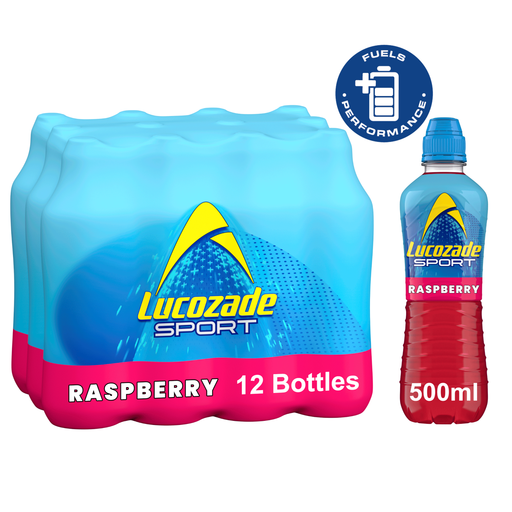
Lucozade Sport Raspberry Isotonic Sports Drink, 12 × 500ml
An isotonic sports drink to assess for an exercise occasion, rather than a routine children’s snack. The pack contains twelve 500ml bottles; check the individual bottle’s sugars, ingredients and label statements before choosing it.
View on Joybuy
 No image available
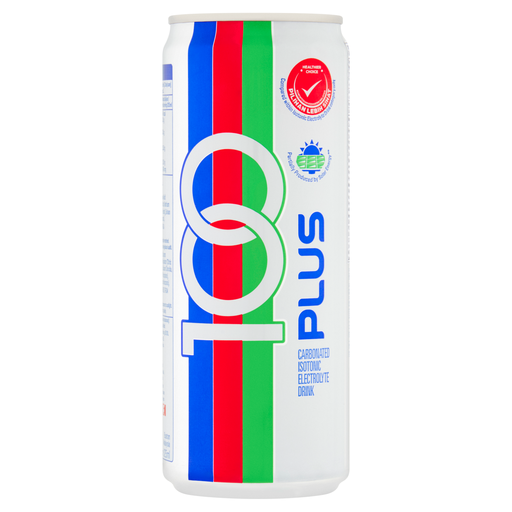
F&N 100 Plus Malaysian Carbonated Isotonic Electrolyte Drink, 325ml
This 325ml carbonated isotonic drink belongs in an exercise-drink comparison, not an everyday children’s snack selection. Check sugars for the whole bottle and the ingredient list if comparing it with a zero-sugar option.
View on Joybuy
 No image available
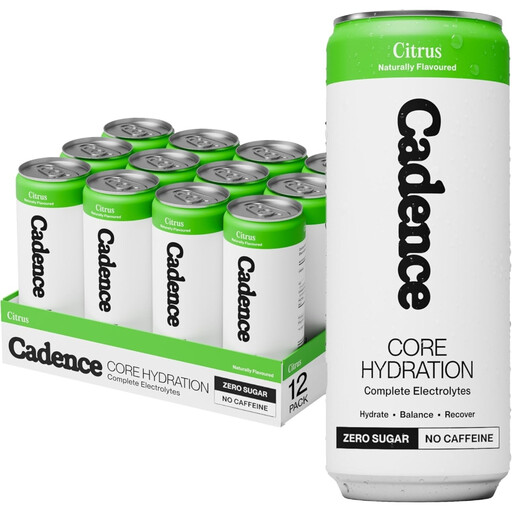
Cadence Core Hydration Drink Citrus, 12 × 330ml
A citrus hydration drink in a pack of twelve 330ml servings. For an exercise-related choice, check its sugars and carbohydrate on the label rather than assuming that a hydration drink provides the same carbohydrate as a regular isotonic sports drink.
View on Joybuy
Common questions
Should children have sports drinks with ordinary half-term snacks?
Choose water or milk for ordinary children’s snacks: the NHS identifies these as the preferred drinks for children. Wirral Community Health and Care NHS Foundation Trust also notes that sports drinks, including sugar-free versions, can be acidic and contribute to tooth wear.
Is a zero-sugar sports drink the same choice as water?
No. Tesco lists 0g sugars per 100ml for Lucozade Sport Zero Sugar Orange & Peach, but its ingredients include citric acid and sweeteners. Wirral Community Health and Care NHS Foundation Trust warns that sugar-free and sports drinks can be acidic, so the zero-sugar label does not make one a routine substitute for water.
When might a regular isotonic drink be relevant?
Consider its carbohydrate content when planning for prolonged endurance exercise, rather than choosing it for casual refreshment. Tesco’s Gatorade Cool Blue listing describes its carbohydrate-electrolyte formulation in that exercise context and lists 20g sugars per 500ml bottle.
What should I read on a sports-drink label?
Check sugars per 100ml and per bottle, the ingredients, and any specific warnings or caffeine statement that matters to the person drinking it. Confirm the exact variant: a zero-sugar product and a regular carbohydrate sports drink answer different exercise-related needs.
Does low sugar make a slush suitable for younger children?
Not necessarily. For slushed ice drinks containing glycerol, the Food Standards Agency’s June 2025 advice says children aged 6 and under should not consume them and children under 10 should not have refills. Check the slush’s ingredients; this advice concerns those slush products, not bottled sports drinks generally.


