Students revising at a desk
Water suits routine drinking while studying. GOV.UK hydration guidance says sports drinks should not replace water outside circumstances such as recovery after prolonged physical activity.


For ordinary seated revision, choose water in a reusable bottle: GOV.UK hydration guidance says sports drinks should not replace water in other circumstances, though they may help after prolonged physical activity. If you want both a sports drink and ready-to-drink glass packaging, confirm the container material for the exact product; a reusable glass water bottle is a different choice.
The reason for choosing a sports drink matters more than the length of a revision session.
Water suits routine drinking while studying. GOV.UK hydration guidance says sports drinks should not replace water outside circumstances such as recovery after prolonged physical activity.
A carbohydrate-electrolyte sports drink may be worth considering after prolonged physical activity. Check the particular drink and serving rather than assuming that studying itself calls for one.
A reusable glass water bottle meets the container preference without being a ready-to-drink sports drink. If the drink itself must come in glass, check its exact packaging before buying.
Decide whether the drink is for seated revision or for recovery after exercise, then check the contents and container of the exact product.
| Priority | What to check | Your needs |
|---|---|---|
| Everyday drinking | Consider water for routine desk-based revision. GOV.UK hydration guidance says sports drinks should not replace water in other circumstances outside their limited uses, including after prolonged physical activity. | I want a drink to keep beside me while I revise, rather than one selected for exercise. |
| Exercise-related use | Check whether the drink is intended for the activity you have done, and compare carbohydrate and electrolyte information on the exact pack. Tesco Groceries and Coca-Cola GB describe their listed sports drinks in the context of exercise. | Revision follows prolonged physical activity, so I need to decide whether a sports drink fits that situation. |
| Repeated sipping | Read the sugars information for the pack and serving. Department of Health and Social Care and NHS England oral-health guidance advises against prolonged sipping of soft drinks containing sugar or acid. | I tend to sip a drink throughout a long study session and want to take that into account. |
| Glass container | Distinguish a reusable glass water bottle from a ready-to-drink sports drink. For the latter, confirm glass packaging on the exact product page or pack. | The container matters to me, but I do not want to mistake a water bottle for a glass-packaged sports drink. |
Claims about these drinks concern physical exercise, not revision performance. GOV.UK hydration guidance says water should remain the preferred drink in other circumstances.
Keep water available for ordinary studying; consider a sports drink for an exercise-related reason rather than the study session itself.
Department of Health and Social Care and NHS England oral-health guidance advises against prolonged sipping of soft drinks containing sugar or acid.
Use water for routine sipping. If you choose a sugar-containing sports drink, follow the guidance to have it with a meal rather than nursing it through the session.
A reusable glass water bottle and a ready-to-drink sports drink are different purchases. A drink listing that says only ‘bottle’ does not establish its container material.
If glass packaging is essential, confirm the material for the exact drink before buying.
The formulation and pack size relevant to a decision are those of the product you intend to buy, not another flavour or bottle.
Check the exact pack for sugars, carbohydrates, sodium, sweeteners and any ingredients or allergen statements relevant to you.
These brand references describe exercise-oriented products; they do not establish that any particular drink comes in a glass bottle.
Tesco Groceries describes its listed Lucozade Sport Orange drink in relation to prolonged endurance exercise.
Coca-Cola GB describes Powerade as an isotonic sports drink intended for use around exercise.
Tesco Groceries lists a Gatorade Cool Blue sports drink; Gatorade UK also describes a separate Hydration Booster product to mix with water.
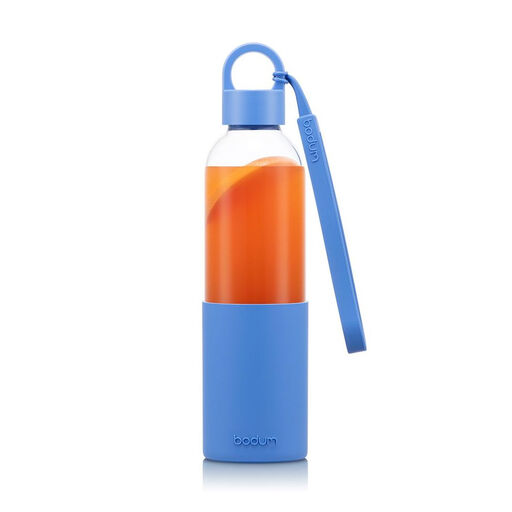
This reusable glass bottle is an option for keeping water beside you during revision, not a glass-packaged sports drink.
 No image available
Use this reusable glass bottle for water during desk-based revision. It holds 0.5L and is not a ready-to-drink sports drink.
No. For ordinary seated revision, choose water. GOV.UK hydration guidance says sports drinks may assist after prolonged physical activity but should not replace water in other circumstances.
Consider the drink in relation to the exercise you have done, then check the exact pack’s serving size and carbohydrate and electrolyte information. Exercise-related product descriptions do not establish a benefit for revision itself.
Avoid prolonged sipping of a soft drink containing sugar or acid. Department of Health and Social Care and NHS England oral-health guidance advises keeping sugar-containing foods and drinks to meal times.
Check the exact current pack’s ingredients, allergen information and sweeteners before buying. The Food Standards Agency explains that precautionary allergen labels communicate a possible unintended presence of an allergen; do not assume one flavour’s label applies to another.