For an ordinary secondary-school packed lunch, choose water rather than a sports drink: the NHS recommends water or milk for children, and the British Dietetic Association says normal meals can meet carbohydrate needs for general fitness. If a pupil wants a sports-drink format around light activity, compare zero-sugar options without assuming they are free of acidity-related dental considerations. A carbohydrate-containing drink is more relevant to hard exercise lasting longer than an hour than to a routine PE lesson.
Who is this choice for?
Parents packing an everyday lunch
If the day involves classes and ordinary breaks, start with a drink that suits everyday use. The NHS recommends water or milk for children; St George's University Hospitals NHS Foundation Trust advises water or plain milk between meals.
Pupils doing light PE or recreational activity
A pupil may want a flavoured sports-drink format without needing carbohydrate from the drink. Check the sugar and ingredient labels, and consider when it would be consumed rather than assuming every PE lesson calls for an isotonic drink.
Pupils with demanding training
The exercise matters more than the timetable label. The British Dietetic Association says carbohydrate during exercise can enhance performance when activity is hard and lasts longer than an hour; match any drink to the actual session and the pupil's meals.
What should you check?
Water or plain milk
Choose when: Packing for an ordinary school day or light activity; the NHS recommends these drinks for children.
Bear in mind: They do not supply carbohydrate during a long, hard exercise session.
Zero-sugar sports drink
Consider when: A pupil specifically wants this format around light activity and carbohydrate from a drink is not the aim.
Bear in mind: Zero sugar does not rule out acidic ingredients; St George's University Hospitals NHS Foundation Trust advises water or plain milk between meals.
Carbohydrate-containing sports drink
Consider when: Exercise is hard and lasts longer than an hour, the situation in which the British Dietetic Association says carbohydrate during exercise can enhance performance.
Bear in mind: Its sugar content makes it a different choice from water for a routine packed lunch.
Choose the drink for the day's activity first, then compare the full bottle's label and the school's packed-lunch policy.
| Priority |
What to check |
Your needs |
| Everyday drink |
Decide whether the day calls for sports fuel at all. The NHS recommends water or milk for children. |
For an ordinary lunch and school day, I want a drink without choosing a sports formula by default. |
| Exercise demand |
Check the activity's intensity and duration. The British Dietetic Association identifies hard exercise lasting longer than an hour as a situation where carbohydrate during exercise can enhance performance. |
If training is long and demanding, I want the drink choice to reflect that session rather than a routine PE lesson. |
| Sugar and serving size |
Compare sugars per 100ml and the amount in the bottle. ASDA Groceries lists 0.01g sugars per 100ml for Lucozade Sport Zero Raspberry & Passion Fruit and 4.1g per 100ml for Powerade Golden Mango; these are different products and pack formats. |
I want to know how much sugar is in the portion actually packed, not just a smaller serving shown on the label. |
| Acidity |
Read the ingredients as well as the sugar figure. St George's University Hospitals NHS Foundation Trust advises keeping acidic drinks to mealtimes and choosing water or plain milk between meals. |
When considering a zero-sugar drink, I still want to account for how often it would be sipped during the day. |
| Drink type and school rules |
Check the ingredient list and caffeine declaration; do not treat an energy drink as interchangeable with a sports drink. Check the individual school's packed-lunch policy. |
Before it goes in a school bag, I want to identify the actual drink and know whether the school allows it. |
Common buying mistakes
-
Buying an isotonic drink for every PE day
A PE lesson alone does not establish a need for carbohydrate during exercise. The British Dietetic Association says normal meals can meet carbohydrate needs for general fitness and identifies hard exercise lasting longer than an hour as a different situation.
Find out what activity is planned and how long it lasts. Pack water for a routine day; consider a carbohydrate-containing drink only when the exercise demands warrant one.
-
Reading “zero sugar” as “no dental consideration”
Removing sugar does not necessarily remove acidity. St George's University Hospitals NHS Foundation Trust states that acidic drinks can cause tooth erosion.
Check the ingredients and avoid sipping an acidic drink throughout the school day. The NHS dental guidance recommends water or plain milk between meals.
-
Comparing a serving with a whole bottle
Serving figures may cover less than the amount a pupil would drink. ASDA Groceries lists 10g sugars per 250ml serving for Powerade Golden Mango; that is not a whole 500ml bottle.
Compare sugars per 100ml, the stated serving size and the bottle size before choosing a pack.
-
Confusing sports drinks with energy drinks
Sport-themed packaging or a nearby shelf position does not tell you whether a drink contains caffeine.
Read the product name, ingredients and caffeine declaration rather than substituting an energy drink for a sports drink.
Relevant brands and retailers
These references help distinguish drink formats and label information; they do not indicate which products a particular school permits.
Lucozade Sport
Its range includes the Lucozade Sport Zero Raspberry & Passion Fruit product listed by ASDA Groceries, alongside carbohydrate-containing sports drinks.
- ASDA Groceries lists 0.01g sugars per 100ml for that specific zero-sugar variant.
- Check the chosen variant and ingredients: zero sugar does not establish that a drink is free of acidic ingredients or suitable as carbohydrate fuel.
Powerade
Powerade Golden Mango is a bottled isotonic option listed by UK grocers including ASDA Groceries and Sainsbury's.
- ASDA Groceries lists 4.1g sugars per 100ml for Golden Mango, allowing a label comparison with a zero-sugar variant.
- Its carbohydrate-containing formula is a different choice from an everyday water bottle; assess the actual exercise demand.
Gatorade
Gatorade UK describes Hydration Booster as a sachet added to water, rather than a ready-to-drink lunch bottle.
- Gatorade says this sachet contains carbohydrate, electrolytes and B vitamins.
- It requires preparation; check the particular product's label and whether its format suits the school day.
Tesco
Tesco Groceries lists Lucozade Sport and Powerade products in its sports-drinks category.
- The category offers a way to identify different bottle and pack formats.
- Check the individual product label and local selection rather than assuming every listed format is in every store.
Sainsbury's
Sainsbury's lists Powerade Golden Mango with nutrition information for label comparison.
- Its listing states 4.1g sugars per 100ml for that product.
- Check the bottle and serving sizes when applying nutrition figures to the amount packed.
Asda
ASDA Groceries lists both Lucozade Sport Zero Raspberry & Passion Fruit and Powerade Golden Mango.
- Its listings state 0.01g and 4.1g sugars per 100ml respectively for those specific products.
- Check the physical label before use, as ingredients and product information can change.
Joybuy sports-drink options
These options cover a citrus hydration drink and a carbohydrate-containing isotonic drink. For a secondary-school packed lunch, check the full label, age guidance and school policy before considering either product; water remains the everyday starting point.
 No image available
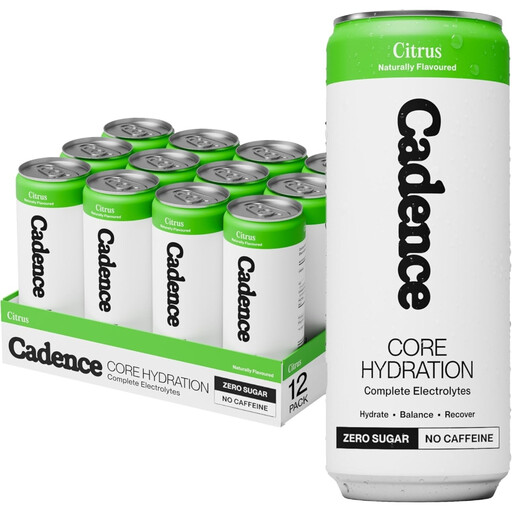
Cadence Core Hydration Drink Citrus, 12 x 330ml
For someone considering a ready-to-drink option around light activity, check the full nutrition and ingredient label rather than relying on the drink's name. This pack contains 12 x 330ml drinks. The product information describes suitability for adults, so confirm age guidance before considering it for a secondary-school pupil; check the caffeine declaration and acidic ingredients too.
View on Joybuy
 No image available
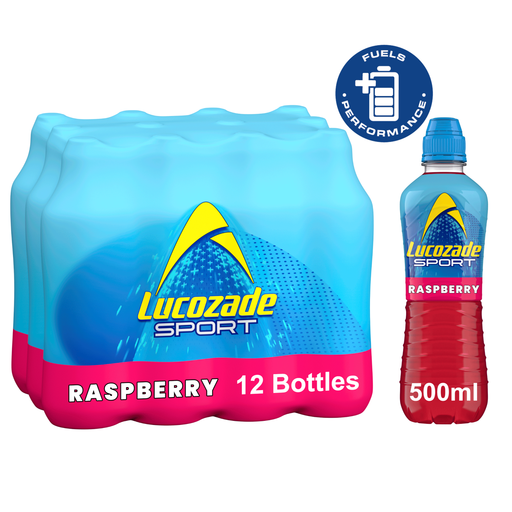
Lucozade Sport Raspberry Isotonic Sports Drink, 12 x 500ml
This carbohydrate-containing isotonic option is worth considering only in relation to demanding exercise, not as a routine packed-lunch replacement for water. The pack contains 12 x 500ml bottles; compare sugars per 100ml and per bottle, and confirm age guidance and caffeine content on the label. The product information warns that it contains aspartame, a source of phenylalanine, and is unsuitable for people with phenylketonuria.
View on Joybuy
Questions about school packed lunches
Does a pupil need a sports drink in their packed lunch every day?
Usually not for an ordinary school day. The NHS recommends water or milk for children, while the British Dietetic Association says normal meals can meet carbohydrate needs for general fitness; assess any separate, demanding exercise session on its own terms.
When might a carbohydrate-containing sports drink be relevant?
It may be relevant during hard exercise lasting longer than an hour: the British Dietetic Association says carbohydrate intake during exercise can enhance performance in that situation. A normal PE lesson does not by itself establish that need.
Does zero sugar remove the dental consideration?
No. A zero-sugar drink can still be acidic. St George's University Hospitals NHS Foundation Trust states that acidic drinks can cause tooth erosion and advises water or plain milk between meals.
How can I tell a sports drink from an energy drink?
Check the individual product's ingredients and caffeine declaration rather than its shelf position or sport-themed packaging. Do not assume the two drink types are interchangeable for a school lunch.
Do school food standards determine what can go in a packed lunch?
The Department for Education's September 2026 guidance says England's statutory school food standards apply to food and drink provided to pupils on school premises at state-funded schools; that scope does not establish a UK-wide rule for drinks packed by parents or carers. Check the individual school's packed-lunch policy.


