For light activity, choose water for ordinary hydration, or a zero-sugar sports drink if you want a flavoured option without the sugar in a regular isotonic drink. For hard exercise lasting longer than an hour, the British Dietetic Association says carbohydrate during exercise can enhance performance, so a zero-sugar drink may not meet a planned fuelling need. Check the sugars and carbohydrate amounts for the bottle you would actually drink.
Who is each option for?
Light-workout shoppers avoiding sugar
If you want a flavoured drink for casual or low-intensity activity without the sugar in a regular isotonic drink, compare zero-sugar varieties. Tesco describes Lucozade Sport Zero as intended for low-intensity exercise and lists 0 g sugars for the Powerade Zero variant covered here. Water remains an option for ordinary hydration.
Shoppers comparing multipacks
A larger pack does not necessarily fit a zero-sugar shop. Tesco lists 22.4 g sugars per 500 ml bottle for both its Raspberry isotonic drink and KX Orange, so compare the nutrition for a whole bottle as well as the pack size.
People exercising hard for longer periods
If you are planning carbohydrate intake during a long, hard session, a zero-sugar drink serves a different purpose from a carbohydrate-containing isotonic drink. The British Dietetic Association says carbohydrate during exercise can enhance performance when exercise is hard and lasts longer than an hour.
What should you check before choosing?
Zero-sugar sports drink
Choose when: You want a flavoured sports-style drink for light activity without sugar.
Trade-off: It does not supply the carbohydrate found in regular isotonic drinks.
Carbohydrate-containing isotonic drink
Choose when: Carbohydrate during a hard session lasting longer than an hour is part of your exercise plan, in line with British Dietetic Association guidance.
Trade-off: Tesco lists 22.4 g sugars per 500 ml bottle for both its Raspberry isotonic drink and KX Orange.
Water
Choose when: You need ordinary hydration for casual exercise rather than carbohydrate during activity.
Trade-off: Water does not provide carbohydrate for a planned exercise-fuelling approach.
| Priority |
What to check |
Your needs |
| Sugars per bottle |
Check the sugars line and serving size. A per-250 ml figure is not the amount in a 500 ml bottle; Tesco lists 22.4 g sugars per 500 ml bottle for its Raspberry isotonic drink and KX Orange. |
I want a flavoured drink without overlooking how much sugar is in the bottle I would finish. |
| Carbohydrate |
Read the carbohydrate amount separately from the sugars line. The British Dietetic Association says carbohydrate during hard exercise lasting longer than an hour can enhance performance; Tesco lists about 16 g carbohydrate per 250 ml of regular Lucozade Sport Orange. |
For a long, hard session, I need to decide whether carbohydrate during exercise is part of my plan—not assume a zero-sugar drink supplies it. |
| Drink format |
Compare bottle volume and pack quantity, then check the nutrition for that exact variant. A sports-style electrolyte water is not necessarily a conventional isotonic drink. |
A multipack may suit how I shop, but I still want to know what each bottle contains. |
| Availability |
Check the exact flavour, pack format and local availability before choosing an alternative. Read the replacement product’s sugars line rather than relying on its sports-drink name. |
If my preferred zero-sugar variety is unavailable, I do not want to substitute a sugary isotonic drink without noticing. |
Common buying mistakes
-
Assuming every sports drink is low in sugar
“Isotonic” does not mean zero sugar. Tesco lists 22.4 g sugars per 500 ml bottle for both its Raspberry isotonic drink and KX Orange, while its Powerade Zero listing states 0 g sugars per 250 ml.
Check the sugars amount against the serving size and the amount you expect to drink.
-
Using a zero-sugar drink as a carbohydrate-fuelling plan
Zero-sugar and regular isotonic drinks serve different needs. The British Dietetic Association says carbohydrate during exercise can enhance performance when the exercise is hard and lasts longer than an hour.
Match your drink to the session, and check the carbohydrate amount if fuelling during exercise is your aim.
-
Substituting a different bottle without reading its label
Products sold as sports drinks can have different sugar amounts, bottle sizes and ingredients. A change of flavour or product line can therefore change what you are buying.
Check the exact variant’s nutrition and ingredients, particularly when replacing a zero-sugar choice.
Brand and product-line references
These examples show why the product line and variant matter more than the brand name alone.
Lucozade Sport
The Lucozade Sport products covered here include a regular Orange drink and a Zero Sugar Orange & Peach multipack.
- Tesco lists 0 g sugar for the Zero Sugar Orange & Peach variant and describes it as designed for low-intensity exercise.
- The regular Orange variant is a different formulation: Tesco lists about 16 g carbohydrate per 250 ml.
Powerade
Powerade Zero Berry Tropical is the zero-sugar variant considered here.
- Tesco lists 0 g sugars per 250 ml serving for this variant.
- Check the exact Powerade variant rather than applying the Zero label’s nutrition to the whole range.
Tesco
Tesco’s own-label Raspberry isotonic drink is a carbohydrate-containing multipack, not a zero-sugar alternative.
- The listing specifies four 500 ml bottles, making the amount per bottle clear to compare.
- Tesco lists 22.4 g sugars per 500 ml bottle.
Gatorade
UK specialist retailer SoSweet describes Gatorade Zero as a sugar-free option sourced from the US market.
- Gatorade Zero provides another named zero-sugar product line to check.
- Check the nutrition and bottle size on the imported variant you are considering rather than assuming they match a UK supermarket product.
KX
KX Orange is an isotonic multipack with carbohydrate, rather than a diet or zero-sugar variant.
- Tesco lists 26.5 g carbohydrate per 500 ml bottle.
- The same listing gives 22.4 g sugars per 500 ml bottle.
Joybuy product options
This electrolyte-water option is relevant if you want a flavoured drink described as zero sugar; it is not presented as a conventional isotonic sports drink.
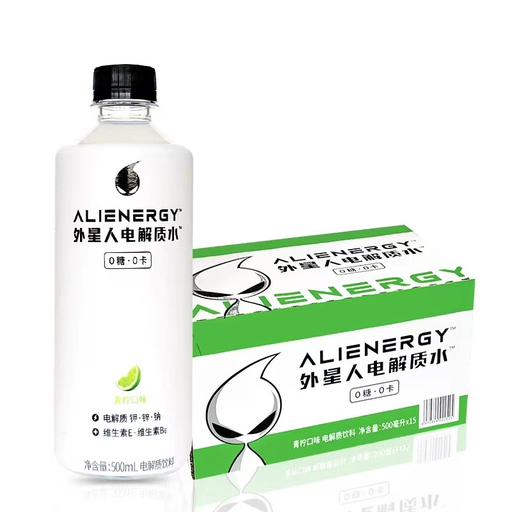 No image available
Chi Forest Alienergy Lime Electrolyte Water, 15 × 500 ml
For a shopper seeking a flavoured sports-style drink, this is described as zero-sugar electrolyte water rather than a conventional isotonic drink. The pack contains 15 × 500 ml bottles, and the product description names erythritol and sucralose as sweeteners. Check the pack’s sugars, calories and electrolyte quantities if those figures matter to your choice.
View on Joybuy
Frequently asked questions
Does a zero-sugar sports drink suit every workout?
No. It can suit someone who wants a flavoured drink without sugar during light activity, but it does not supply the carbohydrate in a regular isotonic drink. The British Dietetic Association says carbohydrate during exercise can enhance performance when exercise is hard and lasts longer than an hour.
Is water enough for casual exercise?
For ordinary hydration during casual exercise, water is a straightforward choice. The NHS identifies water as the best way to replace lost fluids, while the British Dietetic Association says people doing occasional sport, gym classes or recreational running generally do not need sports drinks.
How do I compare a zero-sugar drink with an isotonic multipack?
Compare the sugars and carbohydrate amounts for the bottle you would drink, not just the pack description. Tesco lists 0 g sugars per 250 ml for Powerade Zero Berry Tropical, whereas its Raspberry isotonic drink and KX Orange each list 22.4 g sugars per 500 ml bottle. The serving sizes differ, so keep them visible when comparing the figures.
Do zero-sugar sports drinks contain sweeteners?
The Lucozade Sport Zero and Powerade Zero variants covered here list sweeteners. If a particular ingredient matters to you, read the ingredients on the exact flavour and pack you plan to buy.


