Households washing kit regularly
You want a manageable load of washable sportswear to go through washing and drying without moving it between appliances.


Choose a washer-dryer if one appliance needs to fit your utility room and you value moving a suitable sports-kit load straight from washing to drying. Base that choice on the smaller wash-and-dry capacity, check the exact programme against each garment’s care label, and measure the space needed for connections and the open door. If you regularly need to dry a full wash load, consider whether you have room for separate appliances instead.
You want a manageable load of washable sportswear to go through washing and drying without moving it between appliances.
You have one appliance position and need to account for the machine’s installed depth, connections, clearances and open door.
You wash synthetic or functional garments and want suitable settings on the exact model, while following each item’s care label before drying.
Start with the amount of kit you need to dry without interruption, then check garment-care options and the room’s installation space. Compare energy-label details for models that meet those needs.
| Concern | What to check | Who this matters to |
|---|---|---|
| Wash-and-dry convenience | Rated wash-and-dry capacity in kg and whether the exact model offers a continuous cycle. | If I want a kit load ready without transferring wet clothes, the drying limit decides how much I can put in at once. Around 36% of consumers put that convenience first. |
| Technical-fabric care | A suitable programme on the exact model and settings that match the garments’ care labels. | When my kit includes functional fabrics, I need a cycle I can use without ignoring washing or drying restrictions. Garment care is the main concern for around 29% of consumers. |
| Fit, access and noise | Full installation dimensions, connection and door clearances, and declared spin noise. | With a tight utility-room space, I need to load the machine and reach its connections after installation. Around 21% of consumers place fit and access first. |
| Energy and water use | The exact model’s energy label and product information sheet, alongside your usual load size. | If I wash smaller kit loads often, I want to compare energy and water figures without choosing capacity I rarely use. This is the primary concern for around 14% of consumers. |
A washer-dryer’s drying limit is lower than its wash limit, so a full wash load may not continue straight into drying.
Write down both capacities for each model and compare the drying figure with the kit you expect to finish in one batch.
Splitting a full wash load can mean another drying cycle and more time handling the kit.
Technical garments can have different restrictions on temperature, spin and tumble drying. A programme name does not override their care labels.
Check the labels and the exact model’s programme instructions; air-dry garments whose labels do not permit machine drying.
The appliance also needs room for its connections, required clearances and an open door.
Measure the available space around pipes and plugs, then compare it with the chosen model’s installation diagram.
Inaccessible connections or an obstructed door can complicate installation and everyday loading.
Energy Saving Trust advises looking beyond the A–G rating; the label also gives information relevant to energy use, noise and performance.
Compare the complete labels and product information sheets for shortlisted models, including the wash-and-dry cycle and a capacity that suits your usual loads.
These ranges offer different capacities and fabric-care options; programme availability and installation requirements depend on the exact model.
Bosch Home UK lists washer-dryers across several wash and dry capacities, making the range relevant when batch size is a deciding factor.
Miele UK’s WT1 range is relevant if washing and drying in one appliance is the priority; its range includes an 8 kg wash/5 kg dry format.
LG UK lists a 9 kg wash/6 kg dry model, relevant when the combined-cycle load limit matters more than wash capacity alone.
These 9 kg wash/6 kg dry washer-dryers include freestanding and integrated designs. Choose the installation format that suits your utility room, then check the exact model’s programmes against your kit’s care labels.
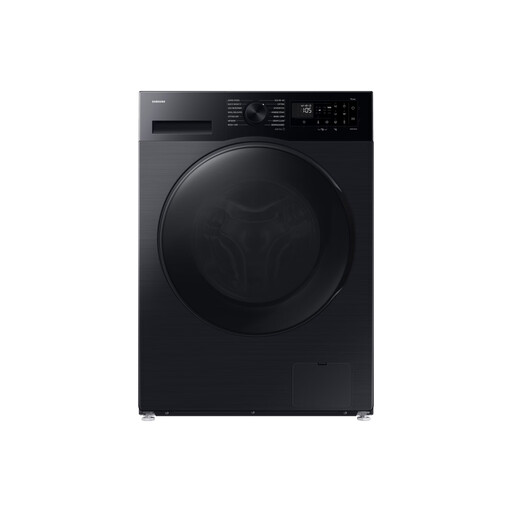 Image unavailable
For a continuous sports-kit cycle, plan the load around the stated 6 kg drying capacity rather than the 9 kg wash capacity. Check the exact model’s garment-compatible programmes and installation clearances.
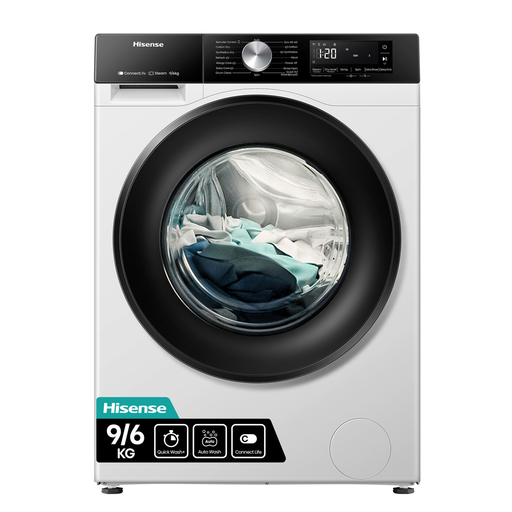 Image unavailable
If avoiding a transfer between appliances matters, compare your usual kit load with the stated 6 kg drying limit. Confirm a suitable cycle in the exact model’s instructions and measure the space needed for connections and the door.
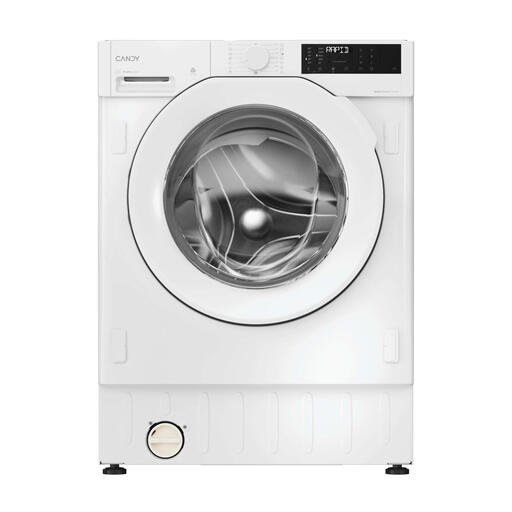 Image unavailable
Consider this integrated format only if the utility-room cabinetry is compatible. Its stated 6 kg drying limit is the figure to use for a continuous cycle; check cabinet-door fitting, garment programmes and the installation diagram before ordering.
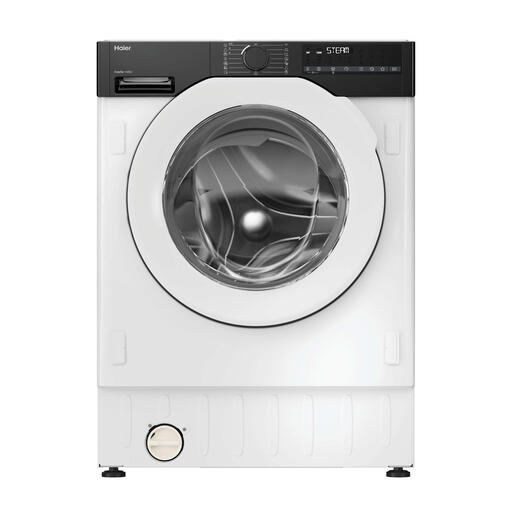 Image unavailable
This integrated model is a choice for compatible cabinetry, with a stated 6 kg drying capacity for loads intended to finish without a transfer. Check cabinet and service clearances, suitable kit programmes and the exact drying specification.
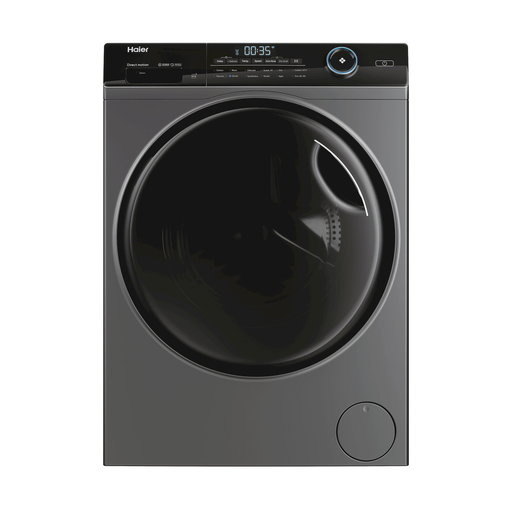 Image unavailable
For recurring sports-kit loads, use the stated 6 kg drying capacity to judge whether one wash-and-dry cycle is practical. Check the exact model’s garment programmes, installed depth and energy label before choosing it.
No: a suitable washing programme does not mean every garment can be tumble-dried. Bosch describes a sportswear programme for certain technical fabrics on a specific model, but each item’s care label and the chosen machine’s programme instructions still determine what you can wash and dry.
The wash and dry capacities are different figures: LG UK, for instance, lists a model rated for a 9 kg wash but a 6 kg drying load. Use the drying figure when deciding how much kit can complete a wash-and-dry cycle without splitting the load.
Measure the available depth around pipes and plugs, side space and room for the door to open, then compare those measurements with the exact model’s installation instructions. As a general guide, allow around 25 mm at each side and roughly 50–150 mm behind a freestanding unit, but the chosen manufacturer’s requirements take priority.
No. Energy Saving Trust advises considering the information alongside the A–G rating; for a washer-dryer, compare the exact models’ wash-and-dry capacity, energy and water figures, cycle duration and noise on their labels and product information sheets.