Match-day handout organisers
These groups want volunteers to produce small photographs during or soon after a fixture. The handout queue matters more to them than making large display prints.


Choose a 6-inch dye-sublimation printer if the main job is handing out many small sports photographs at fixtures; the UK-listed DNP DS620, for example, is specified for 4×6-inch prints in 8.4 seconds. Choose an A3+ inkjet if team photos, awards or clubhouse displays need larger prints. Within A3+ models, weigh the print time and media you need against the different dye-ink and pigment-ink systems specified by Canon and Epson.
These groups want volunteers to produce small photographs during or soon after a fixture. The handout queue matters more to them than making large display prints.
These groups prepare team photographs, action shots, sponsor displays or presentation prints. Their choice starts with the required print size and whether the intended paper supports the display.
These groups make fewer, carefully chosen prints and are considering a pigment-ink workflow rather than rapid event handouts. Paper choice and time available for each print are part of that decision.
Choose it when: Volunteers need repeated 4×6-inch or 5×7-inch handouts at an event; the UK-listed DNP DS620 is specified for an 8.4-second 4×6-inch print.
Trade-off: Its fixed-format media system does not replace an A3+ printer for large team or clubhouse displays.
Choose it when: Larger borderless photographs are central to the club's plans. Canon specifies A3+ borderless output and an eight-colour dye-ink system for the PIXMA PRO-200S.
Trade-off: Plan these prints rather than treating the printer as an instant handout machine; Canon specifies about 1 minute 30 seconds for an 11×14-inch colour image on A3+ paper under its stated conditions.
Choose it when: Selected larger display prints justify a pigment-ink and compatible-media workflow. Canon specifies a ten-ink pigment system for the imagePROGRAF PRO-310; Epson describes its SureColor SC-P700 as using UltraChrome Pro 10 ink.
Trade-off: Allow time for print preparation and output rather than assuming this route will serve a match-day queue. Canon specifies about 4 minutes 15 seconds for an 11×14-inch colour image on A3+ paper from the PRO-310 under its stated conditions.
| Concern | What to check | Who this matters to |
|---|---|---|
| Match-day handouts | Check the output time at your chosen small print size and how many prints a matching media pack contains. | If families are waiting at the fixture, I need small photographs ready without a long handout queue; around 31% of consumers put rapid handouts first. |
| Large displays | Confirm the largest supported print size and whether borderless output works with your intended paper. | A team photograph or awards print needs room to be displayed at the size we have planned; larger, flexible output is the primary need for around 25% of consumers. |
| Consumables planning | Check the required ink or matched media and ribbon, then plan quantities for a typical event and the season. | Our volunteers need to know which supplies to keep ready before the next event; around 25% of consumers put a manageable consumables plan first. |
| Selected display prints | Check the ink system and supported display media, then try representative images at the intended size. | If we print only chosen action shots and presentations, I can allow more time to prepare each image; a pigment-oriented display workflow comes first for around 19% of consumers. |
A large-format print time and a small handout print time describe different jobs. Canon specifies around 1 minute 30 seconds for an 11×14-inch colour print from the PIXMA PRO-200S and around 4 minutes 15 seconds from the imagePROGRAF PRO-310 under their stated conditions; the UK-listed DNP DS620 is specified at 8.4 seconds for 4×6 inches.
Set the handout size and the time available at a fixture before choosing between a small-format event printer and A3+ output.
The DNP DS620 uses media packs with defined print counts, while Epson says the supplied ink in the SC-P700 is used during initial setup. The supplies needed for a season depend on what the group actually prints.
Work out likely quantities at each print size and check the matching ink, paper or media packs before committing to a workflow.
The 6-inch DNP DS620 and Canon's borderless A3+ models serve different maximum print sizes. A small handout format cannot stand in for a planned large team photograph.
Write down the largest print the group must produce, then compare the printers that support it.
Canon and Epson describe multi-ink pigment systems, but the group must still choose supported paper and prepare images for its intended print workflow. A feature name does not establish how every sports image will look.
Before making a club run, try a daylight action shot, a shaded image and a team photograph on the paper and at the size you intend to use.
Trial prints use paper and ink while you settle on suitable media and settings.
Canon offers two distinct A3+ routes relevant to planned club displays: the dye-ink PIXMA PRO-200S and pigment-ink imagePROGRAF PRO-310.
Epson's SureColor SC-P700 is a pigment-ink photo-printer option for groups planning selected display prints.
The UK-listed DNP DS620 is a 6-inch dye-sublimation option for repeated small event handouts rather than A3+ club displays.
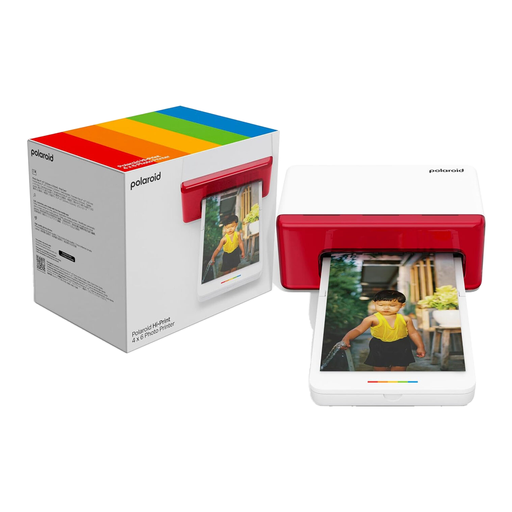
For groups considering 4×6-inch sports-photo handouts rather than A3+ displays, this Bluetooth photo printer is a small-format option. Check its printing workflow and supplies against the number of handouts you plan to make.
 No image available
Consider this for 4×6-inch sports-photo handouts if a Bluetooth printing setup fits your volunteers' workflow.
Check the required Hi-Print photo-paper cartridge, its print count and the printing pace against the number of handouts needed during a fixture. This format is for small prints, not A3+ displays.
Start with 4×6-inch or 5×7-inch output if quick event handouts are the main job; choose A3+ if team photographs, awards or clubhouse displays are the main job. Confirm the exact sizes and paper supported by the printer you are considering, because a 6-inch event printer and an A3+ inkjet do not serve the same largest-print requirement.
Plan for the supplies that match both the printer and your intended print sizes. Dye-sublimation models use matched media systems with defined print counts, while inkjet photo printers need compatible ink and paper; Epson also says initial SC-P700 setup uses supplied ink.
Check an appropriate electrical-recycling route with the seller or your local council rather than putting the printer in general waste. GOV.UK explains that waste electrical and electronic equipment rules address the disposal of electrical equipment; confirm which collection or take-back arrangement is available to your group.