
24/7 Customer Support

Free returns

Same-day & Next-day Delivery

Quality Guaranteed

Unlock Your Welcome Offers: FREE Delivery | Up to 80% OFF | Free 30-day JoyPlus trial
Download the APP
Choosing sports sunglasses is not simply a matter of picking a dark lens and a sporty frame. UK weather can shift quickly from bright sunshine to cloud, while road spray, wind, rain and reflected glare create different demands for cyclists, runners, drivers, anglers and golfers.
The right pair should combine suitable UV protection, a secure fit and lens features that match your activity. It should also be clear about what it cannot do. Use this guide to compare practical specifications and avoid paying for features that are unsuitable for your routine.
A very dark lens is not automatically safer. Look for a clearly stated UV400 specification, which refers to protection against ultraviolet wavelengths up to 400 nanometres. Check the product information rather than relying on lens colour or a mirrored finish.
For driving, also confirm that the lens tint is appropriate for changing light. Very dark lenses may be uncomfortable in tunnels, shaded roads or overcast conditions.
Polarised sunglasses can reduce reflected glare from roads, water and other bright surfaces. This is useful for fishing, sailing, driving and some outdoor sports. However, polarisation does not replace UV protection and may not be suitable for every display screen or cockpit instrument.
Photochromic lenses offer a different benefit: they change tint in response to UV exposure. They can be practical for cycling between open roads and shaded lanes, but they may not darken sufficiently inside a vehicle because many windscreens filter UV light.
Impact-resistant sunglasses can offer additional durability for ordinary cycling and outdoor use, but they are not unbreakable and are not automatically suitable for industrial hazards. Do not use general sports eyewear for grinding, machining or other tasks requiring dedicated protective equipment.
Where relevant, check for a stated performance standard, such as ANSI Z87.1, or applicable UK and European safety marking information. Replace lenses that are cracked, heavily scratched or visibly damaged.
UV400 sunglasses are a sensible starting point for regular outdoor use. Confirm that the specification applies to the complete product and is not merely a description of a tinted lens. Sunglasses should never be used for direct solar observation, including eclipse viewing.
Visible light transmission, or VLT, indicates how much visible light passes through the lens. A lower percentage generally means a darker lens:
These figures are not a substitute for checking the product’s stated lens category and intended use.
TR90 sunglasses use a thermoplastic frame material associated with flexibility and low weight. Weight alone does not guarantee comfort: adjustable nose pads, non-slip temple sections, ventilation and frame width are equally important.
Cycling sunglasses should stay in place when you turn your head or ride over uneven surfaces. A curved lens can improve side coverage, while ventilation may help reduce fogging. For travel and daily use, foldable sunglasses can be more convenient, provided the hinges are handled carefully and stored in a case.
Prescription wearers should check whether the frame accepts an inner prescription insert or whether a prescription sunglasses clip-on is more suitable. A clip-on must sit securely over the prescription frame without obstructing the wearer’s view.
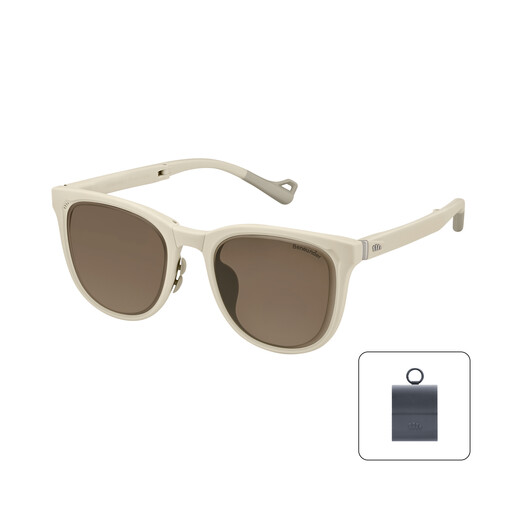
Why This Fits Their Persona: A practical everyday option for commuters, walkers and travellers who want lightweight sunglasses that fit easily into a small bag.
The listing states UV400 protection and includes anti-reflective, oleophobic and scratch-resistant coatings rather than relying only on a dark lens appearance.
TR90 frame, 0.97 oz weight, three-position adjustable temples and a foldable construction.
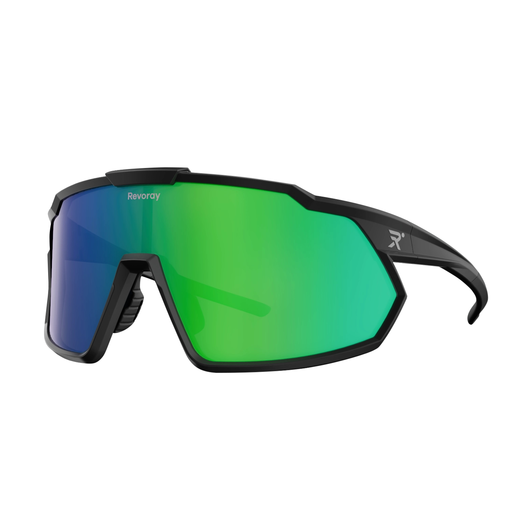
Why This Fits Their Persona: Designed for regular road cycling, mountain biking and outdoor use where a stable fit and glare control matter over longer rides.
The product specification gives a VLT of approximately 15.2% and identifies ANSI Z87.1 impact-resistance performance, making the intended use clearer.
Approx. 33 g weight, TAC polarised lenses, adjustable anti-slip silicone pads and water- and oil-repellent coatings.

Why This Fits Their Persona: A useful match for cyclists who move between open roads, tree-lined routes and changing British weather.
The listing separately identifies photochromic, polarised and UV400 features, and notes that photochromic tinting may be limited inside vehicles.
TR90 frame, polycarbonate lenses, adjustable nose pads, UV400 protection and a stated weight of 26–29 g.

Why This Fits Their Persona: Suitable for prescription-glasses wearers who want a quick solution for driving, walking and outdoor trips without replacing their main spectacles.
It uses a clip-on format rather than asking the buyer to guess whether a full sports frame will fit over prescription glasses.
Polarised lenses, neutral tint, stated UVA and UVB protection, and a design intended to fit over many prescription frames.
We have compiled a complete, real-time list of products that fully satisfy these strict selection criteria and UK safety regulations.
Keep sports sunglasses in a protective case rather than loose in a rucksack or car door pocket. Rinse away salt, dust and grit before wiping, then use a clean microfibre cloth. Avoid alcohol, household glass cleaner and abrasive paper towels, as these may affect lens coatings.
There is no universal replacement timetable. Replace a pair when the lenses are scratched enough to affect visibility, the frame no longer stays secure or coatings have visibly deteriorated. Frequent cyclists may need to inspect their eyewear more often because road grit and sweat can accelerate wear.
They can reduce reflected glare from wet roads and other bright surfaces. Choose a suitable lens category and avoid excessively dark lenses. Check that you can read dashboard displays clearly and that visibility remains comfortable in shaded areas and tunnels.
Photochromic lenses may not darken as expected inside a vehicle because windscreens can block much of the UV exposure that activates the tint. If you need consistent glare reduction while driving, consider dedicated driving sunglasses or a polarised clip-on.
They can be, provided they fit securely, offer UV400 protection and do not obstruct peripheral vision. For faster activities, look for non-slip nose pads, flexible frames, ventilation and clearly stated impact-resistance information. General sports sunglasses should not be treated as industrial eye protection.