Regular dryers of technical kit
If you often dry synthetic, microfibre or functional-fibre sportswear, start with each garment’s care label. Then look for automatic drying control and a programme whose instructions cover that fabric.


For sportswear that its care label permits you to tumble dry, a heat-pump dryer with moisture sensing and a suitable synthetics, sportswear or outdoor programme is a sensible starting point. Check the programme against the garment label and the exact model’s instructions: lower-temperature drying does not make every setting suitable, and heat-pump cycles can take longer than older condenser or vented alternatives. Electrical Safety First’s dryer guidance and model information from Bosch and AEG support these distinctions.
If you often dry synthetic, microfibre or functional-fibre sportswear, start with each garment’s care label. Then look for automatic drying control and a programme whose instructions cover that fabric.
If the dryer will run regularly, compare the exact models’ energy information as well as their programmes. Electrical Safety First describes heat-pump dryers as more energy-efficient than condenser and vented types, while AEG notes that heat-pump cycles can take longer.
If space, vent access or socket position may limit your choice, check the installation instructions before ordering. Electrical Safety First says a vented dryer needs an external vent route; a heat-pump dryer does not need a hole through the wall.
Check the garment label first, then compare the exact dryer’s programmes and sensor controls. Weigh those against running costs, the time available between uses and the installation requirements.
| Concern | What to check | Who this matters to |
|---|---|---|
| Fabric care | Match the label’s tumble-drying indication to the programme. Check whether the exact model offers moisture sensing and instructions covering the fabric. | When I dry technical kit regularly, I want a setting that suits each garment without leaving it in a timed cycle unnecessarily; around 33% of consumers put fabric care first. |
| Running costs | Compare dryer types and the exact models’ current energy information, rather than relying on a brand-wide claim. | If I run the dryer often, electricity use matters more to me than finishing every load quickly; around 27% of consumers make running costs their primary concern. |
| Turnaround time | Check the normal programme duration and any quick programme’s fabric and load limits. | When kit needs to be ready for the next training session, I cannot assume a small-load quick cycle will handle my usual load; for around 20% of consumers, turnaround comes first. |
| Installation and upkeep | Check vent requirements, clearances, socket access and the model’s filter-cleaning instructions. | If the available space or electrical setup limits where I can put a dryer, safe installation and manageable upkeep lead my decision; around 20% of consumers prioritise these needs. |
GINETEX explains that the dots in the tumble-drying care symbol indicate the permitted severity of drying. A programme named Sportswear does not override an individual garment’s label.
Check the label, then choose a setting whose instructions cover the fabric and permitted drying conditions.
AEG’s support guidance notes that heat-pump drying can take longer than drying in older condenser or vented machines. A quick programme may also have a smaller permitted load.
Compare the programmes you would actually use, including their load and fabric restrictions, before deciding whether the turnaround works for you.
Electrical Safety First says vented dryers need an external vent connection and warns against unsafe electrical arrangements. Lint build-up can also affect safe use and drying.
Check the model’s installation instructions and socket position, and clean lint and fluff after each use as directed.
The UK Office for Product Safety and Standards issued a safety warning in December 2025 concerning certain integrated heat-pump dryer models. Whether an appliance is affected depends on its exact identification, not its brand or dryer type alone.
Register the appliance and check its model and serial number against manufacturer and official recall information. If it is affected, follow the stated safety instructions.
Bosch lists Sportswear and AutoDry features on particular heat-pump models.
Selected AEG heat-pump models combine sensor-led drying with an Outdoor programme.
Selected Samsung Series 5 heat-pump dryers list OptimalDry and a Quick Dry option.
Miele describes its UK tumble-dryer range as using heat-pump technology, with fabric-care features varying by model.
These heat-pump models are relevant if you are considering lower-temperature drying for tumble-safe sportswear. Before choosing one, check its exact programme instructions against your garments’ labels; a heat-pump description alone does not establish sportswear-programme suitability.
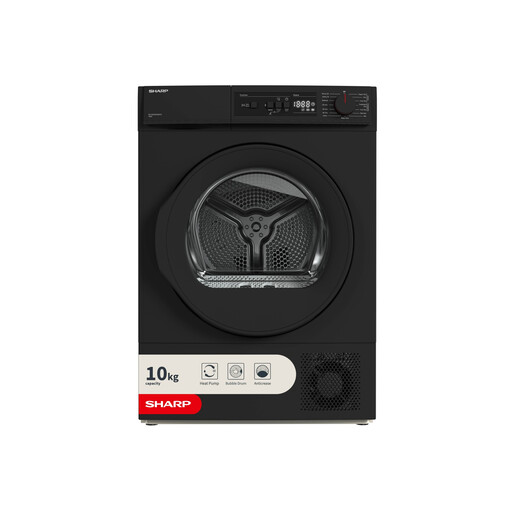 No image available
Consider the 10 kg capacity if it suits your usual laundry loads. The product name states an A++ rating; check current model information and confirm which programme permits your sportswear fabrics.
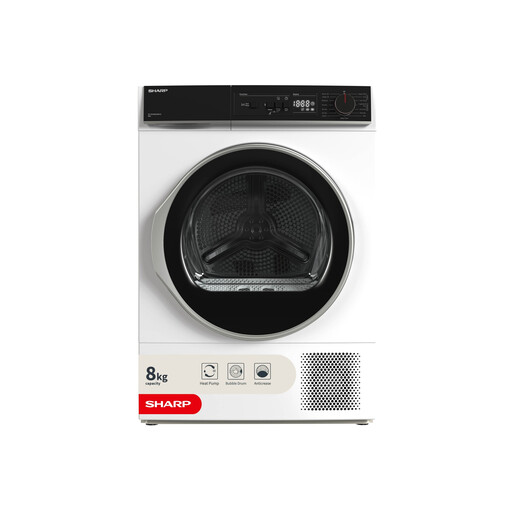 No image available
Consider this 8 kg model if that capacity fits your regular loads. Its product name states an A++ rating; check the exact programme and load guidance before using it for technical kit.
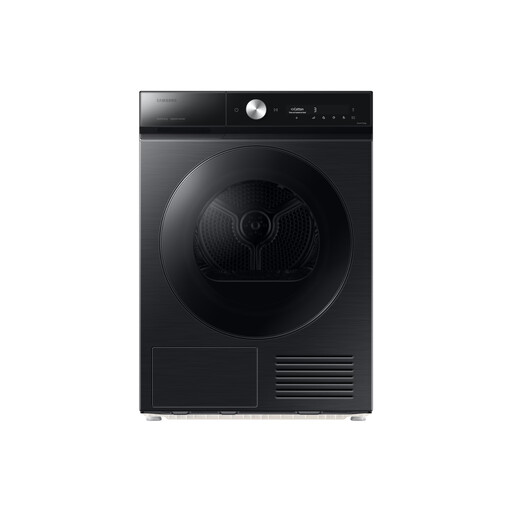 No image available
The 9 kg capacity may suit households combining sportswear with other permitted laundry. Check the model’s fabric programmes and any quick-cycle load limit before relying on a fast turnaround.
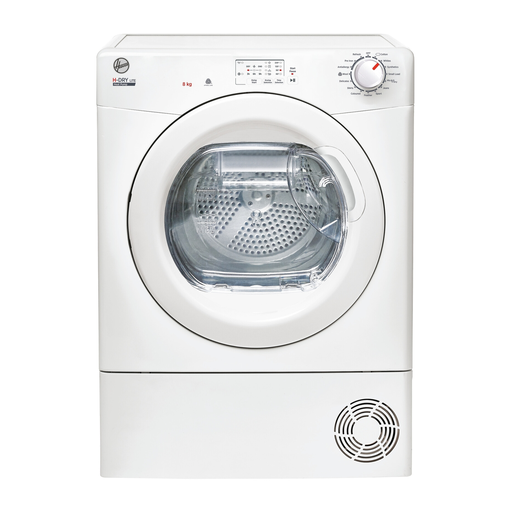 No image available
This 8 kg model’s product name identifies Sensor Dry, NFC One Touch and Aquavision. Check the exact fabric programmes, installation measurements and care instructions before deciding whether it fits your kit and space.
 No image available
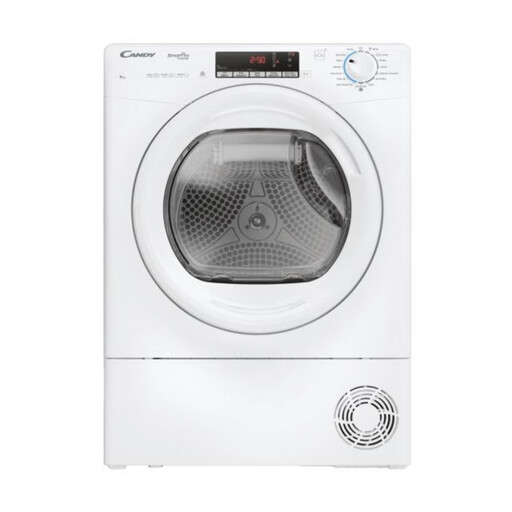
Consider its 9 kg capacity alongside your typical load size. The product name lists Sensor Dry, Wi-Fi connectivity and an A+++ rating; confirm the current model information and a programme appropriate to your garments.
No. The individual care label determines whether tumble drying is permitted; follow its temperature indication when selecting a programme, rather than judging by fibre content alone.
It is a useful starting point if lower-temperature drying and energy use matter to you, provided the exact model has a programme compatible with the garment labels. Electrical Safety First describes heat-pump dryers as more energy-efficient than condenser and vented types, while AEG notes that their cycles can take longer.
A vented dryer needs an external vent route; a condenser or heat-pump dryer does not need that wall hole, according to Electrical Safety First. All types still need space and installation conditions that meet their model instructions.
Clean lint and fluff from the filter and around the door after each use, then follow the model’s instructions for other cleaning. Keeping the filter clear helps maintain airflow.
Check the exact model and serial number against official recall information and the manufacturer’s instructions. The Office for Product Safety and Standards warned in December 2025 that owners of certain affected integrated heat-pump dryers must stop using them until the required repair is complete.