Renters treating occasional cushion spills
If tea, food or pet-related marks are usually small and local, a compact spot cleaner may fit your storage space. Check that the cover permits wet treatment and that you can dry it fully afterwards.


Choose a spot cleaner for local spills only when the exact cushion cover’s care instructions permit the proposed wet treatment. If a removable cover needs a labelled wash or professional care, follow that method instead; if spot cleaning is suitable, weigh cupboard space and expected cleaning frequency against tank capacity, and allow the cover to dry fully.
If tea, food or pet-related marks are usually small and local, a compact spot cleaner may fit your storage space. Check that the cover permits wet treatment and that you can dry it fully afterwards.
When a cover can be removed and its label specifies a domestic wash, decide whether a permitted local treatment is enough or the whole cover needs washing. GINETEX explains that care symbols identify the appropriate textile treatment.
Frequent marks across several cushions make tank capacity and suitable tools more relevant, provided the machine and its accessories can be stored and the fabrics permit the treatment.
Start with the cover’s care label: neither a larger tank nor a steam mode makes an unsuitable fabric safe to wet-clean. Then choose a format for the size and frequency of the jobs you actually expect.
Consider it: For occasional local spills when wet treatment is permitted and storage is tight.
Accept: Check the individual machine’s tank capacity before relying on it for several covers.
Consider it: For recurring marks across multiple suitable cushions or other upholstery, where refilling and emptying would interrupt the job.
Accept: Allow room to store the machine and any accessories; capacity does not establish fabric compatibility.
Consider it: Only if the fabric’s instructions permit the relevant heat and wet treatment and you want a steam mode alongside washing.
Accept: A steam setting is not permission to treat a delicate or dry-clean-only cover.
Consider it: When the label calls for machine washing, hand washing or professional care, particularly if the whole cover needs cleaning.
Accept: Removing and drying the cover takes planning, but a spot cleaner does not replace its specified care process.
| Concern | What to check | Who this matters to |
|---|---|---|
| Fabric compatibility | Read the exact cover’s care and drying symbols. Confirm that the proposed wet or heat treatment is permitted before choosing a machine. | If damaging a removable cover is my main worry, its permitted care method decides whether I buy a spot cleaner at all. Around 45% of consumers put fabric compatibility first. |
| Storage and occasional use | Measure your cupboard space and compare machine dimensions with the small jobs you expect to tackle. | With little storage and only occasional marks to treat, I need a machine I can realistically keep between uses. Roughly 28% of consumers prioritise that practical fit. |
| Capacity for recurring marks | Compare clean- and dirty-water tank capacities and check which upholstery tools are included. | When several suitable cushions need regular attention, stopping to refill or empty a tank matters more to me. About 27% of consumers make capacity and tools their primary concern. |
A machine’s intended use does not override the care instructions for an individual fabric. Wet treatment may be inappropriate even when the cover is removable.
Check the sewn-in label before buying or cleaning, then follow the treatment it permits.
A format that suits one local spill may mean more filling and emptying when several cushions need attention.
Compare both tank capacities against your expected jobs, as well as the space available to store the machine.
Wandsworth Council explains that excess moisture combined with poor ventilation contributes to condensation and mould.
Extract moisture thoroughly and allow the cover and cushion to dry fully with ventilation. Report recurring damp or mould to your landlord or agent rather than treating it solely as a cleaning task.
An unsuitable treatment can worsen visible damage and make the condition of landlord-owned furnishings harder to establish.
Photograph the mark and care label, check the inventory and keep a record of any permitted cleaning method used. If a deduction is disputed, check the process applicable to your tenancy.
Vax offers SpotWash machines aimed at targeted spills on upholstery and other surfaces.
BISSELL is relevant if you are comparing conventional upholstery spot cleaning with a steam-capable format.
Rug Doctor is another carpet-cleaner brand to consider when comparing cleaning formats; Which? includes it among brands covered in its testing.
These machines are options for local upholstery cleaning where the exact cushion cover permits wet treatment. The choice includes corded spot cleaners and a cordless model; check fabric care and storage fit before choosing between them.
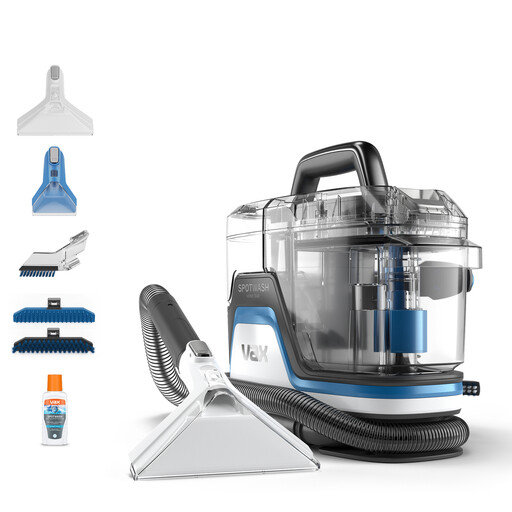 No image available
Consider it for a local upholstery spill if the cover permits wet extraction. Check the machine’s dimensions against your cupboard space and allow the cover to dry fully.
 No image available
Consider it for targeted upholstery marks where wet cleaning is allowed. Check that it fits your storage space, and do not use it on a delicate or water-sensitive cover unless that treatment is permitted.
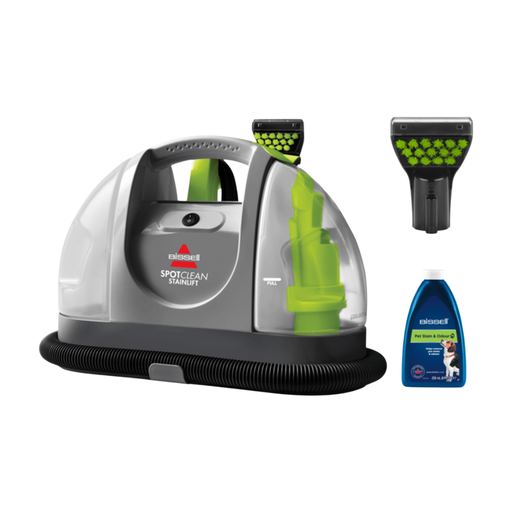 No image available
Its portable spot-cleaner format is relevant to local marks on upholstery that permits wet treatment. The product name identifies HeatWave Technology; check the cover’s care label rather than assuming that feature makes a fabric suitable.
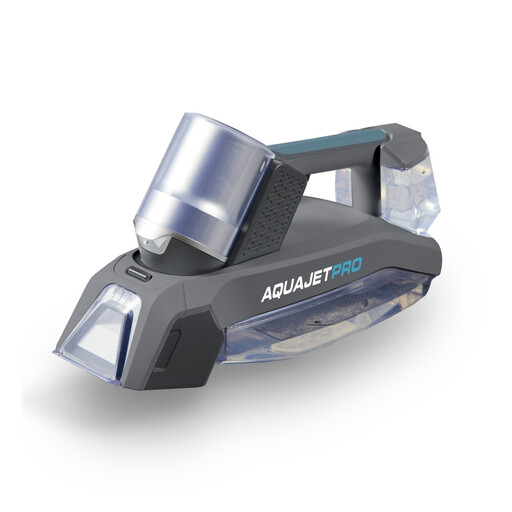 No image available
Consider the cordless format for an occasional local mark on a cover that permits wet cleaning. Its stated 0.3 L clean-water and 0.4 L dirty-water tanks warrant consideration if you expect to clean several cushions in one session.
No. Check the exact cover’s care label before applying moisture or heat. GINETEX explains that care symbols identify permitted treatments; a removable cover is not automatically suitable for wet extraction or steam.
Not necessarily. A permitted local treatment may be enough for a small mark, while widespread soiling calls for considering the cover’s labelled wash process. A spot cleaner does not replace those instructions.
Only when the cover’s instructions permit the relevant heat and wet treatment. BISSELL describes a steam refresh mode for the SpotClean HydroSteam, but that machine feature cannot establish compatibility with your fabric.
Allow the cover and cushion to dry fully with ventilation before putting them back together. Wandsworth Council notes that excess indoor moisture and poor ventilation can contribute to condensation and mould; report persistent damp or mould to your landlord or agent.
No automatic outcome follows from the stain alone; the circumstances and rules applicable to your tenancy matter. Keep the inventory, photographs and care instructions, and check the relevant dispute process if a deduction is proposed.