Renters with water-compatible upholstered chairs
You want to treat food or drink marks on dining-chair seats whose instructions permit water-based cleaning. If the chairs are supplied with the flat, you also need a record of their condition.


Choose a water-extraction spot cleaner only if the dining-chair fabric’s care instructions permit water-based cleaning. For occasional marks on one or two suitable seats, focus on storage space and an upholstery-capable tool; consider a larger-capacity machine if you will regularly clean several seats or other upholstered surfaces. If the chair belongs to your landlord, record its condition before and after treatment.
You want to treat food or drink marks on dining-chair seats whose instructions permit water-based cleaning. If the chairs are supplied with the flat, you also need a record of their condition.
You expect occasional chair-seat spills but have limited cupboard space. A manageable storage footprint and a tool suited to upholstery matter more to you than capacity for longer cleaning sessions.
You plan to clean several suitable seats, or to use the machine on other compatible upholstery. Tank capacity and the supplied tools therefore deserve closer attention alongside storage space.
Check the chair’s fabric instructions before comparing machines. Then match the tool, storage footprint and tank capacity to how much cleaning you expect to do.
| Concern | What to check | Who this matters to |
|---|---|---|
| Fabric compatibility | Find the chair’s care label or manufacturer instructions and confirm that water-based cleaning is permitted before choosing an upholstery tool. | If I cannot establish how the chair should be cleaned, I would rather pause than risk treating it with the wrong method. Around 36% of consumers put fabric compatibility first. |
| Storage and setup | Check the machine’s dimensions against your cupboard and confirm which upholstery-capable tool is supplied. | For an occasional spill, I want a machine I can store and bring out without taking over the flat. Roughly 29% of consumers prioritise compact storage and straightforward setup. |
| Repeated cleaning | Compare stated tank capacities and the included upholstery tools if you expect to clean several seats or other suitable surfaces. | Cleaning several seats regularly makes interruptions and tool coverage more important to me than the smallest possible machine. Around 21% of consumers make cleaning capacity their main concern. |
| Rental-condition records | For supplied furniture, check the inventory and photograph the chair, care label and stain before and after any permitted treatment. | If the chair came with the flat, I need to distinguish an existing mark from the result of my cleaning attempt. Roughly 14% of consumers put condition records and damage avoidance first. |
The chair’s instructions, not the cleaner’s upholstery description, determine whether water extraction is appropriate. Plumbs explains that a W care code permits water-based cleaning, while S calls for water-free solvent cleaning.
Locate the label before buying or using a machine. If it is missing or does not clearly permit water-based cleaning, ask the chair manufacturer which method to use instead of experimenting on the fabric.
A machine that fits the cupboard may still be a poor match for repeated cleaning if its tank capacity or supplied tool does not suit the number and shape of the seats.
For occasional marks, check storage dimensions and the included upholstery tool. For several seats, also compare tank capacity and tool coverage.
Cleaning-product instructions vary by model. The Rug Doctor Portable Spot Cleaner manual, for example, warns against shampoo and foaming detergents.
Check the exact machine’s approved formula and dilution instructions before filling it. Follow its water-temperature and maintenance directions too.
A cleaning attempt does not, by itself, establish which marks were already present or whether treatment changed the fabric. The Deposit Protection Service’s dispute guidance considers documented condition and fair wear and tear.
Compare the chair with the check-in inventory, photograph the stain and care label, and speak to the landlord or agent before attempting a treatment that could damage supplied furniture.
Its SpotWash range includes compact models for targeted cleaning and a Max Duo model positioned for larger cleaning sessions.
Its Portable Spot Cleaner is described by Rug Doctor for use on compatible upholstery and fabric as well as carpets and vehicle interiors.
The Little Green range includes portable carpet-and-upholstery cleaners that may be relevant to small, water-compatible chair-seat stains.
These portable spot cleaners are options to examine for dining-chair upholstery that permits water-based cleaning. Before choosing one, check that its supplied tool reaches your seat’s edges and seams and that you have room to store the machine.
 No image available
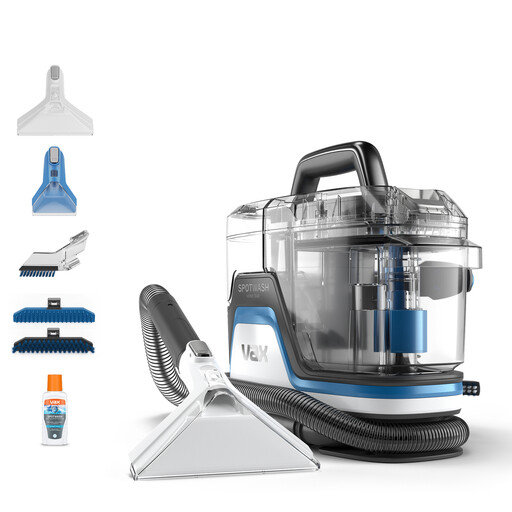
Consider this model if you want a spot cleaner for suitable chair seats and have limited cupboard space. VAX describes the SpotWash Home Duo as just over 30 cm tall and designed for upholstery. Check which supplied tool suits your chair’s seat and seams.
 No image available
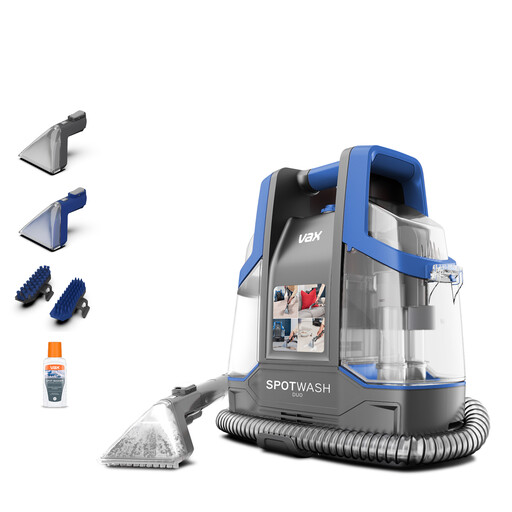
Consider this model for occasional marks on one or two water-compatible chair seats. VAX positions the SpotWash Duo for everyday spills and describes dedicated cleaning tools. Confirm the supplied tool and approved solution for this exact model before use.
 No image available
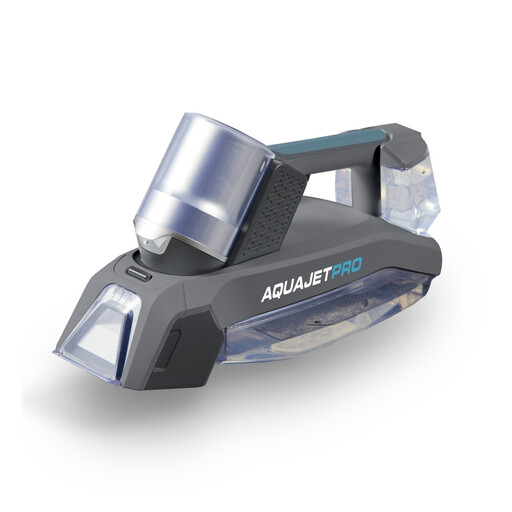
Consider this cordless model for small, targeted cleaning where access to a socket is inconvenient. Its stated clean-water tank is 0.3 L and its dirty-water tank is 0.4 L; check whether its supplied attachments suit chair-seat edges and seams before buying.
 No image available
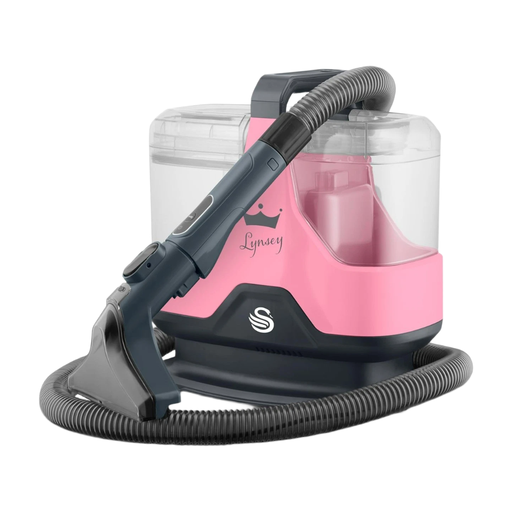
Consider this model if a flexible hose would help you reach suitable chair seats. Its named features include interchangeable heads and an automatic stop function; confirm which head is intended for upholstery and check the space needed to store the machine.
No: use water extraction only when the chair’s instructions permit water-based cleaning. Plumbs explains that W indicates water-based cleaning, while S requires water-free solvents. If the label is absent or unclear, ask the chair manufacturer which cleaning method is suitable.
Yes: compare the chair with the check-in inventory and photograph its existing condition before any permitted cleaning. Keep a record of the stain and the result; the Deposit Protection Service’s dispute guidance considers evidence of condition and fair wear and tear.
Follow the instructions for your exact machine and use an approved cleaning formula. The Rug Doctor Portable Spot Cleaner manual says to unplug the machine before filling, emptying or cleaning it and warns against shampoo and foaming detergents. BISSELL’s Little Green guidance specifies compatible formulas and a maximum water temperature of 60°C for the covered models.
No result should be assumed: a water-compatible chair may still have pre-existing wear, discolouration or damage that cleaning will not resolve. Record its starting condition and follow the fabric instructions rather than repeatedly treating a stubborn mark.