Hosts dealing with food and drink spills
If marks are usually confined to a fabric chair seat, a portable spot cleaner is worth considering instead of a full-size carpet washer—but only for upholstery approved for wet cleaning.


Choose a spot cleaner for holiday-let dining chairs only if the chair maker permits water-based upholstery cleaning and a hidden-area test shows no colour or texture change. A compact corded cleaner suits repeated small spills where sockets are accessible; cordless operation helps with awkward access but limits session length. For set-in marks, a motorised-tool model is another option, provided its permitted-use terms suit the holiday-let operation.
If marks are usually confined to a fabric chair seat, a portable spot cleaner is worth considering instead of a full-size carpet washer—but only for upholstery approved for wet cleaning.
You need to remove a localised mark, empty the machine and leave enough time for the seat to dry completely before it is used again.
Establish the chair maker’s care instructions before choosing a water-extraction machine. As Furniture Village advises in its fabric care guidance, test a specialist cleaner on a hidden area first.
Check whether the chair can be wet-cleaned before comparing tools, power access and upkeep. If its care instructions prohibit wet cleaning, choose a fabric-specific method or professional upholstery cleaning instead.
| Concern | What to check | Who this matters to |
|---|---|---|
| Fabric compatibility | Read the chair maker’s care instructions and test the intended cleaning method on a hidden area. | If the upholstery is unfamiliar or delicate, I would rather establish that wet cleaning is safe than remove a mark quickly. Around 36% of consumers put fabric compatibility first. |
| Drying and turnaround | Check how the tool extracts liquid and follow its guidance on controlled spraying; allow the seat to dry fully. | When a chair is needed for the next guests, a damp seat delays its return to use. For around 29% of consumers, drying and turnaround are the primary concern. |
| Repeated-use care | Look for tanks and tools you can empty and clean after use, and check the approved solution and its handling instructions. | With frequent spill clean-ups, I need a routine for dirty water, attachments and cleaning chemicals as well as the stain itself. Around 21% of consumers prioritise that upkeep. |
| Storage and access | Measure cupboard space and check mains access or the cordless model’s stated runtime. | If sockets are awkward or storage is tight, getting the cleaner to the chair and putting it away may shape my choice. Around 14% of consumers put access and storage first. |
A cleaner’s upholstery label does not override the chair maker’s care instructions. Wet cleaning can change the appearance of an unsuitable fabric.
Identify the chair’s cleaning method before buying, then test the intended method on a concealed area. Do not use water extraction if the chair instructions prohibit it.
Rug Doctor’s operating guidance warns against over-wetting and calls for extracting dirty water. A seat that remains damp cannot be put straight back into use.
Apply solution sparingly, make extraction passes and allow the seat to dry completely before guests use it.
Extra drying time can delay the chair’s return to use.
Rug Doctor describes its Portable Spot Cleaner as suitable for domestic household use only. That condition matters if the machine will be used for a paid holiday-let cleaning operation.
Ask the manufacturer or seller to confirm the permitted-use and warranty terms for your arrangement before purchasing.
The Health and Safety Executive notes that cleaning products can present skin, breathing and eye hazards, depending on the substance and exposure.
Use the cleaner’s approved solution at its stated dilution. For cleaning carried out as work, use the product’s safety data sheet to inform a task-specific chemical risk assessment and follow the resulting handling and storage controls.
VAX offers compact corded SpotWash models and a cordless upholstery spot-cleaning option.
Its Portable Spot Cleaner is presented for localised cleaning of upholstery and other fabric surfaces.
The SpotClean family includes portable models such as the SpotClean Pro 1558E.
These portable corded and cordless cleaners are choices for localised marks on dining-chair upholstery that permits water-based cleaning. Compare their access, tools and upkeep against your chairs and cleaning routine; leave every cleaned seat to dry before use.
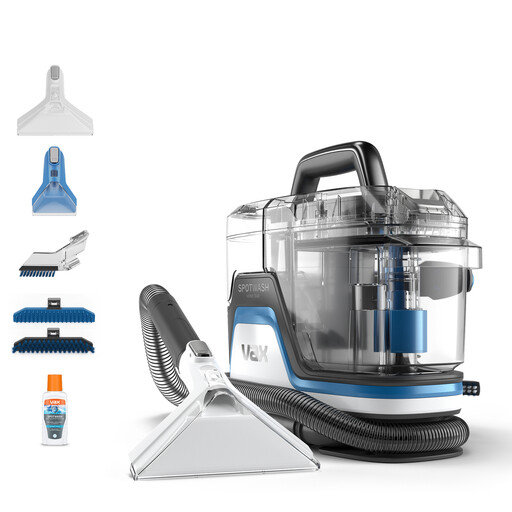 No image available
Consider this model for localised cleaning across several suitable chair seats where mains power is accessible.
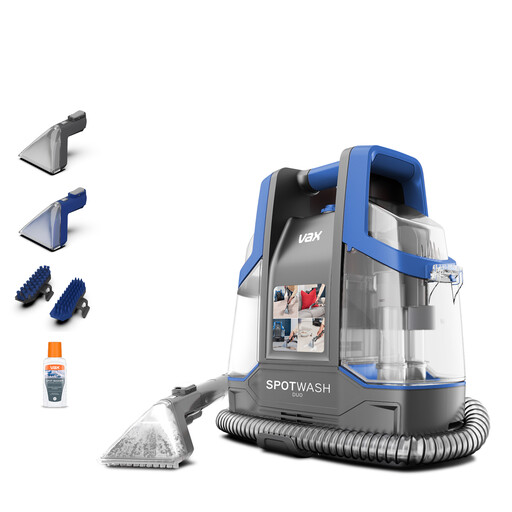 No image available
This corded model suits a cleaning routine that calls for separate tools for everyday spills and messier jobs.
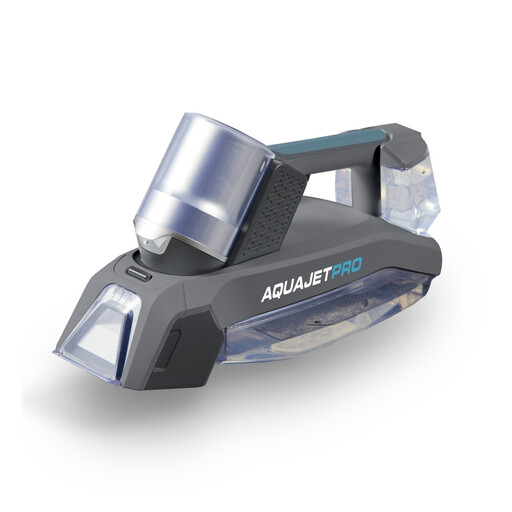 No image available
Consider cordless access for a suitable chair in a location where a cable would be awkward; check whether the working time meets your cleaning routine.
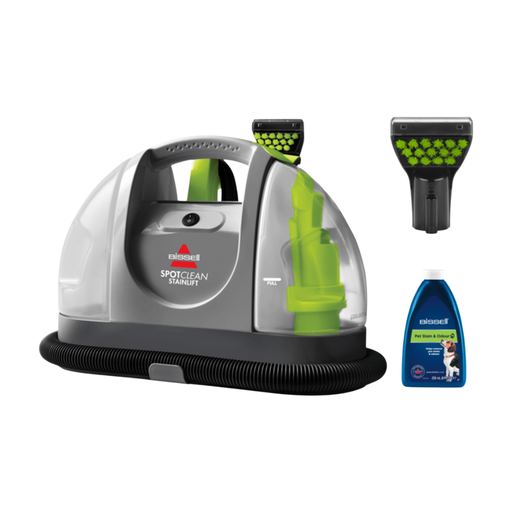 No image available
This portable cleaner is a choice to assess for localised marks on chair upholstery approved for water-based cleaning.
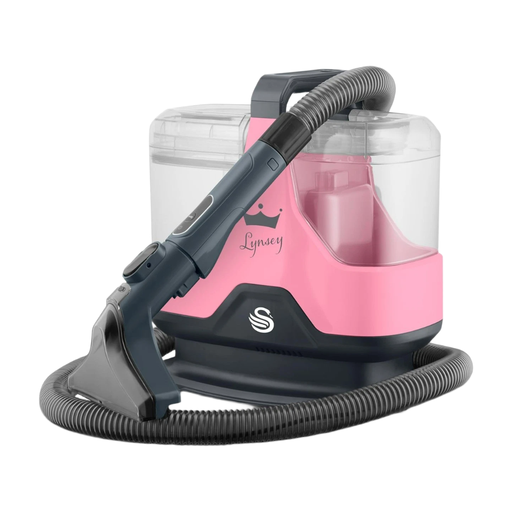 No image available
Consider the hose and interchangeable heads when assessing how to reach suitable chair seats.
No. Follow the chair maker’s care instructions and test the intended cleaner on a hidden area before treating a visible seat. Furniture Village advises checking manufacturer instructions before using specialist upholstery cleaners and recommends professional cleaning for oil- or grease-based stains.
Use solution sparingly and make extraction passes rather than repeatedly soaking the mark. Rug Doctor’s operating instructions warn against over-wetting; allow the chair to dry completely before it is used again.
Check that the solution is approved for the machine and suitable for the chair fabric, then follow its dilution and handling instructions. For cleaning carried out as work, the Health and Safety Executive says a safety data sheet helps inform a chemical risk assessment but does not replace one.