Holiday-let hosts managing quick changeovers
Hosts dealing with visible marks between stays who need to leave enough time for a cleaned headboard to dry before guests arrive. Sykes Cottages identifies cleaning as part of the changeover work.


For occasional marks on a holiday-let fabric headboard, consider a portable upholstery spot cleaner only if the headboard’s care instructions permit water-based cleaning. Match the hand tool, moisture recovery and tank capacity to the work and the time available before the next guest; a steam mode also requires confirmation that the fabric tolerates heat.
Hosts dealing with visible marks between stays who need to leave enough time for a cleaned headboard to dry before guests arrive. Sykes Cottages identifies cleaning as part of the changeover work.
Owners whose main concern is avoiding water marks, colour loss or heat damage. Which? advises checking upholstery-care instructions before using a water-based method and drying cleaned fabric promptly.
People cleaning multiple upholstered items in one session who need to weigh tank capacity, tool cleaning and storage alongside access to the headboard’s edges.
Check the headboard’s care instructions before comparing machines. Once water-based cleaning is permitted, the choice is between a compact tool for isolated marks, greater capacity for repeated work and, only where heat is suitable, a steam-capable option.
Consider it: For isolated marks when storage space and access around edges matter.
Trade-off: A compact machine is aimed at spot work, not repeated cleaning across large upholstered areas.
Consider it: When several rooms or upholstered items make tank interruptions an important part of the job.
Trade-off: Check whether the larger machine and its tools will fit your storage space and the headboards you clean.
Consider it: Only if the headboard’s instructions permit moisture and heat and you want a refresh mode alongside washing.
Trade-off: BISSELL describes a steam refresh mode for its SpotClean HydroSteam, but having that mode does not establish that a particular headboard can withstand it.
| Concern | What to check | Who this matters to |
|---|---|---|
| Fabric compatibility | Check for W or WS care instructions before water extraction, then test the proposed solution on a concealed area. Do not treat S or X as approval for water cleaning. | If I might mark a guest-facing headboard, protecting the fabric comes before tackling the stain. Around 42% of consumers would make fabric compatibility their primary concern. |
| Drying and changeovers | Check how the tool recovers moisture and whether the tanks suit the number of items cleaned in one session; allow time for ventilation. | When the next arrival is close, I need the cleaned headboard to dry before the room is used. Drying and turnaround would come first for around 33% of consumers. |
| Storage and upkeep | Check cupboard space, tank access and the instructions for cleaning the hose and tools after use. | If equipment has to go straight back into limited storage, I need to empty and clean it without a lengthy routine. Roughly 25% of consumers would prioritise storage and upkeep. |
Which? distinguishes water-cleanable upholstery from fabrics requiring other care. Using water extraction on a headboard marked S or X could damage its finish.
Find the headboard’s care label or manufacturer instructions. If they permit water-based cleaning, test the intended solution on a concealed area before treating a visible panel.
Rug Doctor advises against overwetting, while Which? recommends drying upholstery promptly to reduce the risk of a mildew smell.
Use controlled passes, recover moisture before applying more solution, and leave enough time for ventilation before guests arrive.
Tools and dirty-water components still need attention after use, regardless of a machine’s treatment or cleaning features.
Empty and rinse components as directed in the manual, clean the hose and tools, and check which cleaning formula the manufacturer specifies. BISSELL warns that non-BISSELL formula can damage components in its SpotClean HydroSteam.
Rug Doctor describes its Portable Spot Cleaner as suitable for domestic household use only. That description should not be taken as confirmation of cover for a business setting.
Check the intended-use and warranty terms for the exact machine before buying it for holiday-let work.
VAX offers compact SpotWash Home and Duo models for spot cleaning, alongside larger-capacity Max models for more frequent work.
Its Portable Spot Cleaner is presented for spot cleaning carpets and upholstery with a hand tool.
The SpotClean HydroSteam range offers steam and water-and-formula modes for buyers considering a refresh function as well as spot washing.
These spot cleaners relate to targeted upholstery cleaning rather than steam cleaning. For any model, confirm that the headboard permits water-based cleaning and that the supplied tool suits its fabric and construction.
 No image available
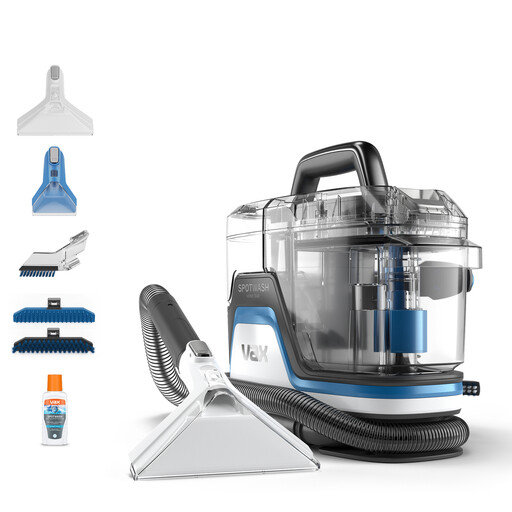
Consider this compact model for isolated marks and awkward headboard edges: VAX describes it for upholstery refreshes and lists a crevice tool. Check that the supplied tool is appropriate for the particular headboard before use.
 No image available
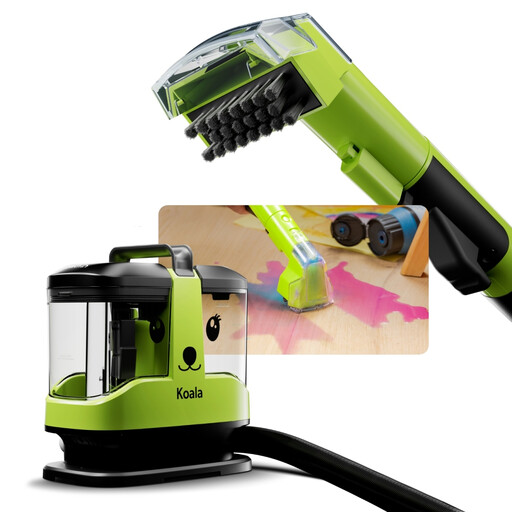
Consider this model if access along seams and edges is important; check that the supplied tools suit the headboard before buying. Its stated 450W rating does not establish how dry the upholstery will be after cleaning, so allow time for ventilation.
 No image available
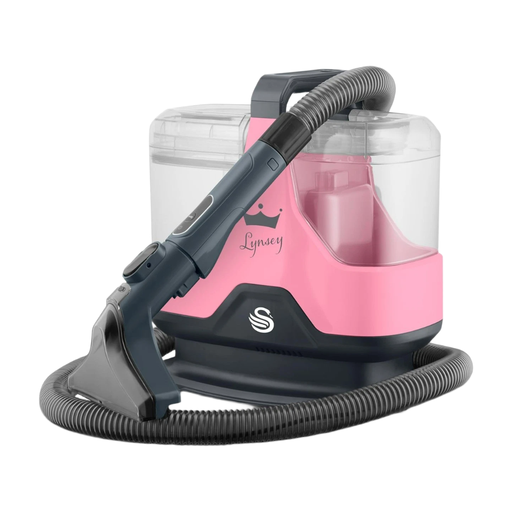
The flexible hose may help when positioning the cleaner around a headboard. The product title lists interchangeable heads and an auto-stopping function; confirm which head is intended for the upholstery before buying.
 No image available
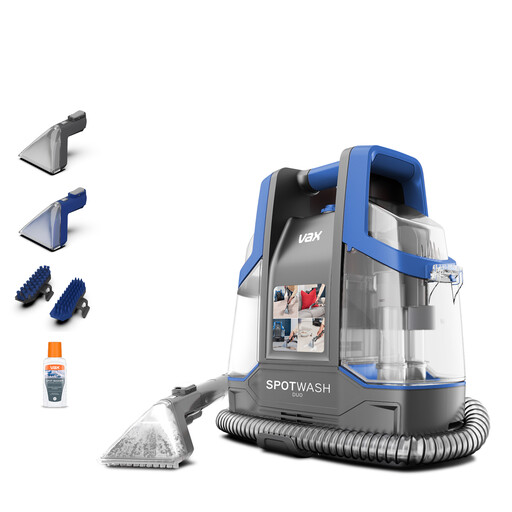
Consider this portable spot cleaner for permitted water-safe upholstery where access to tight areas matters. Do not use it on delicate or water-sensitive fabric; if cleaning several rooms, check the tank capacities and supplied tools against the work planned.
 No image available
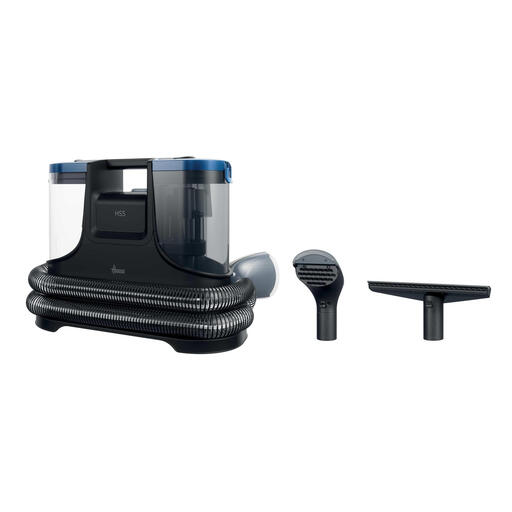
Consider this compact model for headboard work only after checking the HS500 manual: its upholstery-cleaning description and liquid pick-up safety wording need to be reconciled before using it for extraction. The title lists two accessories; check which, if either, suits the headboard.
No. Which? describes W upholstery as permitting water-based solutions and X as vacuum-only; check the headboard’s own instructions for its care code, and do not use water extraction on S or X fabric. Where water-based cleaning is permitted, test the intended solution on a concealed area first.
Avoid overwetting, recover moisture with controlled passes and leave time for the fabric to air dry with ventilation. Which? advises prompt drying to reduce the risk of a mildew smell; do not assume direct heat is suitable for the headboard.
No: the headboard’s care instructions still determine whether heat and moisture are appropriate. BISSELL describes Steam Mode as a way to refresh upholstery on its SpotClean HydroSteam, but that does not establish suitability for a particular fabric; confirm the instructions and test a concealed area before using a permitted method.
Choose the cleaning method from the headboard’s care instructions, not from a general holiday-let rule. Check obligations for the property’s nation and local authority separately from the machine’s intended-use and warranty terms.