Small-flat stain responders
If you deal with occasional marks on seat pads, a portable cleaner may suit the job better than setting up a full-size carpet washer. Check its stored dimensions, including where the hose and tools will go.


Choose a spot cleaner only after confirming that the seat-pad care instructions permit water-based cleaning. For occasional marks in a small flat, prioritise a machine you can store and clean easily; if you regularly clean several pads, tank capacity and hose reach may matter more. A steam mode needs separate permission from the furniture maker because a water-safe fabric is not automatically suitable for heat.
If you deal with occasional marks on seat pads, a portable cleaner may suit the job better than setting up a full-size carpet washer. Check its stored dimensions, including where the hose and tools will go.
If your seat pads permit water-based cleaning, look for an upholstery attachment that lets you treat a localised area and extract the dirty liquid. Check the care instructions before choosing the cleaning method.
If you clean up repeatedly, consider how you will keep everyday and dirtier jobs separate, then rinse the tank, tools and hose after use. A cleaning function can help with the hose but does not replace those tasks.
Start with the seat-pad care label: storage, reach and cleaning features matter only if the fabric permits the method you intend to use.
| Concern | Buying check | Who this matters to |
|---|---|---|
| Fabric compatibility | Read the care label before choosing wet extraction. Furniture Instore’s upholstery guidance says S-coded fabric must not be wetted; test a permitted method on a hidden area. | If my seat pads could be damaged by moisture, I need to settle which cleaning method the fabric allows before choosing a machine. Around 44% of consumers put fabric compatibility first. |
| Storage and reach | Measure the storage space with room for tools, then compare machine dimensions, weight and hose reach with your seating layout. | When cupboard space is tight, I need to know the cleaner will fit away between spills and reach the seat from a usable socket. For around 33% of consumers, storage and handling take priority. |
| Repeated clean-ups | Check the upholstery tool, clean and dirty tank arrangement, and how the hose and tools are rinsed after use. | If spills or pet messes happen often, I want a clean-up routine I can repeat without leaving debris in the machine. Post-use maintenance is the primary concern for around 23% of consumers. |
An upholstery tool does not make a cleaning method suitable for every fabric. Furniture Instore’s care guidance says S-coded upholstery must not be wetted; its X code calls for vacuuming or light brushing rather than liquid cleaning.
Find the seat-pad or furniture care label before buying a wet cleaner. For a permitted water-based method, test an inconspicuous area and stop if the colour, texture or finish changes.
A cleaner that will not fit its storage space or reach the chair comfortably may be awkward to use. Kärcher UK lists the SE 3 Compact Home at 450 × 225 × 260 mm and 4.3 kg without accessories: dimensions and carrying weight are separate checks from cleaning features.
Measure the cupboard, allow room for the hose and tools, and check reach from the socket you intend to use.
Dirty liquid and debris can remain in tanks, tools and hoses. Vax UK Support describes a hose-flushing function on its SpotWash model, but machine cleaning functions do not remove the need to follow the after-use instructions.
Check how the model is emptied and rinsed, and which cleaning formula its instructions require.
Allow time to rinse the parts after use and to replace cleaning formula when needed.
Vax’s SpotWash range includes corded models intended for local carpet and upholstery cleaning, with different tools across the range.
The SE 3 Compact Home is an upholstery-capable spray-extraction option for people who also plan to clean other small textile areas.
BISSELL’s SpotClean HydroSteam 3689E is relevant if you are considering a model with separate wash and steam-capable modes.
These portable spot cleaners offer different storage, tool and corded or cordless choices for local upholstery cleaning. Use wet extraction only where the seat-pad care instructions permit it, and compare each model with your available space and cleaning routine.
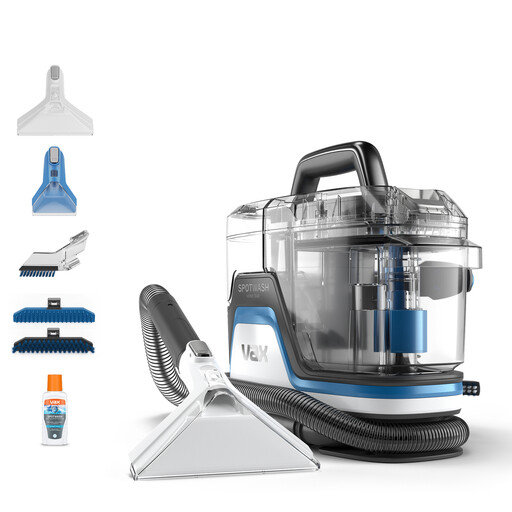 No image available
Consider this model for occasional local marks when cupboard storage is a priority. Measure your available space, including room for the tools, before choosing it.
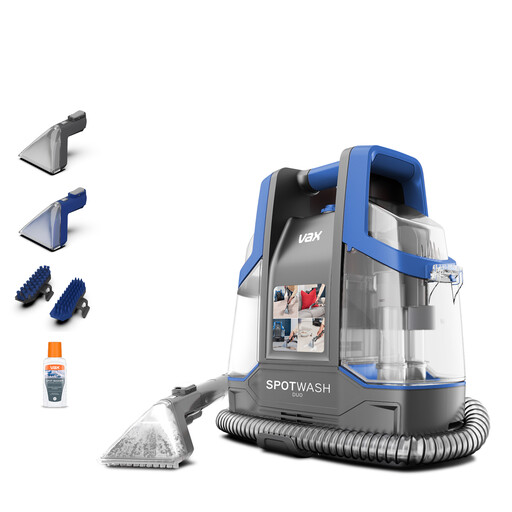 No image available
Consider this corded option if you expect both everyday marks and dirtier spills. Check the exact model’s included tools, cupboard fit and reach from your intended socket.
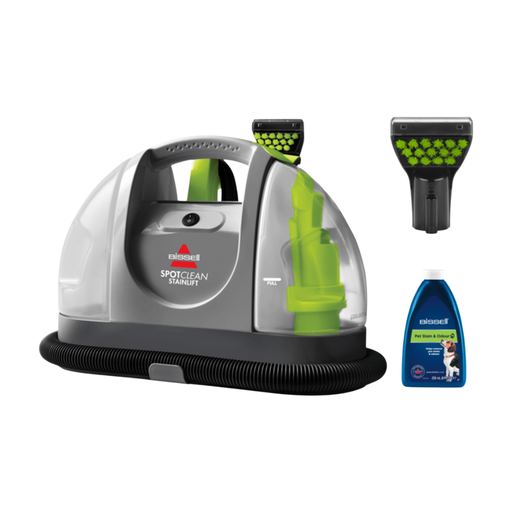 No image available
This portable upholstery-cleaning option is worth considering for targeted marks. Its product name identifies HeatWave Technology, but that does not establish suitability for a particular fabric; follow the seat-pad care instructions and check hose reach for your room.
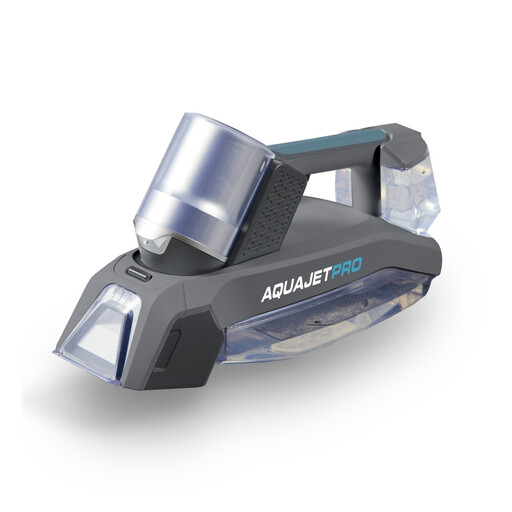 No image available
Consider cordless cleaning if moving between seats without a trailing cable matters to you. The named variant has a 0.3 L clean tank and a 0.4 L dirty tank; consider whether those capacities suit the number of pads you plan to clean in one session.
 No image available
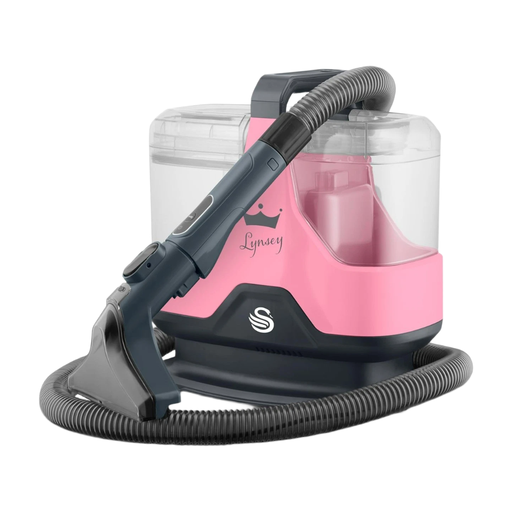
The flexible hose and interchangeable heads make this a model to compare if your seating is awkward to reach. Check its stored dimensions and confirm the tank arrangement against your cleaning plans.
No. Check the pad or furniture care label before using liquid. Furniture Instore’s upholstery guidance distinguishes W-coded fabric for water-based cleaning from S-coded fabric, which must not be wetted; SW allows either method subject to testing, while X calls for vacuuming or light brushing only. Test a permitted method on a hidden area first.
No: permission for water-based cleaning does not automatically cover steam and heat. Use a steam mode only if the furniture maker permits it. BISSELL UK Support describes a steam mode for upholstery on its SpotClean HydroSteam, but the machine’s intended use does not override the seat pad’s care instructions.
Follow the pad’s care instructions and the cleaner’s directions, starting with a hidden-area test. Remove loose debris, use the appropriate upholstery attachment, avoid repeated soaking and give the fabric time to dry as instructed. Observe the machine’s fill limits and cleaning-formula directions.
Empty the dirty-water tank and rinse the parts specified in your model’s instructions, including tools or hoses where applicable. Vax UK Support describes a hose self-clean function on its SpotWash model, while Kärcher UK describes a system-cleaning function for the SE 3 Compact Home; neither removes the need for the remaining after-use care.
Check your local authority’s or retailer’s electrical-equipment collection options rather than assuming the appliance belongs in ordinary household rubbish. GOV.UK explains that the UK’s waste electrical and electronic equipment rules are intended to support recovery, reuse and recycling.