Move-in sofa refreshers
You have a few marks or generally grubby cushions after the move and want to clean approved upholstery without taking on a full-size carpet washer.


Check the sofa’s care instructions before choosing a water-based spot cleaner: a cushion marked for solvent-only cleaning is not a wet-extraction job. For cushions that permit water-based cleaning, a compact machine with suitable tools makes sense for a few panels and seams; larger tanks are worth considering when the move has left several textile areas to clean, provided you have room to store the machine.
You have a few marks or generally grubby cushions after the move and want to clean approved upholstery without taking on a full-size carpet washer.
You need to clean approved cushions but also want to assess whether separate tools would help with seams or dirtier jobs.
You are not yet sure whether the cushion can tolerate water. Its care label or the sofa maker’s instructions must settle that question before machine features matter.
Start with the permitted cleaning method, then match tank capacity, tools and storage needs to the amount of upholstery you intend to clean.
| Concern | What to check | Who this matters to |
|---|---|---|
| Fabric compatibility | Find the cushion or sofa care instructions. Plumbs explains that a W code permits water-based cleaning, while an S code calls for water-free solvent cleaning. | If the cleaning code is unclear, I need to establish whether water is permitted before choosing a machine. Around 33% of consumers put fabric compatibility first. |
| Capacity for a wider clean | Compare clean- and dirty-water tank sizes and the stated upholstery use; consider the space needed to store the machine. | When cushions are only part of a clean that also includes stairs or car interiors, I want fewer interruptions to refill and empty tanks. Capacity is the main concern for around 27% of consumers. |
| Tools for awkward areas | Check which upholstery, crevice or separate messy-clean-up tools are included, rather than assuming every attachment comes with a model. | Seams and dirtier incidents make the tool selection more important to me than a larger tank. Around 20% of consumers chiefly prioritise tools for those jobs. |
| Storage and upkeep | Check the machine’s dimensions and how its tanks and hose are emptied and cleaned after use. | If I will use the cleaner only occasionally, it needs a practical place to live and a manageable clean-up routine. Storage and upkeep come first for around 20% of consumers. |
A machine described as suitable for upholstery is not permission to use water on every fabric. Plumbs’ care-code guidance distinguishes water-cleanable fabric from solvent-only fabric and cautions against excessive moisture around delicate cushioning.
Check the cushion and sofa instructions before using water or solution. If they specify solvent-only care, do not use a wet spot cleaner on that fabric.
A larger-tank machine may suit several areas, while a compact model with the right attachments may be easier to use and store for a few cushions. A manufacturer’s suction comparison is not a cross-brand result.
List the areas you will clean, then check tank sizes, included upholstery tools and storage dimensions against that job.
Rug Doctor’s portable cleaner manual rules out shampoo and foaming detergent; BISSELL’s guidance recommends its specified formula for component protection. The permitted product depends on the machine.
Follow the model’s solution instructions, clean the dirty-water tank and hose as directed, and unplug the machine before filling, emptying or cleaning it.
A model requiring a specified cleaning solution also creates an ongoing consumable need.
Vax offers compact SpotWash Duo and Home Duo models alongside the larger-tank SpotWash Max Duo for upholstery and other targeted cleaning.
Rug Doctor presents its portable spot cleaner for upholstery as well as carpets, stairs and vehicle interiors.
BISSELL’s SpotClean line includes HydroSteam, a model with separate steam and water-and-formula wash modes.
These are spot cleaners to consider for targeted work on cushions whose care instructions permit water-based cleaning. Match each model’s stated features to the number of areas you plan to clean; the sofa’s care instructions still determine whether wet cleaning is appropriate.
 No image available
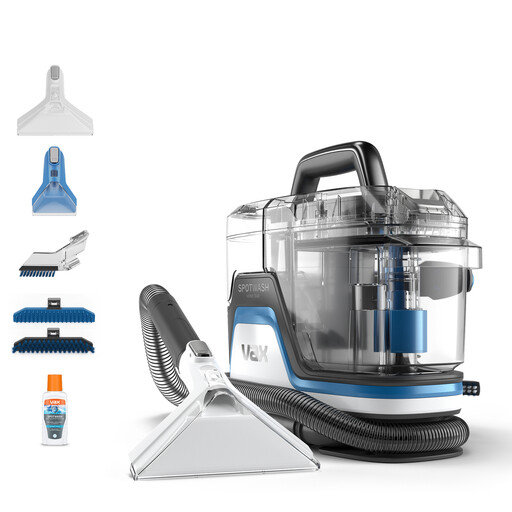
Consider this model for a few water-cleanable cushions, particularly if you need to work across panels and around seams. Vax describes upholstery and crevice tools for the Home Duo; check the included attachments and follow the cushion’s care instructions before cleaning.
 No image available
This is a model to assess if cushion marks are part of a clean-up that also involves pet-related messes. Check which attachments and cleaning solutions are specified for this variant, and use water on the cushions only where their care instructions permit it.
 No image available
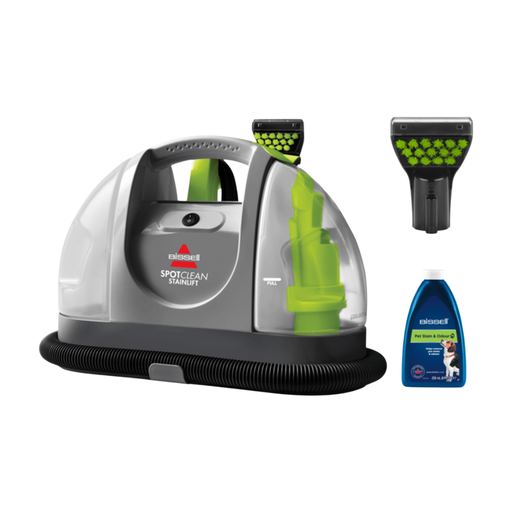
Consider this portable spot cleaner for targeted cushion marks when the fabric permits water-based cleaning. Check its included tools and formula instructions for the job; the HeatWave Technology name does not establish that heat is suitable for your sofa.
 No image available
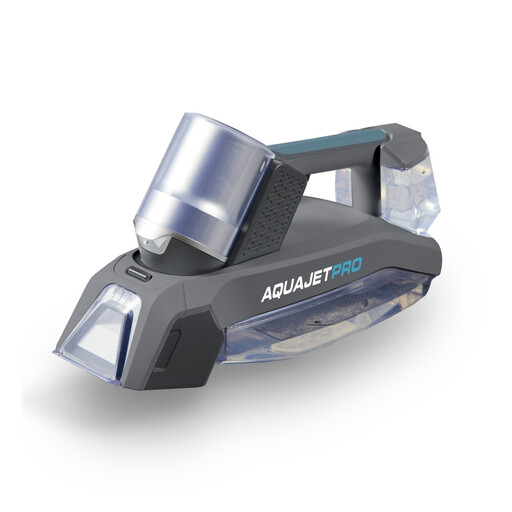
Consider this cordless model if you are cleaning small, permitted areas away from a convenient socket. Its stated tanks are 0.3 L clean and 0.4 L dirty, so assess those capacities against the number of cushions you intend to clean.
 No image available
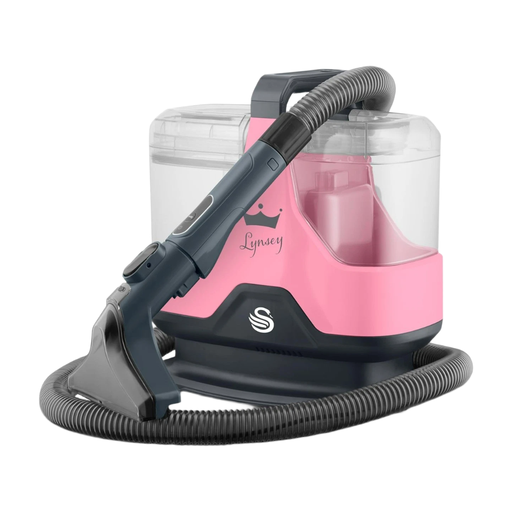
This 600 W model has a flexible hose and interchangeable heads to assess for targeted cleaning on permitted upholstery. Check which head the instructions specify for cushion fabric rather than assuming every supplied head suits it.
No. Plumbs explains that a W care code permits water-based cleaning, while an S code calls for water-free solvent cleaning. If you cannot find the code, consult the sofa maker’s instructions before applying water or solution.
Look on the cushions and the sofa beneath them, including around the back or beside an armrest. If the label is missing, check the furniture maker’s cleaning instructions for the specific sofa and cushion construction.
No. Vax describes a hose self-clean function on its SpotWash Duo, but the dirty-water tank still needs emptying and cleaning as directed. Follow your own model’s manual, and unplug it before filling, emptying or cleaning it; Rug Doctor gives that unplugging instruction for its portable cleaner.
Choose a model supplied for use in Great Britain and follow its electrical and cleaning instructions. GOV.UK’s guidance on the Electrical Equipment (Safety) Regulations 2016 describes obligations for electrical equipment placed on the Great Britain market; a product title or upholstery claim alone does not establish the suitability of a particular machine or cleaning method.