Owners of water-cleanable upholstered cushions
Your cover or upholstered cushion has a maker’s label permitting water-based cleaning, and you want to treat a local spill rather than clean the whole item.


Choose a water-extraction spot cleaner only if the cushion-cover or furniture maker permits water-based cleaning; a removable cover is not necessarily suitable. For occasional spills, consider a compact machine with a suitable upholstery tool; cordless access matters more if a lead would get in the way, but runtime and bundle contents then need checking. For stubborn local stains, a suitable tool does not remove the need to test colourfastness and avoid soaking the fabric.
Your cover or upholstered cushion has a maker’s label permitting water-based cleaning, and you want to treat a local spill rather than clean the whole item.
Accidental messes happen often enough that upholstery-suitable tools and a practical clean-up routine matter when you choose a machine.
You need to consider where the cleaner will be kept and whether a lead can reach the cushion. A cordless option also makes runtime and battery-bundle contents important.
Start with the exact cover’s care instructions. Once water-based cleaning is permitted, choose around the messes you expect to tackle and where you will use and store the cleaner.
| Concern | What to check | Who this matters to |
|---|---|---|
| Cover compatibility | Read the cover or furniture maker’s label before choosing a water-based cleaner. If the instructions are unclear, ask the maker or seller. | I need to know whether water can be used on my cover before looking at machines. Roughly 40% of consumers would put that compatibility question first. |
| Recurring messes | Check which supplied tools are intended for upholstery and how the model’s instructions say to use and clean them. | With repeated spills or pet messes, I want tools that suit the cushion and the clean-up task; around 30% of consumers would make mess handling their primary concern. |
| Access and storage | Check the machine’s dimensions and reach where stated. For cordless models, check runtime and whether the battery and charger are included. | If storage is tight or the cushion is hard to reach from a socket, I need a cleaner I can retrieve and use where the spill occurs. About 30% of consumers would prioritise access and storage. |
Removing a cover does not establish that it tolerates water and cleaning solution. BISSELL UK Support permits its specified machine on upholstery marked W or WS; that instruction does not override the care label for your particular cover.
Check the cover or furniture maker’s instructions first. Do not use water-based spot cleaning on a cover marked S or dry-clean-only; if the instructions are unclear, ask the maker or seller.
Even on a water-cleanable fabric, excess moisture can lengthen drying. Rug Doctor UK advises checking colourfastness and avoiding over-wetting when using its Portable Spot Cleaner.
Test a discreet area, follow the model’s spray-and-extract instructions and avoid repeatedly saturating the same patch.
Rug Doctor UK’s Portable Spot Cleaner manual prohibits shampoo and foaming detergent; it instructs users to switch off and empty the recovery tank if foam appears.
Use the solution and dilution method permitted for your exact machine, and read the solution’s use and hazard instructions before filling the tank.
VAX UK lists a ONEPWR SpotWash Home Cordless bare unit without a battery or charger.
Check the contents of the exact listing, as well as the stated runtime, before choosing a cordless bundle.
VAX’s UK spot-cleaner range includes compact machines for upholstery and a ONEPWR cordless option.
Rug Doctor UK specifies its Portable Spot Cleaner for upholstery and other fabric surfaces.
BISSELL UK Support provides upholstery care-code guidance for its water-based SpotClean HydroSteam machine.
These spot cleaners relate to targeted upholstery cleaning. Consider them only for cushion covers or upholstered cushions whose maker permits water-based cleaning, then compare the model and tools with the spills and cleaning location you have in mind.
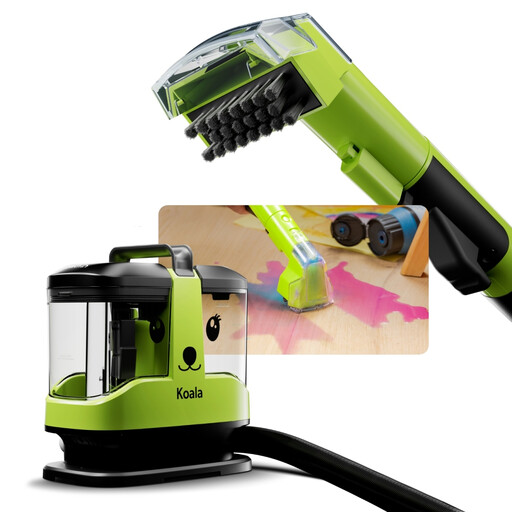 No image available
Consider this model for a local spill only if your cover permits water-based upholstery cleaning. Its name specifies a 450 W rating; check the power arrangement and reach against the place you plan to clean.
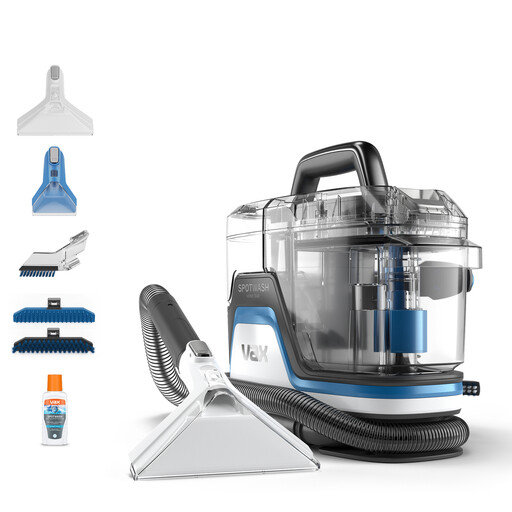 No image available
Consider this compact corded model for spills on water-cleanable upholstered cushions. Check that its supplied tools suit the cushion area and follow the cover maker’s instructions before cleaning.
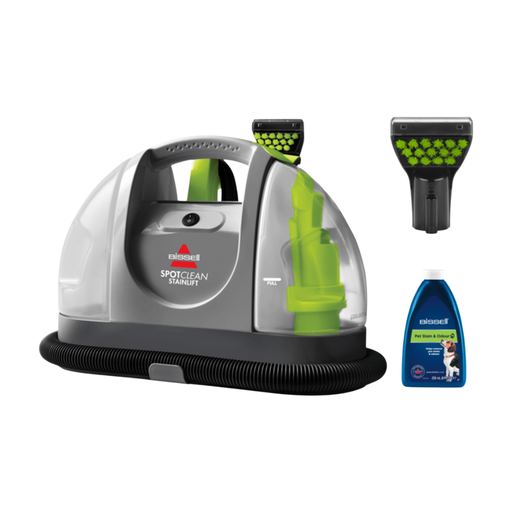 No image available
Consider targeted spot cleaning only where your cover’s instructions permit water-based treatment. Before using a supplied tool on the cushion, check that it is appropriate for that surface and test colourfastness.
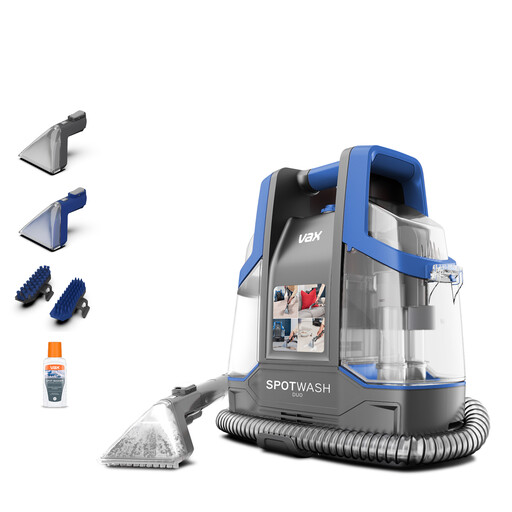 No image available
For suitable upholstery that gets both ordinary spills and messier clean-ups, this model offers the separate tools described by VAX UK Support. The manufacturer specifies a 400 W rating; confirm that the machine’s reach works for your cleaning location.
 No image available
Consider this variant if you need to address local messes on water-cleanable upholstery. Check that the tool you intend to use suits the cushion fabric, and follow the cover maker’s and machine maker’s cleaning instructions.
No. Removability does not establish that a cover tolerates water-based cleaning. Check the cover or furniture maker’s label first: BISSELL UK Support permits use of its specified machine on upholstery marked W or WS, but do not wet-clean an S-coded or dry-clean-only cover. If the instructions are unclear, ask the maker or seller.
Test colourfastness and follow the machine’s instructions for applying solution and extracting it without saturating the fabric. Rug Doctor UK specifically advises a colourfastness check and warns against over-wetting when using its Portable Spot Cleaner; the cover maker’s care instructions still apply.
Check the exact bundle rather than assuming it does. VAX UK describes a removable battery on its standard ONEPWR SpotWash Home Cordless listing, while its separate bare-unit listing explicitly excludes the battery and charger.
Check an appropriate electrical-equipment collection route rather than putting it in ordinary waste. The UK government identifies the Waste Electrical and Electronic Equipment Regulations 2013, as amended, as the framework underpinning electrical-equipment waste arrangements; your retailer or local authority can advise on the collection options available to you.