Small-flat chair-seat owners
You have upholstered dining chairs that can be wet-cleaned, limited cupboard space and occasional food or drink spills. A full-size carpet washer would be more machine than you need for the chair-seat task.


For occasional spills on dining-chair upholstery that permits water-based cleaning, choose a spot cleaner with an upholstery-suitable hand tool and a machine you can store and empty comfortably. If you also clean rugs, stairs or repeated pet messes, separate tools or a larger machine may be worth considering; neither route makes an S- or X-labelled chair suitable for wet cleaning.
You have upholstered dining chairs that can be wet-cleaned, limited cupboard space and occasional food or drink spills. A full-size carpet washer would be more machine than you need for the chair-seat task.
You also want to treat suitable sofas, rugs, stairs or car upholstery. The supplied tools and the routine for emptying and cleaning the machine matter alongside its fit around a chair.
You expect dirtier jobs as well as everyday upholstery spills and would find it useful to keep the tools for those jobs separate.
Check the chair’s cleaning instructions before comparing machines. Once wet cleaning is permitted, weigh cupboard fit and the supplied upholstery tool against how often you will tackle messes beyond the dining seats.
| Concern | What to check | Who this matters to |
|---|---|---|
| Fabric and moisture | Check the chair’s care instructions and the suitability of both the machine and solution. Plan to extract moisture without soaking the padding. | If my chair’s fabric or padding could be affected by water, I need to settle whether wet cleaning is allowed before choosing a machine. Around 33% of consumers put fabric compatibility and moisture control first. |
| Cupboard storage | Measure the intended space and compare the machine’s stored dimensions, including its hose and tools. | When cupboard space is tight, I need a cleaner I can put away after the tanks and tools have dried. Roughly 27% of consumers make storage their primary concern. |
| Everyday spills | Confirm that the supplied hand tool is intended for upholstery and that filling and emptying the machine suits occasional use. | For an ordinary food or drink spill, I want to treat a small area without bringing out a full-size cleaner. Around 27% of consumers prioritise that everyday chair-seat task. |
| Dirtier repeat jobs | Check whether separate tools and the tank-cleaning routine suit the other surfaces you expect to clean. | If muddy or pet-related messes recur, I need to keep those jobs distinct from routine chair upholstery cleaning. Roughly 13% of consumers put repeated, dirtier cleaning first. |
A machine may be intended for upholstery while a particular chair fabric is unsuitable for water-based cleaning. The National Carpet Cleaners Association says an X care code means vacuum only, with no liquid cleaning.
Read the chair maker’s care instructions before purchase and use. Do not wet-clean S- or X-labelled upholstery; if instructions are unavailable, seek professional advice before applying liquid.
Excess moisture can reach the padding and prolong drying; rubbing can also affect the fabric surface.
Blot a fresh spill, follow the fabric and machine instructions, extract moisture from the treated area and let the seat dry fully before using it.
A machine intended for more frequent, varied cleaning does not make a chair fabric wet-cleanable. For occasional seat spills, its stored footprint and cleaning routine may matter more than capacity.
Measure your cupboard and compare the actual machine dimensions, supplied tool and post-use care before deciding how much capacity you need.
Rug Doctor’s Portable Spot Cleaner manual prohibits shampoo and foaming detergent and specifies cleaning products intended for that appliance.
Follow the exact machine manual for solution and dilution, then check separately that the product is suitable for the chair fabric.
VAX’s SpotWash models offer distinct routes for limited storage and for separating everyday upholstery work from dirtier jobs.
Its Portable Spot Cleaner is a route for buyers planning to clean suitable chair upholstery as well as stairs or vehicle interiors.
BISSELL’s SpotClean range is relevant if you are considering a portable cleaner, including a cordless option for access around chairs.
These portable spot cleaners are relevant to local cleaning of dining-chair upholstery where the chair’s instructions permit wet cleaning. Compare their stated configurations and the room you have for storage; a cleaner’s upholstery use does not establish compatibility with your chair fabric.
 No image available
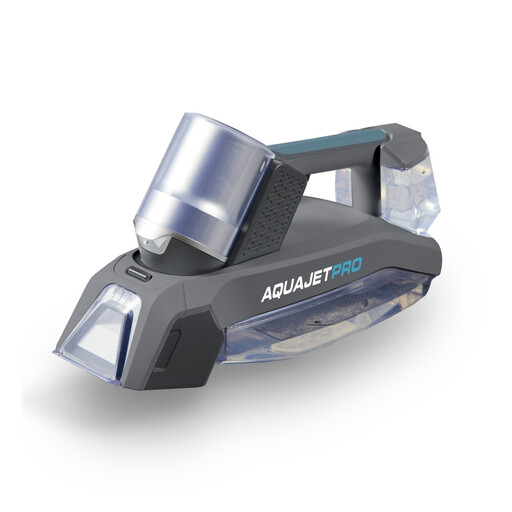
Consider this cordless model for local spills on chair upholstery that permits wet cleaning. Its named configuration has a rotating brush bar, an 80 W motor, a 0.3 L clean-water tank and a 0.4 L dirty-water tank. Consider whether those tank sizes suit the number of seats you plan to clean.
 No image available
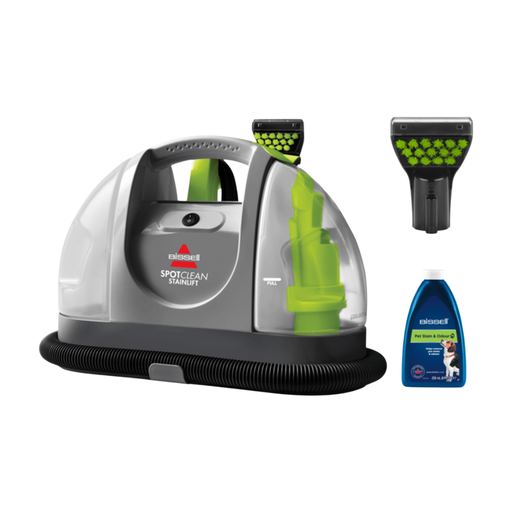
Consider this portable spot cleaner if you also expect to treat suitable carpets, stairs or car upholstery. The product name identifies HeatWave Technology; confirm the supplied upholstery tool and stored dimensions for the 2067E before choosing it for chair seats in a small flat.
 No image available
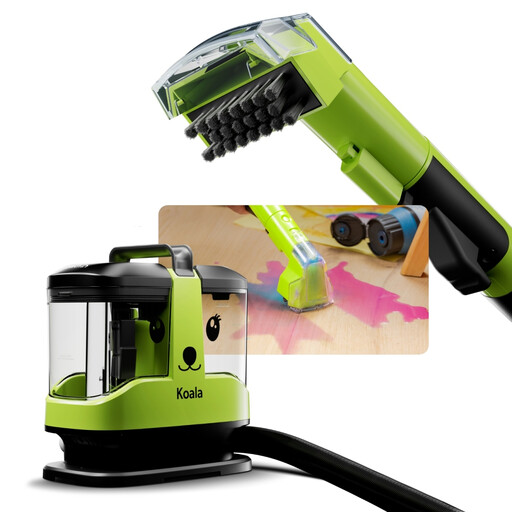
Consider this model for local treatment of wet-cleanable chair seats and other suitable upholstery. The named SC02 configuration is rated at 450 W; check its actual stored footprint against your cupboard before buying.
 No image available
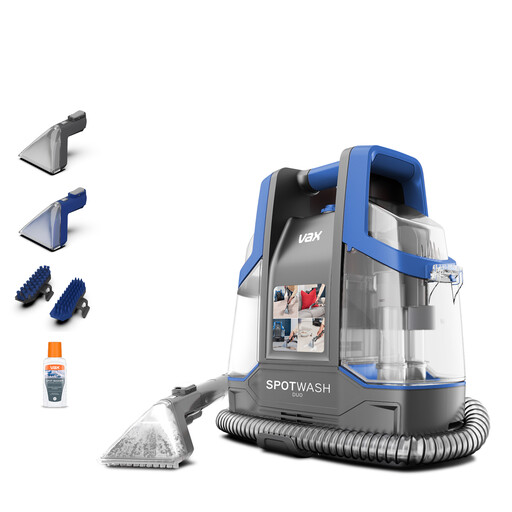
Consider the Duo if you expect both ordinary chair-seat spills and dirtier jobs. VAX UK describes separate everyday and messy-clean-up tools and a multi-purpose attachment intended for upholstery. Confirm the CDCW-CSXA package contents and stored dimensions, and use it only on chair fabric that permits wet cleaning.
 No image available
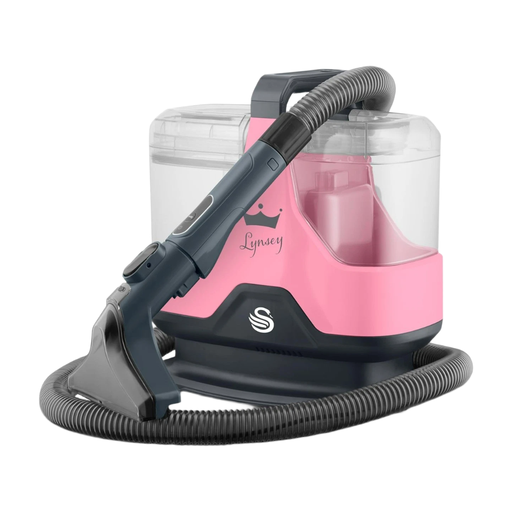
Consider this model if you want to use a flexible hose for suitable upholstery as well as other local cleaning jobs. Its named configuration includes interchangeable heads and a 600 W rating. Confirm which supplied head is intended for chair upholstery and whether the machine fits your storage space.
No: check the chair maker’s care instructions before using water or solution. The National Carpet Cleaners Association describes W as allowing water-based cleaning, W/S as allowing either water- or solvent-based cleaning, S as solvent-based only and X as vacuum only; seek professional advice if you cannot establish how the fabric should be cleaned.
Blot it with a clean, dry cloth rather than rubbing it. If the chair permits wet cleaning, follow its care instructions and avoid saturating the seat padding; allow the seat to dry fully before use.
Choose a model whose supplied tool is intended for upholstery, rather than assuming a carpet tool suits a chair seat. VAX UK describes the SpotWash Duo’s multi-purpose attachment as intended for upholstery, while Rug Doctor describes an upholstery hand tool for its Portable Spot Cleaner; check what comes with the exact model you buy.
Not without checking the exact machine instructions. Rug Doctor’s Portable Spot Cleaner manual prohibits shampoo and foaming detergent and specifies products intended for that appliance; the chair fabric must also permit the chosen cleaning solution.
Check the product’s appropriate marking, instructions and manufacturer details. GOV.UK’s product-safety advice calls for appropriate marking and the manufacturer’s name and address on relevant products; if you use an extension lead, Electrical Safety First advises against overloading it or connecting extension leads together.