What to check when buying
For a protein-focused tuna meal with less sugar, choose the portion and format you will use, then compare the exact products’ nutrition panels. Treat sugars in sauces and other additions as a separate part of the meal.
| Concern |
What to check |
Who this matters to |
| Protein and sugars |
Compare protein and sugars per 100g, then check drained weight or the amount you intend to eat. |
If tuna is the plain base for a protein-focused meal, I want to know what my portion contributes before adding other ingredients. About 36% of consumers put protein with little labelled sugar first. |
| Salt and ingredients |
Compare salt on the same nutrition basis and read the ingredient list for sauces or seasoning. |
When preparing tuna meals often, keeping track of salt and additions matters even if the tin lists no sugars. Salt and ingredient control comes first for about 29% of consumers. |
| Portion and convenience |
Check whether the product needs draining and whether nutrition is given per 100g or per container. |
For a lunch that needs little preparation, I may favour a no-drain pack but still need to know what one portion contains. Around 21% of consumers make convenience their primary concern. |
| How often to eat tuna |
If pregnant or trying for a baby, follow NHS advice on weekly tuna intake and keep track of cans and steaks. |
For someone planning tuna meals while pregnant or trying for a baby, how often tuna appears in the week takes priority over choosing the lowest-sugar tin. About 14% of consumers place that limit first. |
Joybuy tuna selections
These Joybuy selections include spring-water chunks and no-drain or sunflower-oil formats for comparing plain tuna portions. Check each product’s nutrition basis and packing medium rather than treating the tins as interchangeable.
 Image unavailable
John West Tuna Chunks in Springwater, 4 x 125g
For several meals built around plain spring-water tuna. The listed nutrition is 25g protein, 0g sugars and 0.80g salt per 100g drained; check the tin’s drained weight to work out a per-can portion. Contains fish.
Joybuy
 Image unavailable
John West No Drain Tuna Chunks in Springwater, 3 x 100g
For a spring-water portion you do not need to drain. The listed values per 100g are 27g protein, 0g sugars and 0.80g salt; check the pack for the amount in the portion you eat. Contains fish.
Joybuy
 Image unavailable
John West No Drain Tuna Chunks in Sunflower Oil, 3 x 100g
For a no-drain format if sunflower oil suits the meal you are making. The listed values are 27g protein, 0g sugars and 0.90g salt per 100g, rather than per can. The product information warns that some bones may remain.
Joybuy
 Image unavailable
Morrisons Fad Free Tuna Chunks in Spring Water, 145g
For a single tin of plain spring-water chunks. The listed ingredients are skipjack tuna, spring water and salt; the nutrition panel gives 24.9g protein, 0g sugars and 1.0g salt per 100g drained. Check drained weight for the amount in the tin. Contains fish.
Joybuy
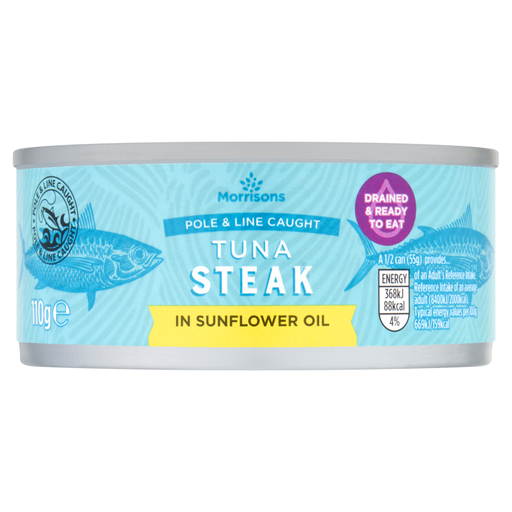 Image unavailable
Morrisons Drained Tuna Steaks with Sunflower Oil, 110g
For tuna steaks packed with sunflower oil rather than spring water. The panel lists 25.4g protein, nil sugars and 0.9g salt per 100g; confirm the serving and drained-weight basis on the tin before comparing portions. Contains fish.
Joybuy
Questions about choosing tuna
Should I look for “reduced sugar” on plain tinned tuna?
Compare the sugars value on the exact tin instead of relying on that phrase. The cited plain spring-water and brine products list 0g or less than 0.5g sugars per 100g, but their protein, salt and portion sizes differ.
How do I work out the protein in one tin?
Start with the label’s per-can figure if it provides one; otherwise use the protein per 100g with the weight of tuna you will eat. Tesco’s cited small spring-water can, for example, has a 56g drained weight and lists 13.9g protein per can.
Will spring-water tuna keep a finished meal low in sugar?
Not by itself: check the other ingredients or the finished meal’s label. Tesco Real Food lists 22g sugars per serving for its sesame-soy tuna mayo sweet-potato recipe, even though plain tuna can list 0g sugars.
What should I do with tuna left after opening a tin?
Follow the storage instructions on the exact pack, including any direction to move unused tuna into another container, refrigerate it and use it within the stated time. Instructions can differ between products.
How often can I eat tuna if I am pregnant or trying for a baby?
The NHS advises no more than four cans of tuna or two tuna steaks a week for people who are pregnant or trying for a baby because tuna can contain pollutants, including mercury. A tin’s sugar or protein value does not change that guidance.


