Cooks making family-size trays
If you want squash cubes in one uncrowded layer while preparing other food, start with the cottage’s fitted fan oven if it has a suitable tray and is available to use.


Use the cottage’s fitted fan oven if it is available and you need a full tray or are cooking several dishes. A plug-in countertop oven is an option only where there is suitable worktop space and a suitable wall socket; for smaller batches, consider an air-fryer oven if its usable cooking area lets you spread the squash without crowding.
If you want squash cubes in one uncrowded layer while preparing other food, start with the cottage’s fitted fan oven if it has a suitable tray and is available to use.
A countertop oven may provide another cooking cavity when the fitted oven is unavailable. Before bringing one, check the worktop space, required clearances and wall socket.
An air-fryer oven is worth considering when you cook smaller portions and want a compact hot-air appliance. Check that the tray or basket can hold the squash without crowding.
Choose it when: The cottage has a working oven and you need a full tray or are cooking alongside other dishes.
Bear in mind: You depend on the oven controls and trays available at the property.
Choose it when: Fitted-oven access is limited and the cottage has a suitable place and wall socket for a plug-in appliance.
Bear in mind: A compact tray may mean cooking squash in batches.
Choose it when: You mainly cook smaller portions and want air-fry, roast or bake functions in one countertop appliance.
Bear in mind: Its cooking area may limit how much cubed squash you can spread out at once.
| Concern | What to check | Who this matters to |
|---|---|---|
| Room for one layer | Check the supplied tray’s usable dimensions against the amount of squash you plan to roast, not just the oven’s litre capacity. | If I’m cooking for several people, I want room for an uncrowded tray rather than repeated batches; roughly 34% of consumers would put batch capacity first. |
| Safe temporary setup | Check the manufacturer’s clearance and power requirements, available worktop space and a suitable wall socket. | When bringing an oven to a cottage, I need somewhere suitable to place and power it; around 33% of consumers would make temporary setup their main concern. |
| Small-batch roasting | Look for an appropriate hot-air cooking function and adjustable temperature, then check the usable tray or basket area. | For a small portion, I want the cubes spread out so they can brown rather than sit piled up; about 25% of consumers would prioritise compact hot-air roasting. |
| Cleaning and storage | Check which trays or other parts can be removed and follow the model’s cleaning instructions. | After a short stay, I want to clean and put the appliance away without much fuss; roughly 8% of consumers would put upkeep first. |
An oven’s volume does not tell you whether the supplied tray holds your squash cubes in one uncrowded layer. A compact model could require several batches.
Check the usable tray and rack dimensions and the included accessories before comparing other functions.
Electrical Safety First warns that using large appliances together can overload extension leads. A plug-in oven also needs the clearance specified for its model.
Check the appliance’s electrical instructions and the cottage’s wall socket. Do not rely on an overloaded adaptor or daisy-chained extension leads.
Russell Hobbs describes tests involving particular preheating conditions and foods; those results do not establish how long your batch of squash cubes will take.
Use a suitable temperature setting, leave space around the cubes and check their tenderness and browning as they cook.
A built-in oven is for a kitchen that can accommodate its housing and installation requirements, not an appliance to bring along for a short stay.
If you are fitting out a cottage, check the exact model’s installation instructions, housing dimensions and electrical requirements before ordering.
Russell Hobbs offers compact countertop formats: its 22780 Mini Kitchen has a 30L fan-assisted oven, while the Express Mini Oven 26090-56 is a 12.6L convection model.
Ninja positions the DT200UK as a countertop oven with air-fry, roast and bake functions.
Sage describes its Combi Wave 3-in-1 as combining air-fryer, convection-oven and microwave functions.
Bosch’s HHF113BA0B is a 60 × 60 cm built-in oven, relevant when a cottage is being fitted out permanently.
These products represent three different decisions: adding a countertop air-fryer oven, fitting a built-in fan oven to a cottage, or using a basket air fryer for a portion that fits without crowding. Check the cooking area and installation conditions for the route you choose.
 No image available
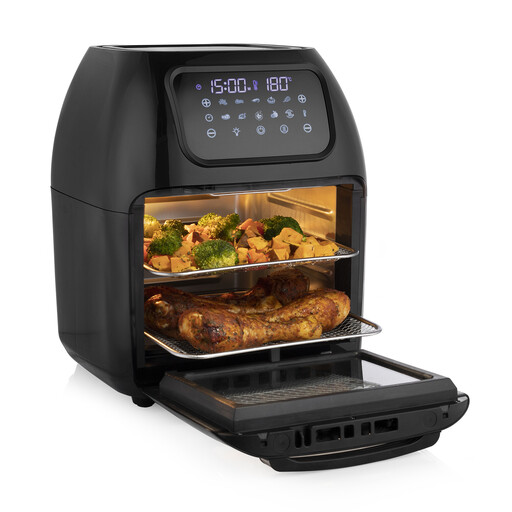
Consider this countertop oven if you want an air-fryer format for roasting squash; check that its tray holds your portion in one layer.
The product name specifies 10L capacity, 1800W power, touch controls, 10 programmes and dishwasher-safe parts. Check worktop clearance and the cottage’s socket arrangement before use.
 No image available
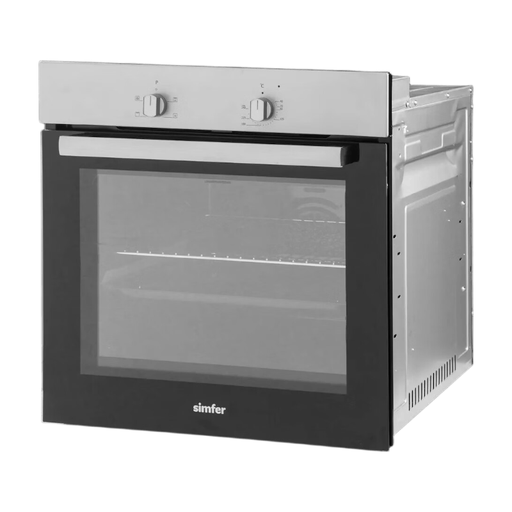
Consider this fan oven if you are equipping a cottage permanently rather than bringing an appliance for a short stay.
It is a built-in model. Check its housing dimensions, installation requirements and the usable area of the cooking tray you intend to use.
 No image available
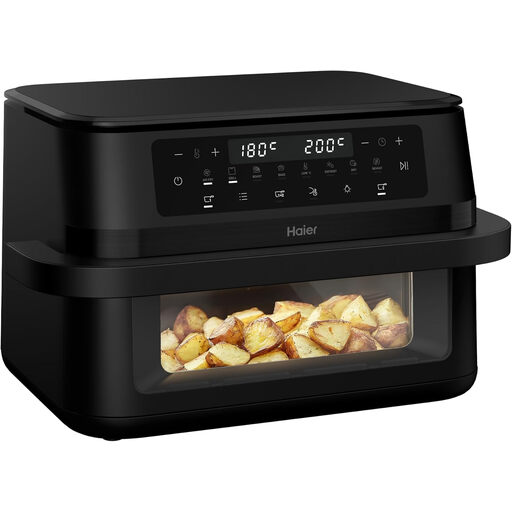
Consider this basket air fryer for a squash portion that can be spread out in its usable basket area; it is not a countertop air-fryer oven with a baking tray.
The product name specifies an 11L capacity, removable divider, viewing window, and roast and bake functions. Check the basket dimensions, ventilation instructions and socket requirements for the cottage.
Simply Veg gives 180°C fan, or 200°C in a conventional oven, for its roasted-squash recipe. Use that as a starting point and check the cubes for tenderness and browning, since their size, tray loading and the oven affect cooking time.
Do not assume an extension lead is suitable for a portable oven. Electrical Safety First warns that large appliances used together can overload one; check the oven’s power instructions and use a suitable wall socket rather than relying on an adaptor or chained extensions.
Check the appliance’s instructions, electrical requirements, plug and fuse, as well as its product marking and manufacturer details. Electrical Safety First provides oven-use guidance, and the Office for Product Safety and Standards advises consumers to look for appropriate marking and manufacturer identification.
A built-in oven needs housing and an electrical installation suitable for that particular model. Follow its installation documentation; Electrical Safety First advises using a qualified electrician for oven fitting and notes that some models require hardwiring.