Workers changing their lunchtime drink
If you usually bring a sugary squash or soft drink, a no-added-sugar option gives you another way to flavour water. The NHS suggests water or sugar-free, diet and no-added-sugar drinks instead of sugary squash.


For a packed lunch, no-added-sugar squash is an option if you want fruit flavour in water instead of sugary squash, but the claim does not mean the prepared drink contains no sugars or sweeteners. Compare nutrition using the stated dilution, then choose a bottle format that fits how you will mix and store it at work; check the current label for ingredients and storage instructions.
If you usually bring a sugary squash or soft drink, a no-added-sugar option gives you another way to flavour water. The NHS suggests water or sugar-free, diet and no-added-sugar drinks instead of sugary squash.
A mini concentrate can go in a bag, while a standard bottle can stay at work. Check the mixing directions: a serving of Robinsons Summer Fruits Mini is stated as 3.3ml in 250ml water, whereas larger concentrates use different ratios.
If sweeteners, sulphites or fruit content affect your choice, read the exact product label alongside its prepared-drink nutrition. Products carrying the same no-added-sugar claim can have different ingredient lists.
Start with the prepared drink, not just the front-of-bottle claim. Then match the dilution and bottle size to where you will make your lunch drink.
| Priority | What to check | Your needs |
|---|---|---|
| Sugars and calories | Read the no-added-sugar claim alongside calories and ‘of which sugars’ for the prepared drink. Compare the same volume and follow each bottle’s dilution instructions. | I want fruit flavour at lunch without assuming ‘no added sugar’ means no sugars. Naturally occurring fruit sugars can still appear in the nutrition panel. |
| Ingredients | Check the current label for sweeteners and sulphites. If vegan suitability matters, look for a declaration on the particular bottle rather than relying on the brand name. | If I avoid a particular ingredient, I need to check the squash I am buying, not just its no-added-sugar wording. |
| Mixing and bottle size | Check the stated serving size and ratio before choosing a mini, standard or high-concentration bottle. Robinsons Orange specifies 1 part concentrate to 4 parts water; Tesco Quadruple Strength Tropical specifies 1 part to 19 parts water, according to their product listings. | A small pack may fit my commute; a larger bottle makes more sense if I can leave it at work and use it regularly. |
| Fruit content | Compare the fruit percentage on the exact product and read the rest of its ingredients. M&S lists 20% fruit for its Orange Squash and 50% fruit juice for Lemon and Lime High Juice. | Fruit content matters to me, but I still want to know what sweeteners or other ingredients are in the drink. |
Fruit ingredients can contribute sugars even when none has been added. Waitrose & Partners lists naturally occurring sugars for its Essential Apple & Blackcurrant squash.
Check ‘of which sugars’ on the nutrition panel for the drink as prepared, as well as the claim on the front.
A figure for a 250ml diluted glass cannot be read as the same serving as a figure for a 300ml glass or 100ml of prepared drink.
Use the labelled dilution and compare nutrition on a common prepared-drink volume where the information allows it.
No-added-sugar products can contain sweeteners or sulphites. The ingredients differ between individual formulations.
Read the label of the bottle you will use, especially if you need to identify sulphites or avoid a particular sweetener.
A high serving count is less useful for one occasional drinker if the bottle is awkward to keep or use after opening.
Choose a size that fits your routine and follow that bottle’s opened-storage instructions.
These examples show why it helps to compare individual formulations rather than treating every squash from a brand or retailer alike.
Its range includes standard concentrates and mini formats for adding to a water bottle.
Its Quadruple Strength Tropical No Added Sugar squash is a high-concentration option for a bottle kept at work.
Sainsbury's lists Robinsons Orange No Added Sugar 1L, providing another product listing to consult for that particular squash.
Two M&S formulations provide different stated fruit percentages for shoppers comparing that feature.
Essential No Added Sugar Apple & Blackcurrant is a double-strength concentrate with a stated serving count.
These concentrates offer no-added-sugar flavour options for a drink mixed for an office lunch. Compare the exact label and dilution instructions before choosing between bottle sizes and flavours.
 No image available
A standard-size orange concentrate for mixing a drink at work. The Robinsons Orange 1L product listings state 3 kcal per 250ml diluted glass and a 1:4 mixing instruction. Check the current bottle for sweeteners, sulphites and storage directions.
 No image available
A 1.5L blackcurrant concentrate to consider if you can keep a bottle at work. Follow its mixing directions and check the prepared-drink nutrition on the current label if calories or sugars will determine your choice.
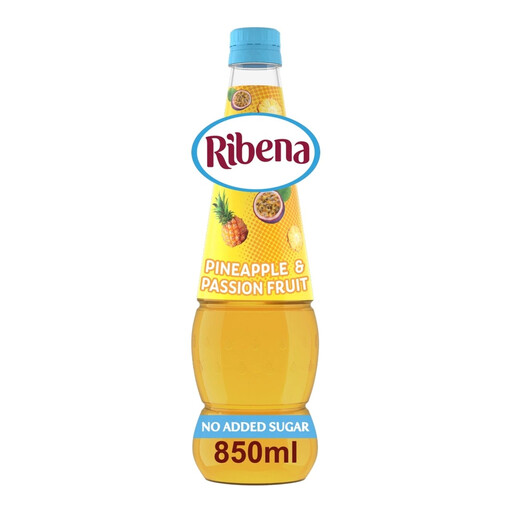 No image available
An 850ml fruit-flavoured concentrate for preparing a lunch drink. If you are comparing it with another squash, check its mixing instructions and nutrition for the prepared drink rather than comparing concentrate values with diluted ones.
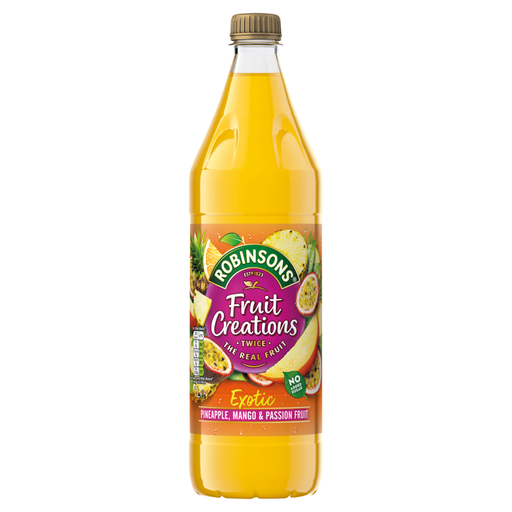 No image available
A 1L concentrate for someone choosing pineapple, mango and passion fruit flavour. Read the current label for its dilution instructions and prepared-drink nutrition before making a serving comparison.
 No image available
A 1L summer-fruit concentrate for mixing a work-lunch drink. Check the bottle’s dilution, prepared-drink nutrition, ingredients and opened-storage instructions for the serving you intend to make.
No. Sugars can occur naturally in fruit ingredients. For example, Waitrose & Partners lists 0.3g sugars per 100ml of prepared Vimto No Added Sugar squash; check the ‘of which sugars’ figure and its stated preparation basis on the product you choose.
Compare the drinks after dilution on the same volume basis. Robinsons Orange listings use a 250ml diluted glass, while Tesco Quadruple Strength Tropical uses a 300ml prepared glass, so their per-glass numbers describe different quantities.
A mini concentrate is designed to be added to a water bottle; Robinsons states a 3.3ml serving of Summer Fruits Mini in 250ml water. A larger bottle may suit a workplace cupboard instead, provided you can measure its stated dilution and follow its storage instructions.
Some do. The Robinsons Orange and Tesco Quadruple Strength Tropical product listings name acesulfame K and sucralose. Read the ingredients on the particular bottle if either sweetener affects your choice.
Read the ingredients on the physical bottle before drinking it. M&S lists sulphites in its Orange Squash and Lemon and Lime High Juice; do not assume another flavour or formulation has the same ingredients.