Hosts comparing sugars per glass
If you are making a jug for a long game, compare the prepared drinks rather than assuming every fruit squash has the same sugars or energy. A no-added-sugar claim does not mean the finished drink contains no sugars.


For a flavoured drink to share, start with a no-added-sugar squash and compare sugars and energy per prepared glass, following the dilution instructions on each bottle. If fruit content matters more to your group, consider a higher-juice squash but check its prepared-drink nutrition rather than assuming the two types are equivalent. Keep water available for guests who do not want squash or need to avoid its ingredients.
If you are making a jug for a long game, compare the prepared drinks rather than assuming every fruit squash has the same sugars or energy. A no-added-sugar claim does not mean the finished drink contains no sugars.
One shared jug may not suit everyone. Check the current bottle for sweeteners, sulphites and any other ingredients relevant to your guests, and leave water available as an alternative.
If the bottle will be used throughout the evening or afterwards, compare the stated dilution and prepared servings. Bottle size alone does not show how many drinks it makes.
Choose what to put on the table first; then compare squash labels using the same prepared-drink basis.
Choose when: You want a flavoured jug and are comparing sugars and energy in the diluted drink.
Bear in mind: Fruit can contribute naturally occurring sugars, and ingredients such as sweeteners or sulphites may matter to guests.
Choose when: A stated higher fruit-juice content is important to your group.
Bear in mind: No added sugar does not establish the sugars per prepared glass; read the nutrition panel.
Choose when: Guests need an unflavoured option or would rather avoid the squash’s ingredients.
Bear in mind: Guests who want a flavoured drink will need a separate option. The NHS describes water as a hydration choice and says lower-sugar or sugar-free drinks can also count towards fluid intake.
| Priority | What to check | Your needs |
|---|---|---|
| Prepared-drink nutrition | Check sugars and energy per diluted serving, preferably on the same 250ml basis. Check whether any figure instead describes undiluted concentrate. | I want to know what is in the glass I will actually pour, not just whether the front label says no added sugar. |
| Fruit content | Read the stated fruit-juice percentage alongside sugars in the prepared drink. A no-added-sugar claim does not rule out naturally occurring sugars. | Fruit content matters to our group, but I do not want to assume a higher-juice bottle has the same sugars per glass as another squash. |
| Dilution and servings | Follow each bottle’s concentrate-to-water directions and compare stated prepared servings. Waitrose & Partners lists 1 part squash to 9 parts water and 60 servings for Essential Summer Fruits. | We may refill the jug during the game, so I need to know how to mix it and how far the bottle goes at its stated dilution. |
| Ingredients and warnings | Read the current ingredient and allergen information for sweeteners and sulphites; check for a phenylalanine warning where a product contains aspartame. | Before making one jug for everyone, I need to know whether any guest should choose a different drink. |
| After-opening use | Check the bottle’s storage instructions and period after opening, especially if much of a large bottle will remain after the game. | If we only use squash occasionally, I want a bottle we can use according to its pack instructions after game night. |
Fruit ingredients can contribute naturally occurring sugars even when no sugar has been added.
Check the sugars figure for the prepared drink and compare equal serving sizes, rather than relying on the front-of-pack wording.
A stronger mix changes what is in each glass and uses the bottle more quickly. Dilution instructions also differ between products.
Measure the first jug using the current pack directions, then let guests add water to their own glasses if they prefer a weaker drink.
Ingredients and warnings differ between squashes. For example, Waitrose & Partners lists aspartame, sodium bisulphite and a phenylalanine warning for Ribena Blackcurrant No Added Sugar.
Keep the bottle available for guests to read, ask about relevant ingredient needs before mixing a shared jug, and offer water separately.
Post-opening instructions are product-specific. Waitrose & Partners lists refrigeration and use within 21 days for its Ribena Blackcurrant No Added Sugar listing.
Choose a bottle size that fits how often you expect to use it, and follow the instructions on the bottle you buy.
A partly used bottle may be wasted if it is not finished within its stated period after opening.
These examples illustrate label details worth comparing; a brand name alone does not establish the nutrition or ingredients of every flavour.
Robinsons Orange No Added Sugar is a single-strength squash example for a diluted games-night jug.
Tesco lists a 1.5L Quadruple Strength Tropical Squash No Added Sugar for shoppers considering a concentrated own-label format.
Sainsbury's lists a Quadruple Strength Blackcurrant Squash with no added sugar.
Asda Summer Fruits Squash is a 1.5L own-label no-added-sugar option.
M&S Pink Grapefruit High Juice provides a higher-fruit example rather than a basis for judging every M&S squash.
Waitrose Essential No Added Sugar Summer Fruits is a double-strength own-label squash example.
These no-added-sugar squash options offer orange, blackcurrant and tropical fruit flavours for a shared jug. Check each current bottle for prepared-drink nutrition, dilution and ingredients before choosing for your group.
 No image available
An orange squash to dilute for a shared jug. The Joybuy product description states 3 kcal per diluted 250ml glass; Waitrose & Partners lists a 1:4 dilution for Robinsons Orange No Added Sugar. Follow the current bottle’s instructions if they differ, and check its ingredients for guests with relevant dietary needs.
 No image available
A 1.5L blackcurrant concentrate for making several rounds of drinks. Check the current pack’s dilution instructions and nutrition for the prepared drink before comparing it with other squash. Its listed ingredients include sweeteners and sodium bisulphite, so read the label for guests with relevant dietary requirements.
 No image available
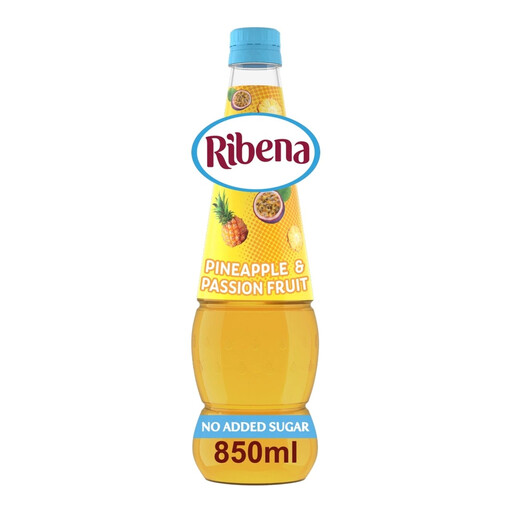
An 850ml no-added-sugar concentrate for guests who prefer a pineapple and passion fruit flavour. Check the current pack for dilution directions and prepared-drink nutrition before comparing glasses. Also read its sulphite and phenylalanine warnings where relevant to your guests.
No. A no-added-sugar claim does not rule out naturally occurring sugars from fruit ingredients. Check the sugars line for the prepared drink if sugars per glass affect your choice.
Compare their nutrition on the same prepared-drink basis, such as a diluted 250ml glass, and follow each bottle’s mixing instructions. Check stated prepared servings separately; comparing bottle sizes or undiluted concentrate figures alone can mislead.
Check the current ingredients and warnings for anything relevant to your guests, including sulphites and any aspartame-related phenylalanine warning. Keep the bottle available so guests can read it themselves, and offer water separately.
Follow the instructions on the particular bottle, as storage periods differ. For example, Waitrose & Partners lists refrigeration and use within 21 days of opening for Ribena Blackcurrant No Added Sugar.
No. The NHS describes water as a hydration choice and says lower-sugar or sugar-free drinks can also count towards fluid intake. A water jug alongside optional diluted squash lets guests choose.