For frequent family drinks, a no-added-sugar squash is a starting point if you want to cut back on added sugar, but compare the sugar in the drink after dilution rather than relying on the front-of-pack wording. Check serving size, dilution instructions and ingredients before choosing between a concentrated squash, a fruit-led cordial or a standard cordial; a larger bottle does not necessarily make more drinks.
Who is this for?
Large households changing their everyday squash
If several people regularly make drinks from one bottle, compare its stated prepared servings and serving size alongside its volume. Concentrates with different dilution ratios are not directly comparable by bottle size alone.
Parents choosing family drinks
If reducing free sugars in family drinks matters to you, read the prepared-drink nutrition panel as well as the product claim. NHS guidance advises cutting down on free sugars, including those from sugary drinks; flavour and the bottle’s age and dilution directions also matter when choosing for children.
Shoppers checking ingredients
If sweeteners, sulphites or fruit content affect your choice, check the current label for the exact bottle. These details vary across the squash and cordial products discussed here.
What should you compare?
Start with the prepared drink and the number of drinks your household expects to make, then check ingredients and storage before stocking up.
| Priority |
What to check |
Your needs |
| Sugars in the drink |
Compare sugars per prepared serving or per 100ml, keeping the serving sizes distinct. Check fruit-derived sugars as well as any no-added-sugar claim. |
I want to cut back on added sugar without assuming every no-added-sugar drink has no sugar. ASDA describes its orange squash as no added sugar but containing naturally occurring sugars. |
| Prepared servings |
Read both the stated count and portion size. Tesco states 100 prepared 300ml servings at 1:19 dilution for its 1.5L quadruple-strength orange squash; the ASDA-listed Robinsons 1.75L orange squash states 70 prepared 250ml servings at 1:9 dilution. |
With several people making drinks, I need to know how long a bottle might last at the dilution we will actually use. A serving count based on a different glass size may not answer that on its own. |
| Ingredients |
Read the current sweetener and allergen declarations for each flavour and variant. The ASDA-listed Robinsons orange squash includes acesulfame K, sucralose and sodium metabisulphite. |
Before buying several bottles, I want to check that their ingredients suit everyone who will drink them. |
| Flavour and storage |
Check fruit content, prepared-drink sugars and the instructions after opening. Sainsbury's lists 30% lime juice from concentrate and 20 prepared servings for its 1L lime cordial; Waitrose & Partners states that its Cherries & Berries cordial has 14 servings and should be refrigerated and used within three weeks of opening. |
I may choose a particular fruit flavour over a larger serving count, but the bottle still needs to fit how quickly our household will use it. |
Common buying mistakes
-
Treating ‘no added sugar’ as ‘sugar-free’
A no-added-sugar drink can still contain naturally occurring sugars, as ASDA states for its orange squash. The two descriptions should not be used interchangeably.
Read the sugars figure for the prepared drink and compare it on the same portion basis as the alternative you are considering.
-
Judging yield by bottle size
Concentration and serving size change what a bottle makes. Tesco states 100 prepared 300ml servings for its 1.5L quadruple-strength orange squash, while the ASDA-listed Robinsons 1.75L double-strength orange squash states 70 prepared 250ml servings.
Compare the stated servings, their sizes and the dilution ratios. If your household pours different-sized drinks, use its usual portion as the basis for your decision.
-
Overlooking sweeteners and sulphites
No-added-sugar products do not all use the same ingredients. For example, the ASDA-listed Robinsons orange squash declares sweeteners and sodium metabisulphite.
Check the current ingredients and allergen information for every flavour before buying several bottles, particularly when an ingredient matters to someone in the household.
-
Ignoring storage after opening
A bottle may have a shorter period for use once opened than your household expects. Waitrose & Partners instructs buyers to refrigerate its Cherries & Berries cordial and use it within three weeks of opening.
Check the individual bottle’s storage directions and choose a size you expect to finish within the stated period.
Brand and product-line references
These examples show differences between particular retailer-listed products, not a judgement about every drink sold under each brand.
Robinsons
The ASDA-listed Double Strength Orange No Added Sugar Squash is a 1.75L bottle with 70 stated prepared 250ml servings at 1:9 dilution.
- ASDA lists 3kcal and 0g sugars per prepared 250ml serving for this bottle.
- Its ingredient list includes acesulfame K, sucralose and sodium metabisulphite; check whether these suit your household.
Tesco
Tesco’s 1.5L Quadruple Strength Orange Squash No Added Sugar states 100 prepared 300ml servings at 1:19 dilution.
- Tesco lists 40% fruit juice from concentrate and 0.5g sugars per prepared 300ml glass.
- The stated serving count and nutrition depend on following the listed dilution and portion size.
ASDA
ASDA’s 1.5L no-added-sugar orange squash states 60 prepared 250ml servings at 1:9 dilution.
- ASDA lists less than 0.5g sugars and 4kcal per prepared 250ml serving.
- The product contains naturally occurring sugars, so its no-added-sugar wording does not mean that the drink contains no sugar.
Sainsbury's
Sainsbury's 1L Lime Cordial No Added Sugar is a lime alternative to the orange squashes above, with 20 stated prepared 250ml servings at 1:4 dilution.
- Sainsbury's lists 30% lime juice from concentrate and less than 0.5g sugars per prepared 250ml serving.
- Its stated serving count is lower than those of the large orange squashes described here; compare portion sizes and ingredients before choosing on fruit content alone.
Belvoir Farm
The Cherries & Berries no-added-sugar cordial listed by Waitrose & Partners offers a different fruit flavour in a bottle with 14 stated servings.
- Waitrose & Partners lists 1.1g sugars per 100ml of drink diluted at 1:6.
- The listed cordial needs refrigeration after opening and should be used within three weeks.
Joybuy squash options
These no-added-sugar squash concentrates include two multipacks and two individual bottles. Compare their current labels for prepared-drink nutrition, dilution and age guidance before choosing one for a family shop.
 No image available
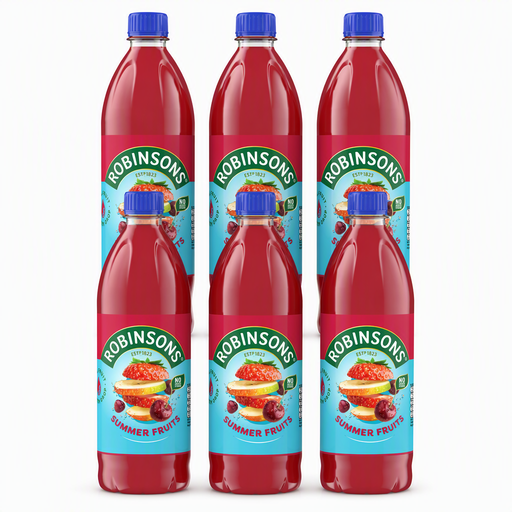
Robinsons No Added Sugar Summer Fruits Squash 6 × 1L
The six-bottle format is worth considering when your household uses summer fruits squash regularly. Check the current pack for prepared-drink sugars and dilution directions; the product information also flags aspartame, saccharin and sulphites for an ingredients check.
View on Joybuy
 No image available
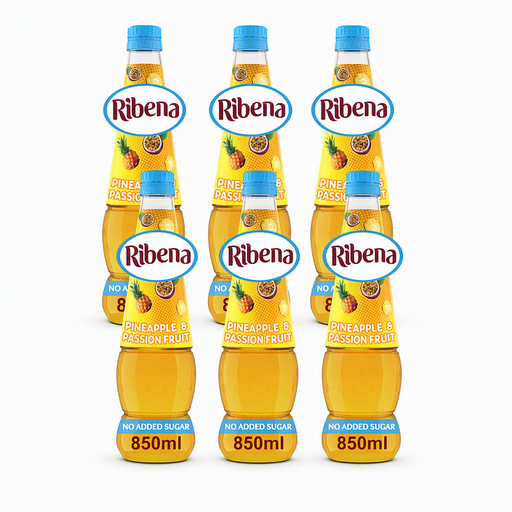
Ribena Pineapple and Passion Fruit No Added Sugar Squash 6 × 850ml
This six-bottle pack offers a pineapple and passion fruit flavour for a household shop. Check the pack’s prepared-drink nutrition and dilution instructions before comparing its yield with other concentrates; its product information flags aspartame, acesulfame K and sulphites.
View on Joybuy
 No image available
Robinsons No Added Sugar Orange Squash 1L
This individual orange squash bottle may suit a household that does not need a multipack. Follow the current pack’s dilution directions and check its ingredients; the product information flags sweeteners and sulphites and says it is not suitable for children under 36 months.
View on Joybuy
 No image available
Ribena Concentrated Blackcurrant No Added Sugar Squash 1.5L
The 1.5L bottle offers a blackcurrant option for households choosing a single concentrate. Read the current pack’s prepared-drink nutrition and dilution directions rather than relying on calorie-related wording; the product information flags aspartame, acesulfame K, sucralose and sodium bisulphite, and says the drink is not recommended for children under three.
View on Joybuy
Frequently asked questions
Is ‘no added sugar’ the same as ‘sugar-free’?
No. A no-added-sugar drink may contain naturally occurring sugars: ASDA states this for its orange squash. Check the sugars figure on the prepared-drink nutrition panel rather than treating the two descriptions as interchangeable.
What matters most when comparing bottles for a large family?
Compare prepared serving counts together with serving sizes and dilution ratios, then read the prepared-drink nutrition and ingredients. Tesco states 100 prepared 300ml servings for its 1.5L quadruple-strength orange squash; the ASDA-listed Robinsons 1.75L double-strength orange squash states 70 prepared 250ml servings. Those counts use different portion sizes.
Can I use the usual dilution when serving squash to a toddler?
Follow the age and dilution directions on the particular bottle rather than assuming its standard mixing instructions suit a toddler. Some products have age-related cautions, so check the current pack before serving.
Should I check the ingredients when buying the same squash again?
Yes, particularly if a sweetener or allergen matters to someone in your household. Check the current pack for the exact flavour and variant; for example, the ASDA-listed Robinsons orange squash declares sodium metabisulphite.
How long can cordial be kept after opening?
Follow the instructions for the individual bottle. Waitrose & Partners says its listed Cherries & Berries cordial should be refrigerated after opening and used within three weeks; do not apply that period to other cordials without checking their labels.


