Large households serving squash at home
A large concentrate bottle may fit a regular household shop. Use the stated servings and dilution directions to judge prepared-drink quantity rather than relying on bottle size or pack count.


For squash served mainly at home, compare large concentrated bottles by their stated servings and dilution directions; the number of bottles in a pack does not establish how many drinks it will make. Mini concentrates suit occasions when portability matters, while a proposed can multipack needs its contents and preparation instructions checked before it can be compared on the same basis.
A large concentrate bottle may fit a regular household shop. Use the stated servings and dilution directions to judge prepared-drink quantity rather than relying on bottle size or pack count.
Check the full nutrition and ingredient labels, dilute squash as directed and read any age or handling warnings. The NHS identifies water and milk as the preferred drinks for children and advises diluting squash well.
A concentrated mini bottle offers a portable option when you can add water away from home. Follow its preparation and handling warnings rather than treating it as a ready-to-drink pack.
Start with what is inside each pack, then compare the amount of prepared drink it makes and the instructions for serving it.
| Priority | What to check | Your needs |
|---|---|---|
| Prepared-drink quantity | Look for servings and the preparation basis on the exact pack. Tesco describes its 1.5L quadruple-strength Tropical Squash as 100 servings, using one tablespoon for a 300ml glass; Robinsons gives a 1:9 concentrate-to-water ratio for its Apple & Blackcurrant double concentrate. | I want enough diluted drinks between family shops, so the number of bottles or their combined volume is not enough to make the comparison. |
| Pack format | Establish whether a proposed can pack contains concentrate or a ready-to-drink product, and check each unit’s volume. For minis, check how and where water will be added. | Most drinks will be made at home, but I may want a smaller pack to take out occasionally. |
| Sugar and ingredients | Read the nutrition declaration and ingredients alongside any no-added-sugar claim. Check the figures for the prepared drink where the label provides them. | I want to know what the family will actually drink, including any sugars or sweeteners, rather than relying on the front-of-pack wording. |
| Children’s use | Follow the dilution directions and check age and handling warnings on the exact pack. The Waitrose listing for Robinsons Mini says not to drink it undiluted or let children under 36 months handle it. | If children will have the squash, I need to know who will prepare it and whether they can safely handle the concentrate. |
| Allergen checks | Check the ingredients and allergen information on the physical pack, particularly when buying a different flavour or a newly packaged product. | An allergy or intolerance in the household means I need to check the exact bottle each time, not just an earlier online listing. |
Concentrates can have different preparation instructions. A larger bottle does not necessarily make more diluted drinks than a smaller bottle of a different strength.
Compare stated servings or calculate on the same prepared-drink basis using each pack’s dilution directions.
The claim alone does not tell you the prepared drink’s sugar content or its full ingredient list.
Read the nutrition declaration and ingredients on the exact product, including any sweeteners and declared allergens.
The Robinsons Mini listing warns against drinking the concentrate undiluted and says children under 36 months should not use or handle it.
Add water as instructed and check the pack’s age and handling warnings before taking minis out with children.
Robinsons lists large double-concentrate squash for home use and a concentrated Mini format for portable use.
Tesco lists own-label squash in large quadruple-strength bottles.
Sainsbury's lists a 1.5L quadruple-strength Tropical Squash as another large-bottle format.
M&S describes its 1.5L Orange Squash as double strength, with 20% real fruit and no added sugar.
Waitrose lists standard squash bottles as well as Robinsons Mini concentrated squash.
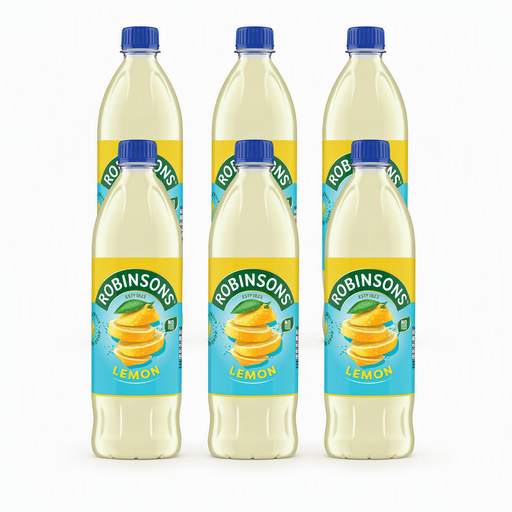
This six-bottle squash pack is an option for buying concentrate in bulk; it is not a multipack of cans.
 No image available
Six 1L bottles offer a bulk bottle format for a household shop rather than individual cans.
The product name states no added sugar and lemon juice. Check the pack’s dilution directions, stated servings, nutrition and ingredients before comparing its prepared-drink quantity with other concentrates.
First check whether the cans contain a ready-to-drink product or concentrate, their individual volumes and any dilution directions. A can count cannot be compared directly with a concentrated bottle’s stated servings.
Compare stated servings using each product’s preparation directions, rather than bottle litres alone. Tesco states 100 servings for its 1.5L quadruple-strength Tropical Squash at one tablespoon per 300ml glass; Robinsons gives a 1:9 dilution ratio for its Apple & Blackcurrant double concentrate. Check the exact packs to compare like with like.
No. The wording does not by itself tell you that the prepared drink contains zero sugars. Check the nutrition declaration and ingredients on the exact pack, following its directions for dilution.
Check the exact pack’s warning before letting a child handle it. The Waitrose listing for Robinsons Mini says not to drink it undiluted and does not recommend it for use or handling by children under 36 months. The NHS identifies water and milk as the preferred drinks for children and advises diluting squash well.
Read the ingredients and allergen information on the physical pack each time you buy, especially if the flavour or packaging has changed. An online product description should not replace the label on the bottle being served.