For an everyday flavoured drink, compare no-added-sugar squash by the sugars in the drink at its stated dilution, rather than relying on the front-of-pack wording alone. If you mix it with sparkling water, the NHS warning about dental erosion from carbonated drinks still matters. Keep your agreed hypo treatment separate: Diabetes UK advises using sugary fizzy drinks for treating hypos, not as an everyday alternative.
Who is this choice for?
People managing diabetes who want a fizzy drink
If you prefer fizz, you can consider squash mixed with sparkling water while checking the prepared drink’s sugars. Keep everyday drinks distinct from the fast-acting sugar used to treat a hypo, and consider the NHS warning about dental erosion from carbonated drinks.
Households sharing a squash concentrate
A bottle’s dilution directions, prepared-serving nutrition and ingredient list matter when several people will drink it. Check the label for ingredients relevant to anyone in the household.
Buyers checking particular ingredients
No-added-sugar squashes can have different sweeteners and allergen statements. Read the current bottle label if an ingredient such as a sulphite matters to you; the front-of-pack sugar claim does not answer that question.
What should you check before buying?
Start with the nutrition information for the drink as prepared, then check how to dilute it and whether its ingredients and intended use fit your needs.
| Priority | What to check | Your needs |
|---|
| Prepared-drink sugars |
Find sugars per diluted serving or per diluted 100ml. Check the serving size and whether the figure describes the concentrate or the drink. |
I want to compare what will be in my glass, rather than figures for undiluted squash. Sainsbury’s lists Robinsons Orange No Added Sugar at 0g sugars per diluted 250ml serving. |
| Dilution |
Follow the stated mixing ratio before applying the nutrition figures. The Robinsons Orange listing uses 1 part squash to 4 parts water; ASDA lists 1 part Summer Fruits squash to 9 parts water. |
For a drink I make regularly, I want directions I can follow consistently. Different ratios mean the same measure of concentrate will not prepare the same amount of drink. |
| Label wording |
Read the nutrition panel alongside a no-added-sugar claim. Check for a statement about naturally occurring sugars. |
I do not want to mistake ‘no added sugar’ for ‘zero sugar’. Waitrose describes its Essential Summer Fruits squash as containing naturally occurring sugars. |
| Ingredients |
Check the current sweetener and allergen information on the bottle. Recipes may differ between flavours and products. |
If I need to avoid a particular ingredient, the product’s own label matters more than the range name or its no-added-sugar wording. |
| Fizz and teeth |
Check the squash’s mixing directions before using sparkling water. The NHS says carbonated drinks are associated with dental erosion regardless of whether they contain sugar. |
I may want a fizzy drink, but changing to no-added-sugar squash does not remove the dental consideration associated with carbonation. |
| Hypo treatment |
Keep your agreed fast-acting treatment separate from an everyday no-added-sugar drink. The NHS gives fruit juice and sugary fizzy drinks as examples for treating low blood sugar. |
If I am at risk of hypos, I need to know which drink is for ordinary use and what my personal diabetes plan says to use when my blood sugar is low. |
Mistakes to avoid
-
Reading ‘no added sugar’ as ‘no sugar’
Fruit-derived sugars can remain in a product labelled no added sugar. A claim on the front does not tell you the sugar amount in a prepared glass.
Check the sugars figure for the diluted drink and read any statement about naturally occurring sugars.
-
Comparing figures on different mixing bases
A figure for undiluted concentrate cannot be read as a figure for the finished drink. Products prepared at 1:4 and 1:9 also use different amounts of concentrate.
Check what each nutrition figure measures, then follow that product’s dilution directions when making your comparison.
-
Assuming no-added-sugar fizz removes the dental concern
The NHS associates carbonated drinks with dental erosion regardless of their sugar content.
If dental erosion concerns you, consider still water as an alternative to making every squash drink fizzy.
-
Setting aside no-added-sugar squash for a hypo
No-added-sugar squash should not replace the fast-acting sugar used to treat low blood sugar. The NHS gives sugary drinks and glucose products as treatment examples.
Keep the treatment specified in your personal diabetes plan available separately from everyday drinks.
Brand and range references
These product examples illustrate label differences; a brand name alone does not establish the nutrition or ingredients of every flavour.
Robinsons
Sainsbury’s lists Robinsons Orange No Added Sugar as a squash diluted 1 part concentrate to 4 parts water.
- The Orange listing states 0g sugars per diluted 250ml serving.
- Check the ingredients on the flavour you buy rather than assuming every Robinsons squash has the same formulation.
ASDA
ASDA Summer Fruits is a 1.5L squash with directions to dilute 1 part squash to 9 parts water.
- ASDA lists less than 0.5g sugars per prepared 250ml serving.
- Its 1:9 preparation basis needs to be kept in view when comparing it with a 1:4 squash.
M&S
Marks & Spencer describes its Orange Squash as double strength, made with 20% fruit and with no added sugar.
- The stated fruit content helps identify this particular orange formulation.
- Check the current label for sugars in the drink you prepare before comparing it with bottles that give diluted-serving figures.
Waitrose Essential
Waitrose describes its Essential Summer Fruits squash as double strength and no added sugar.
- The product description explicitly identifies naturally occurring sugars.
- Use the nutrition panel to establish the sugars in your prepared drink; no-added-sugar wording is not a zero-sugar figure.
Ribena
ASDA lists Ribena Summer Fruits No Added Sugar squash with a 1:4 dilution instruction.
- That Summer Fruits listing states 0.2g sugars per 100ml.
- Do not transfer its nutrition or mixing directions to a different Ribena flavour without checking that flavour’s label.
No-added-sugar squash on Joybuy
These are no-added-sugar squash concentrates for mixing a drink, rather than ready-sparkling products. If you plan to use sparkling water, check each bottle’s mixing directions and compare nutrition on the prepared-drink basis.
 No image available
Robinsons No Added Sugar Orange Squash 1L
For an orange concentrate with a stated prepared-drink sugar figure, Sainsbury’s lists Robinsons Orange No Added Sugar at 0g sugars per diluted 250ml serving, mixed 1 part squash to 4 parts water. Check the bottle’s directions if using sparkling water.
View on Joybuy
 No image available
Ribena No Added Sugar Blackcurrant Concentrate 1.5L
A blackcurrant concentrate in a 1.5L bottle. Check its current dilution directions, prepared-drink sugars and ingredient list before deciding whether it suits the drink you want to make.
View on Joybuy
 No image available
Robinsons No Added Sugar Summer Fruits Squash 1L
A 1L summer-fruits concentrate. The Joybuy product description states 2 calories per 100ml of diluted drink; check the current bottle for its prepared-drink sugars and mixing directions.
View on Joybuy
 No image available
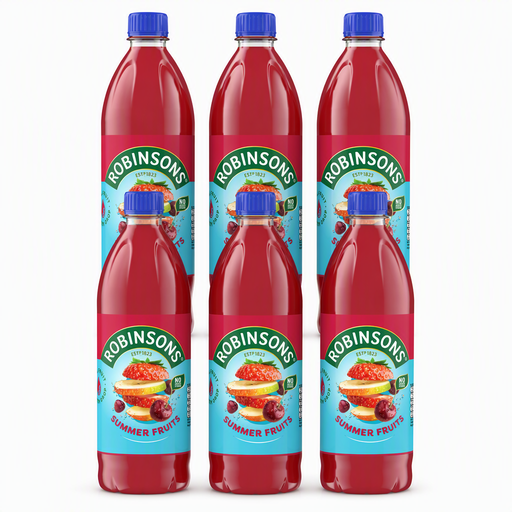
Robinsons No Added Sugar Summer Fruits Squash 6 x 1L
A six-bottle summer-fruits pack for households that use squash regularly. Check the directions and prepared-drink nutrition on this pack itself rather than assuming they match the single 1L bottle.
View on Joybuy
 No image available
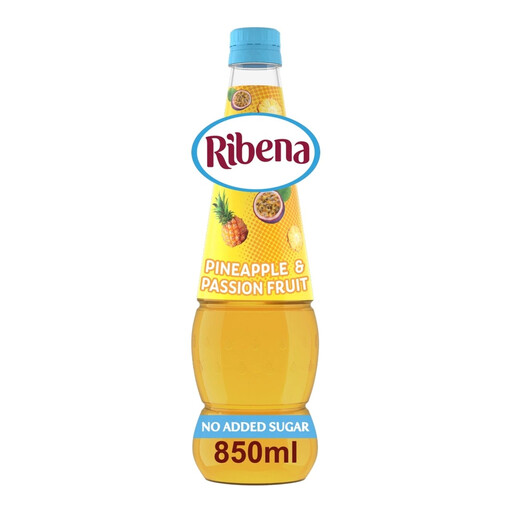
Ribena No Added Sugar Pineapple and Passion Fruit Squash 850ml
An 850ml pineapple and passion-fruit concentrate. For a meaningful comparison with other flavours, check the bottle’s dilution ratio, sugars in the finished drink and ingredients.
View on Joybuy
Common questions
Does ‘no added sugar’ mean squash contains no sugar?
No. Naturally occurring sugars can remain: Waitrose explicitly says this of its Essential No Added Sugar Summer Fruits squash. Check the sugars figure for the drink as prepared, not just the front-of-pack claim.
Can I mix no-added-sugar squash with sparkling water?
Check the particular squash’s mixing directions before choosing sparkling water instead of still water; a concentrate is not necessarily sold as a ready-sparkling drink. If you make it fizzy, bear in mind the NHS warning that carbonated drinks are associated with dental erosion regardless of sugar content.
Can no-added-sugar squash treat a hypo?
Do not use it in place of the fast-acting sugar in your personal hypo plan. The NHS gives fruit juice, sugary fizzy drinks and glucose products as examples for treating low blood sugar; follow the advice given by your diabetes team.
Which nutrition figures should I compare between bottles?
Compare sugars for the diluted drink at each bottle’s stated serving size and mixing ratio. Sainsbury’s lists Robinsons Orange at 0g sugars per diluted 250ml with a 1:4 ratio, while ASDA lists Summer Fruits at less than 0.5g per prepared 250ml with a 1:9 ratio. Keep those different preparation instructions in view.
Do sweeteners and allergens still need checking?
Yes. A no-added-sugar label does not identify every sweetener or allergen in a squash. Read the current ingredient and allergen information for the exact flavour and pack you intend to use.


