
24/7 Customer Support

Free returns

Same-day & Next-day Delivery

Quality Guaranteed

Unlock Your Welcome Offers: FREE Delivery | Up to 80% OFF | Free 30-day JoyPlus trial
Download the APP
A squeak can turn an ordinary toy into an inviting game of chase, fetch or chewing. However, not every product listed as squeaky dog toys suits every pet. A small plush toy may be ideal for gentle indoor play but unsuitable for a determined chewer, while a rubber toy can be too firm or too large for a young puppy.
The most useful way to shop is to match the toy with your dog’s size, chewing habits, play style and cleaning routine. This guide covers the main pitfalls, the specifications worth checking and a selection of products for different UK households.
Marketing descriptions often use phrases such as “tough”, “long-lasting” or “chew-resistant”. These terms do not mean a toy cannot be torn, punctured or opened. Plush toys with seams, stuffing and squeakers are generally more appropriate for gentle to moderate chewers, rather than dogs that routinely destroy toys.
Inspect stitching, seams and edges before every play session. Remove the toy as soon as the squeaker becomes exposed, filling comes loose or pieces begin to detach.
A toy that looks appealing online may be awkward for your dog to carry or small enough to swallow. Check the listed dimensions against your dog’s mouth and body size. For small and medium breeds, a toy around 12–20 cm may be easier to grip, but the correct size still depends on the individual dog’s chewing behaviour.
Avoid toys with detachable parts or shapes that could become lodged in the mouth. When buying dog toys for puppies, also consider whether the texture is suitable for developing teeth and whether the toy is large enough to prevent accidental swallowing.
Cleaning instructions vary considerably. Some washable dog toys can be rinsed or wiped, while others require cold machine washing or careful hand cleaning. A plush toy that retains moisture can become unpleasant if it is returned to your dog before drying fully.
Check whether the sound mechanism must be protected, whether batteries are involved and whether the product can be cleaned after outdoor use. A squeaky toy for indoor use may need a different maintenance routine from a dog fetch toy used in wet grass.
Descriptions such as “dental chew toys for dogs” should be interpreted carefully. Textured surfaces may provide friction during chewing, but a squeaky toy is not a replacement for brushing, professional care or other routine oral hygiene.
Squeakers can encourage interaction, but the noise may not suit every home. Consider whether the toy will be used in a flat, during video calls or around children. Grunting, crinkling and standard squeaking mechanisms produce different sounds, so check the product description where possible.
For dogs that lose interest quickly, combine sound with movement. Interactive dog toys, balls and fetch shapes can encourage you to participate rather than leaving the toy available all day.
Always follow the product label and supervise play, particularly when introducing a new toy. Toys should be checked for:
Rotate several toys rather than leaving every item out continuously. This can help maintain interest and provide different options for fetch, chewing and comfort. Toys may support a routine for dog toys for boredom and separation anxiety, but they cannot guarantee a change in anxious behaviour. Dogs showing persistent distress may need advice from a qualified veterinary professional.
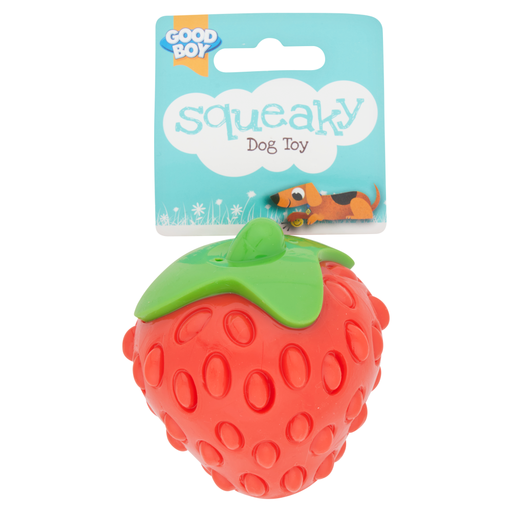
Why This Fits Their Persona: Its lightweight, easy-to-carry shape is practical for everyday fetch in the home or garden, giving new dog owners a straightforward introduction to squeaky play.
The description identifies it for supervised play and advises replacement when damaged, rather than presenting it as indestructible.
Rubber, fabric and squeaker construction; suitable for fetch, solo play and interactive use.
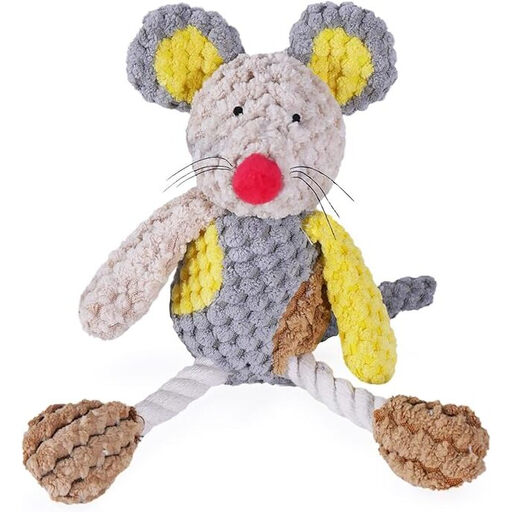
Why This Fits Their Persona: A soft, character-shaped companion suits owners looking for an attractive indoor toy for a puppy or smaller dog that enjoys carrying and gentle play.
Its description clearly states that it is not suitable for aggressive chewers and provides machine-washing instructions, helping set realistic expectations.
Cotton fabric, polyester filling, hidden squeaker and tough rope legs; machine washable in cold water.
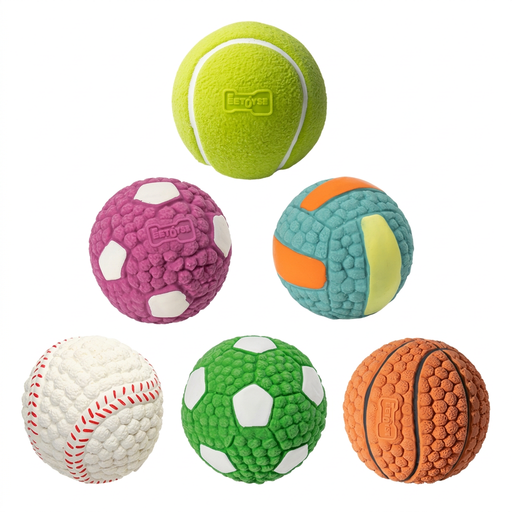
Why This Fits Their Persona: Owners wanting one set for fetch, training and routine cleaning may value its soft latex construction and stated suitability for small to medium dogs up to approximately 15 kg.
The instructions specify gentle to moderate chewers, regular inspection and immediate replacement if cracked, torn or damaged.
Squeeze-activated squeak, textured surface, fully washable design and ball format for fetch or training.
We have compiled a complete, real-time list of products that fully satisfy these strict selection criteria and UK safety regulations.
Many are suitable, but age, size and material matter. Choose a toy that is too large to swallow, has no easily detachable components and matches your puppy’s chewing strength. Supervise first use and remove it if the squeaker, filling or rubber begins to come loose. Soft latex or plush options may suit gentle puppies, while highly determined chewers may require a different toy category.
There is no fixed lifespan. A plush toy may last for months with a gentle dog but only minutes with a persistent chewer. Rubber, TPR and latex toys can also split or puncture. Inspect the toy before each session rather than relying on a promised duration. Replace it when damaged, even if it still squeaks.
They can provide sound, movement and a change of activity, which may make play more engaging. However, they are not a guaranteed solution for separation-related distress. Use them as part of a broader routine involving exercise, enrichment and gradual alone-time training. If your dog shows ongoing panic, destructive behaviour or other signs of distress, seek appropriate veterinary advice.