
24/7 Customer Support

Free returns

Same-day & Next-day Delivery

Quality Guaranteed

Unlock Your Welcome Offers: FREE Delivery | Up to 80% OFF | Free 30-day JoyPlus trial
Download the APP
A stability ball, also known as an exercise ball or gym ball, is one of the most versatile pieces of fitness equipment you can own. Whether you're looking to intensify your core workout, find an active seating solution for your home office, support your body during pregnancy or aid in physiotherapy, the right ball can make a significant difference.
However, with various sizes, materials and features available, choosing the correct one can feel overwhelming. This guide is designed to cut through the clutter, providing clear, practical advice to help you select a stability ball that fits your specific needs and helps you achieve your goals.
Before you add a ball to your basket, consider these key factors. Getting them right is crucial for both safety and effectiveness.
The most important factor is choosing the correct diameter for your height. An incorrectly sized ball can strain your back and knees. Here is a general guideline for exercise use:
When sitting on the ball, your hips should be level with or slightly higher than your knees, with your feet flat on the floor, creating a 90-degree angle at your knees. If you plan to use it as an exercise ball for an office chair, you may need a larger size to match your desk height.
Safety should always be a priority. Look for two key features:
You may notice some products described as a weighted stability ball. These contain a material like sand inside, which adds a few pounds of weight. This feature prevents the ball from rolling away when not in use and adds a subtle layer of resistance and stability during exercises. This makes them particularly useful for beginners, for physiotherapy routines or for anyone who wants the ball to stay put between sets. A standard, non-weighted yoga ball is lighter and offers a greater challenge to your stabiliser muscles.
Based on key features like material, safety construction and user-friendliness, here are some of our top recommendations.
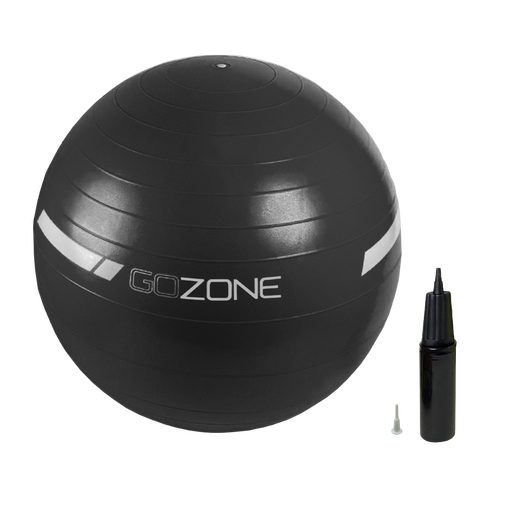
Why It Stands Out: This ball is designed for taller individuals or those with higher desks. Its 3.5 lb weighted construction provides excellent grounding, preventing it from rolling away and adding stability to your movements. The durable PVC material is designed with both anti-burst and anti-slip properties for a secure user experience.
Pros:
Who is it for? Taller individuals seeking a reliable ball for home fitness or anyone needing the added stability from a weighted base for physiotherapy or advanced core training.
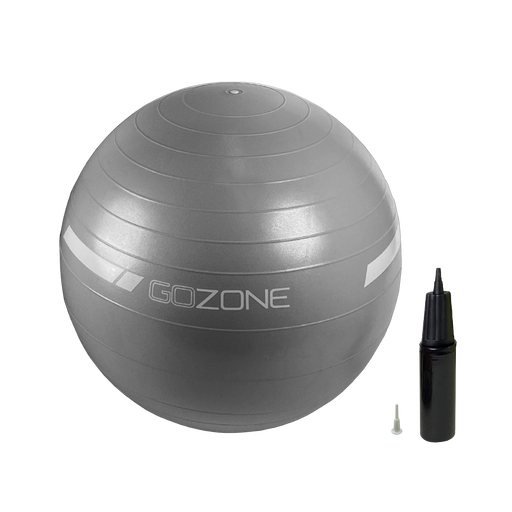
Why It Stands Out: As the most common size, this 65 cm ball is a fantastic all-rounder. It features a 3 lb weighted base for stability and is constructed from heavy-duty PVC. Its textured surface provides a confident grip, making it a dependable choice for a wide range of activities, from Pilates to active sitting.
Pros:
Who is it for? Users of average height (5'4" to 5'10") looking for a multi-purpose gym ball for general fitness, balance training or as an ergonomic seating alternative.
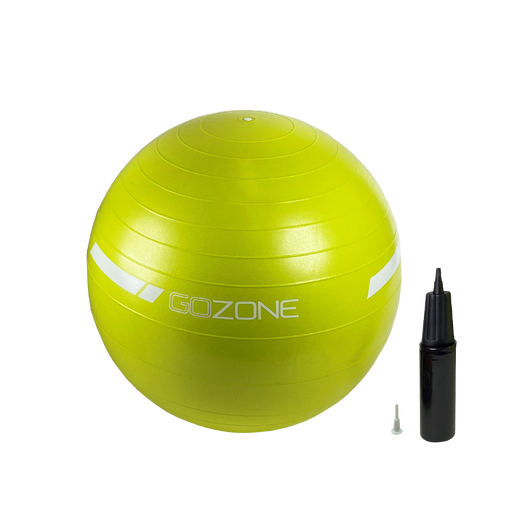
Why It Stands Out: This 55 cm ball is perfectly proportioned for shorter individuals, ensuring correct posture and form during exercises. Like its larger counterparts, it includes a 2.5 lb weighted base for stability and is made from durable anti-burst PVC. Its compact size also makes it a great tool for targeted exercises, such as crunches or push-ups.
Pros:
Who is it for? Shorter individuals, those with limited space or anyone looking for a smaller ball for specific core exercises or certain prenatal routines.
If our recommendations don't quite match what you're looking for, or if you'd like to browse different sizes, colours or features, we have a wider selection available. Find the perfect tool to support your fitness and wellness journey.
Explore our full range of fitness exercise balls to find the perfect one for your needs.
The best way is to base it on your height. As a general rule: use a 55 cm ball if you are under 5'4", a 65 cm ball for heights between 5'4" and 5'10" and a 75 cm ball if you are taller than 5'10". When seated, your knees should be at a 90-degree angle with your feet flat on the floor.
Using a stability ball for 'active sitting' can help improve posture and core strength. Because the surface is unstable, your core muscles must constantly engage to keep you upright. It is advisable to start by using it for short periods (e.g., 20-30 minutes at a time) and gradually increase the duration as your core endurance builds.
'Anti-burst' is a crucial safety feature. It means the ball is made from a material that, if punctured by a sharp object, will deflate slowly and controllably instead of bursting like a balloon. This helps to prevent sudden falls and potential injuries during use. Always inspect your ball for signs of wear before each use.