
24/7 Customer Support

Free returns

Same-day & Next-day Delivery

Quality Guaranteed

Unlock Your Welcome Offers: FREE Delivery | Up to 80% OFF | Free 30-day JoyPlus trial
Download the APP
Finding an activity that engages everyone, from young children to teenagers and adults, can be a challenge. Stacking games offer a brilliant solution, combining simple rules with suspenseful, hands-on fun. They are perfect for a lively family game night, a competitive round of party games or even as a quiet solo challenge.
Whether you are looking for educational toys for kids that help develop crucial skills or a classic tower building game to test your steady hand, the market is full of options. This guide is designed to help you navigate the choices and find a stacking game that fits your needs, ensuring your next get-together is a memorable one.
Before you make a choice, consider a few key factors. Thinking about who will be playing and what you want from the experience will help you select a game that gets played again and again.
The ideal stacking game varies significantly with age. For younger children, look for games that focus on developing fine motor skills and hand-eye coordination. A colourful colour stacking toy can also introduce concepts like pattern and colour recognition in an engaging way. For older children and adults, the challenge can shift towards strategy, speed and nerve, making for exciting group play. Always check the manufacturer's recommended age, especially regarding small parts.
Stacking games come in several formats. The classic wooden block games involve carefully removing and re-stacking pieces from a tower, a test of precision and patience. Other variations introduce creative or competitive twists, such as building specific shapes against the clock or working in teams. Consider whether you prefer a straightforward, suspenseful challenge or a more frantic, collaborative experience.
Are you looking for a game for solo play, a small family group or a larger party? Some stacking games are designed for one or two players, focusing on personal achievement and concentration. Others, like the classic Jenga, scale well for groups, while newer versions are explicitly designed for team-based competition. Checking the recommended number of players ensures the game is a good fit for your typical gathering.
Here are a few standout options that cater to different players and play styles.
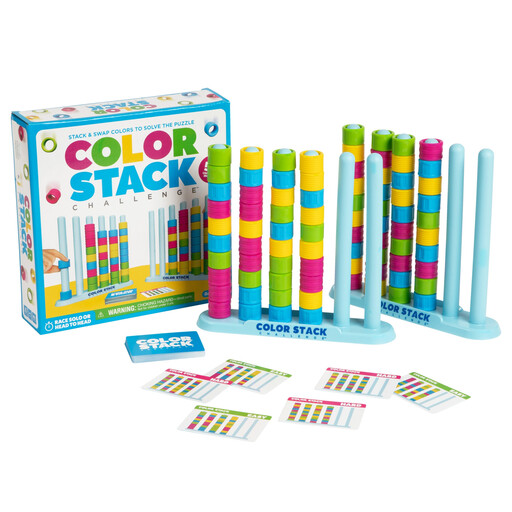
Why It Stands Out: This game moves beyond simple stacking by incorporating vibrant colours and different shapes. It serves as an excellent educational tool, encouraging children to think about patterns, colour matching and structural stability while they play.
Pros:
Who is it for? This is a great choice for parents and gift-givers looking for educational toys for kids aged 8 and over. It’s ideal for children who enjoy creative building and problem-solving, offering a fun way to develop key skills.
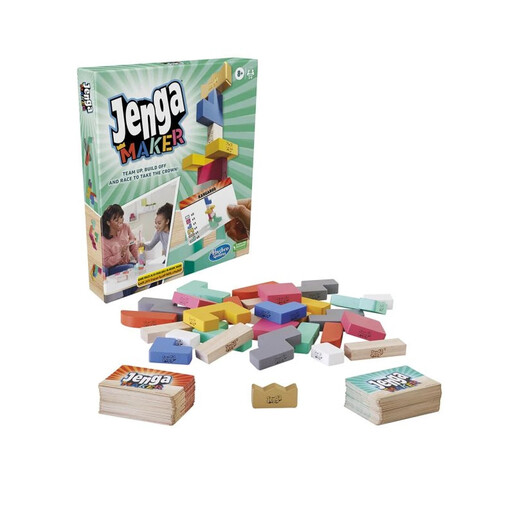
Why It Stands Out: Jenga Maker transforms the classic solo game into a frantic team-based race. One player describes a structure from a card while their teammate races to build it. This twist emphasises communication and collaboration over a steady hand alone.
Pros:
Who is it for? Perfect for families with older children (aged 8+) and groups of friends looking for a high-energy game. If your family game night needs a dose of speed and friendly competition, this is an excellent option.
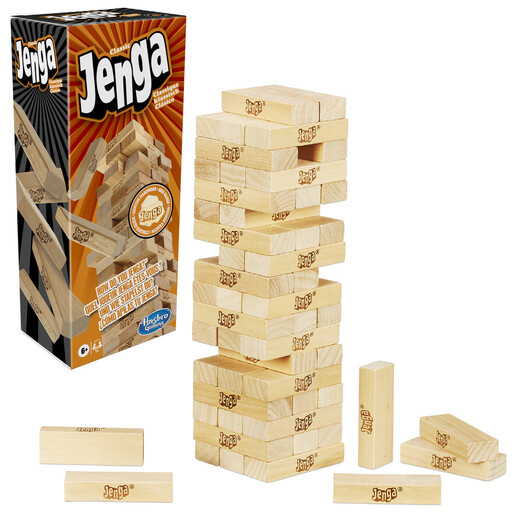
Why It Stands Out: This is the original tower building game that has been a staple in homes for decades. Its beauty lies in its simplicity: pull a block, stack it on top, and don't be the one to make the tower tumble. It requires no setup time and the rules are understood in seconds.
Pros:
Who is it for? Everyone. It’s a must-have for any game collection. It’s particularly good for mixed-age groups, as its simple concept is accessible to younger players while still challenging for adults. If you need a reliable, go-to game, this is it.
Stacking games are just one type of hands-on challenge. If you enjoy puzzles that test your logic, spatial reasoning and patience, there are many other options to discover.
For more brain-teasing fun, explore our full collection of Puzzle Boards to find your next favourite game.
Stacking games are highly beneficial for a child's development. They help enhance fine motor skills, improve hand-eye coordination and teach patience and problem-solving. Games that involve colours or patterns, like a colour stacking toy, also support cognitive development by encouraging recognition and strategic thinking.
Absolutely. While often seen as children's toys, stacking games are incredibly popular with adults. The elements of strategy, risk and physical skill make them excellent icebreakers and a source of suspenseful fun at social gatherings and parties.
Jenga is a specific, trademarked brand with a standardised set of 54 precision-cut hardwood blocks. The name has become synonymous with the genre, much like Hoover for vacuum cleaners. Other wooden block games may vary in the number of blocks, their dimensions, the type of wood used or may add extra elements like coloured dice to dictate which block to move, offering a different gameplay experience.