
24/7 全天候客户支持

免费退货

当日/次日达

品质保障

开启新人专享福利: 全场免邮 | 低至 2 折 | 免费试用 30 天 JoyPlus 会员
下载 Joybuy
A stainless steel bento lunch box can be a practical choice for packed lunches, snacks and meal preparation, but the product listing does not always tell the full story. A low price may hide a lid that is awkward to clean, while a large capacity may be uncomfortable to carry on a crowded commute.
For UK adults, parents, students and office workers, three common buying traps deserve attention:
The right choice depends on capacity, construction, closure design and how the container will be used from Monday to Friday.
A reusable metal lunch box should clearly identify its material. 304 stainless steel is commonly selected for food containers because it is corrosion-resistant and relatively straightforward to clean. However, the material label alone does not confirm that every part of the product is suitable for food contact.
Check the product information for:
A stainless steel container should not normally be placed in a microwave unless the manufacturer specifically states that it is suitable. For most packed lunches, it is more practical to heat food separately and transfer it after cooling.
For a leak-proof lunch box, look beyond the word “leak-proof”. A secure design normally includes a fitted lid, a silicone seal and one or more clips or a latch. These parts work together to reduce the chance of spills, but no lunch box should be treated as completely spill-proof unless the manufacturer provides clear usage conditions.
A lockable lunch container can be useful for commuting or school bags, particularly when the closure is easy to operate without excessive force. Removable seals are also worth considering because food residue can collect underneath them. A seal that can be removed and cleaned is generally more practical than one that is permanently fixed.
Capacity should match the meal rather than simply looking impressive on a product page. A 54oz lunch box holds approximately 1.6 litres, while a 61.2 fl oz lunch box is approximately 1.8 litres. These larger formats may suit substantial meals, snacks or meal-prep portions, but they can be bulky when full.
Choose between:
Remember that compartments reduce flexibility. A single compartment is often easier for pasta, salads, leftovers or a sandwich that needs more room.
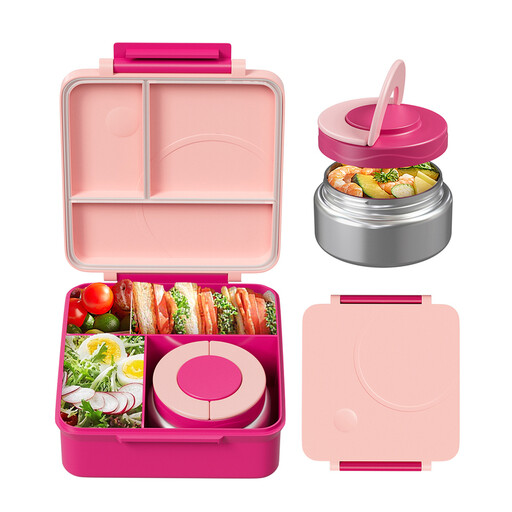
Why This Fits Their Persona: A practical option for students, schoolchildren or first-time reusable lunch box buyers who want separated foods in a recognisable 54oz format.
The divided layout makes the internal design clear, while the single-latch format gives buyers a defined closure to check before placing it in a bag.
54oz capacity, divided interior and a pink finish suited to everyday school or snack packing.
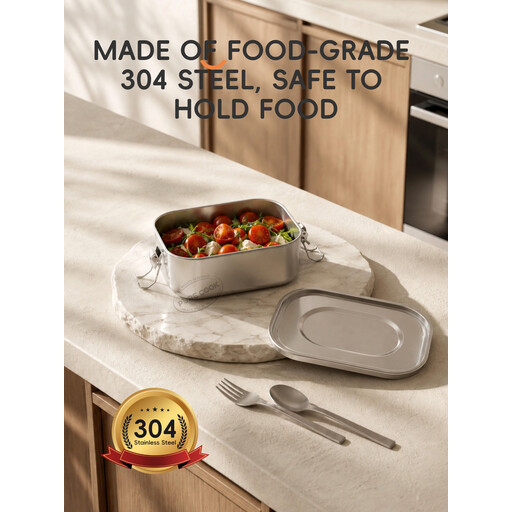
Why This Fits Their Persona: Suits office workers and commuters who prefer a metal container with a flexible interior for leftovers, sandwiches or prepared meals.
The listing specifies 304 stainless steel, a removable silicone seal and lockable clips, addressing material, cleaning and closure details often left unclear.
61.2 fl oz capacity, single-compartment design, removable seal and dishwasher-safe specification.
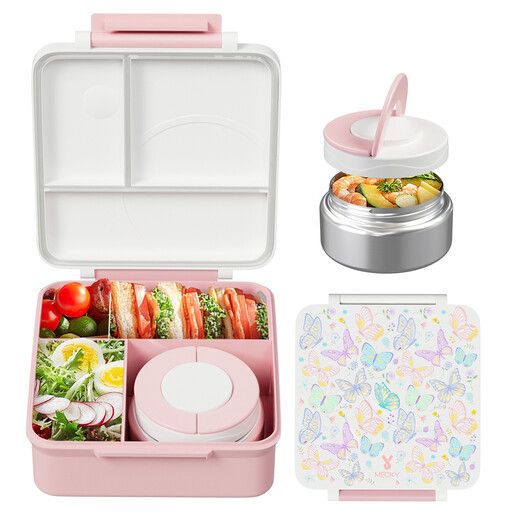
Why This Fits Their Persona: Useful for commuters, parents packing varied lunches or anyone who wants a divided format for a main meal and separate sides.
Its named divided design helps buyers avoid confusing a large single cavity with genuinely separated meal sections.
54oz capacity, single-latch closure and divided format for combining different foods.
We have compiled a complete, real-time list of products that fully satisfy these strict selection criteria and UK safety regulations.
To keep a reusable metal lunch box in good condition:
With normal care, the useful lifespan depends on construction, frequency of use and how the closure components are maintained. The stainless steel body may remain serviceable while a silicone seal eventually needs replacing, so confirm whether spare parts are available if long-term use is important.
Yes, it can suit both settings. Select the capacity based on the meal size and check the external dimensions before buying. A larger lunch box may hold more food but take up more space in a schoolbag or work rucksack. A secure latch or clips are helpful when the container will be carried between home, school, university or the office.
Not necessarily. Dividers separate foods, but they do not always create individually sealed sections. If you need to carry yoghurt, soup or dressing, check whether the product has a full perimeter seal and follow the manufacturer’s guidance. For liquid-heavy meals, a dedicated sealed container may be more suitable.
The ongoing cost can be lower because the container is reusable, but the total value depends on its purchase price, care and lifespan. Washing it with a normal dishwasher load may be convenient, while hand-washing the seal can help preserve its fit. Avoid replacing a sound container simply because of cosmetic marks; inspect the seal and closure for functional wear instead.