
24/7 Customer Support

Free returns

Same-day & Next-day Delivery

Quality Guaranteed

Unlock Your Welcome Offers: FREE Delivery | Up to 80% OFF | Free 30-day JoyPlus trial
Download the APP
A stainless steel kitchen cleaver can replace several prep tools for home cooks, particularly when preparing stir-fries, Chinese dishes, meat, fish and vegetables. However, not every cleaver suits every kitchen. A blade that feels manageable for slicing vegetables may be unsuitable for heavy chopping, while a large meat cleaver can feel cumbersome during detailed preparation.
Before buying, focus on construction, dimensions, handle comfort and the type of cutting you actually do. This guide explains the practical details that matter, highlights common buying traps and presents our top recommendations for different cooking habits.
“Stainless steel” describes the material, not the complete design. Blade thickness, edge geometry and intended use all affect how a knife performs. A thinner Chinese cleaver or vegetable chopping knife may be suitable for herbs, vegetables and boneless meat, but it should not automatically be used on bones or frozen food.
Check the product warnings before purchase. Some cleavers specifically advise against hard surfaces, bones and frozen ingredients because these can damage the cutting edge.
A 7-inch cleaver offers a useful middle ground for many UK kitchens, but blade length is only one part of handling. A 190 mm blade is approximately 7.5 inches and may provide additional cutting surface for larger ingredients. If your worktop or chopping board is compact, a longer blade may feel less convenient.
Conversely, a very short blade can require more strokes when preparing cabbage, squash or larger cuts of meat. Match the knife to your available preparation space rather than selecting a size based only on appearance.
All kitchen knives require maintenance. Even a newly purchased stainless steel kitchen cleaver will gradually lose cutting efficiency through regular use. A product that can be sharpened with a suitable steel or sharpener may be easier to maintain over time.
Avoid using a cleaver as a general-purpose tool. Twisting the blade, cutting hard packaging or striking bones can shorten its usable life and create chips along the edge.
Look for clearly stated stainless steel construction, as this generally offers straightforward cleaning and resistance to surface corrosion when the blade is dried properly. “Stainless” does not mean maintenance-free: food residue, moisture and harsh storage conditions can still affect the blade and handle.
Forged construction, where stated, may indicate a more substantial manufacturing method, but it should be considered alongside the knife’s weight, balance and edge design. A robust meat cleaver is not necessarily the right tool for fine vegetable work.
A 7-inch cleaver is a practical option for slicing meat, fish and vegetables while remaining manageable for everyday preparation. A flat, straight edge is useful for a controlled chopping motion and can suit stir-fry preparation.
Longer blades provide more contact area for slicing, while a compact blade may feel easier to control for smaller ingredients. Consider whether you mainly need a vegetable chopping knife, meat slicing knife or a general stir-fry knife.
An ergonomic cleaver should offer a secure grip without forcing your fingers into an awkward position. Look for a handle described as comfortable or secure, but remember that grip preferences vary according to hand size and cutting technique.
Care instructions also matter. Hand washing and immediate drying are sensible for many stainless steel cleavers, even if a product is described as dishwasher safe. Keeping the blade dry can help preserve its appearance and edge.
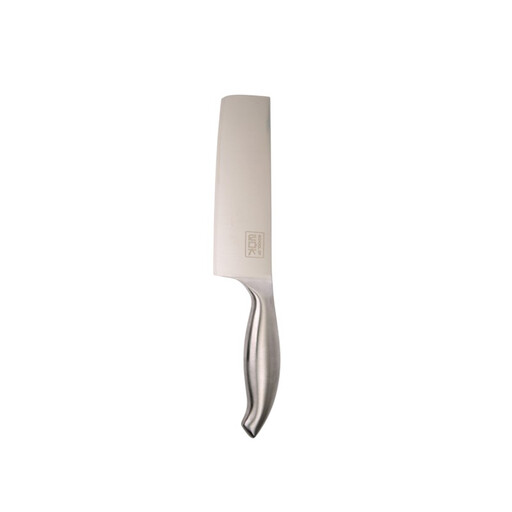
Why This Fits Their Persona: Its medium 7-inch format is a practical starting point for home cooks preparing vegetables, fish, meat and stir-fry ingredients without moving straight to a larger cleaver.
The listing specifies a stainless steel blade, straight edge and intended ingredients, helping buyers assess it by construction and use rather than vague sharpness claims.
Medium flat 7-inch blade; ergonomic handle; suitable for meat, fish, vegetables and stir-fry ingredients.
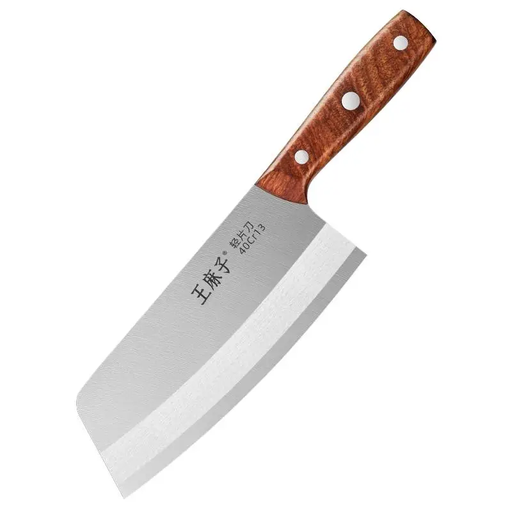
Why This Fits Their Persona: The 190 mm forged stainless steel design suits cooks who want one substantial kitchen knife for slicing, chopping and everyday meat preparation.
The listing provides a specific 190 mm size and identifies forged stainless steel construction, giving more useful buying information than an unspecified “professional” label.
190 mm blade; forged stainless steel construction; designed for meat cutting, vegetable chopping and slicing.
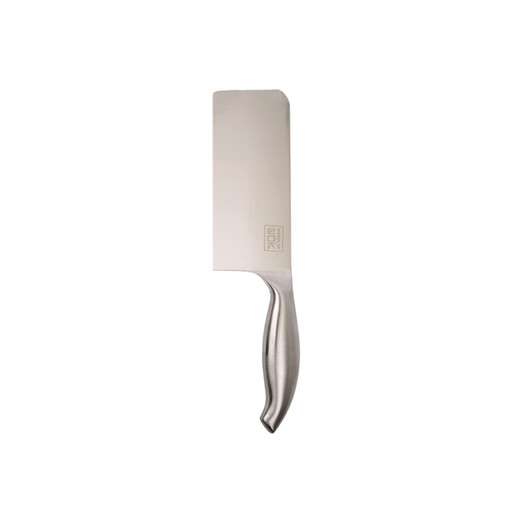
Why This Fits Their Persona: The longer flat 7-inch blade is suited to regular stir-fry preparation and cooks who want a dedicated Chinese cleaver for repeated chopping, slicing and dicing.
The product guidance clearly limits use on bones and frozen foods, reducing the risk of treating a versatile cleaver as a heavy-duty bone chopper.
Long flat 7-inch straight edge; ergonomic handle; suitable for meats, fish, vegetables and other stir-fry ingredients.
We have compiled a complete, real-time list of products that fully satisfy these strict selection criteria and UK safety regulations.
Yes, many kitchen cleavers are designed for both vegetables and boneless meat. A straight-edged Chinese cleaver can handle chopping, slicing and dicing, but it should not be assumed to be suitable for bones or frozen food. Check the individual product instructions before use.
For many UK home kitchens, a 7-inch cleaver is a practical size for vegetables, fish, boneless meat and stir-fry ingredients. Larger 190 mm designs offer a little more blade length, while smaller knives may feel easier to control on compact boards.
Hand wash and dry it promptly, use an appropriate chopping board and avoid twisting the blade. Regular sharpening with a compatible tool can help maintain cutting performance. Store the cleaver safely so the edge does not strike other utensils.