
24/7 全天候客户支持

免费退货

当日/次日达

品质保障

开启新人专享福利: 全场免邮 | 低至 2 折 | 免费试用 30 天 JoyPlus 会员
下载 Joybuy
Navigating cookware choices can feel unnecessarily complicated once technical metallurgy terms like 304 and 316 appear on packaging. Both grades belong to the trusted austenitic stainless steel family, providing durable, non-porous surfaces that never impart metallic flavours to food. In British kitchens, where energy-conscious induction hobs and varied culinary repertoires ranging from slow-simmered acidic bolognaise to quick vegetable broths are commonplace, choosing the right steel grade directly influences how your cookware holds up across years of daily use.
The core difference between 304 and 316 comes down to composition, heat distribution, and your typical cooking routine. While 304 steel offers dependable rust protection for all-round boiling, braising, and steaming, 316 steel incorporates molybdenum into the alloy for enhanced resistance against pitting from sea salt and harsh acids. Pairing these metals with complete tri-ply cladding or dense encapsulated bases ensures uniform heat without hot spots, helping you curate a functional kitchen setup that makes everyday meal preparation straightforward and rewarding.
While 316 stainless steel delivers exceptional defense against saltwater corrosion and harsh acidic ingredients, standard 304 grade remains the industry benchmark for general domestic cooking. Overpaying for 316 across large soup pots or everyday boiling pans can inflate your kitchen budget unnecessarily when high-grade 304 handles basic stocks, pasta cooking, and braising without any structural degradation.
Pans with an encapsulated base confine their conductive aluminium layer strictly to the bottom disc, leaving the single-ply sidewalls prone to hot spots. Full tri-ply construction runs the aluminium core seamlessly up the entire body, ensuring that thicker sauces, curries, and reduced broths heat evenly along the perimeter rather than scorching where the side meets the base.
Cookware performance relies heavily on how effectively the lid retains moisture and internal energy. Flimsy stamped lids allow moisture to boil off quickly, requiring higher stove settings and constant liquid top-ups. Choosing pots with cushioned silicone seals or mechanical locking lids locks in delicate cooking juices and prevents excessive condensation build-up in compact kitchen spaces.
The chemical makeup of the cooking surface dictates how the pot responds to heavy seasoning, acidic ingredients, and frequent soaking.
Heat efficiency depends on how conductive metals are layered across the body to work with modern induction, gas, or ceramic cooktops.
Matching the pot shape and internal volume to your household size minimises power consumption and simplifies meal organisation.
These selected pots highlight the practical advantages of 304 and 316 stainless steel across varied cooking styles and hob setups.
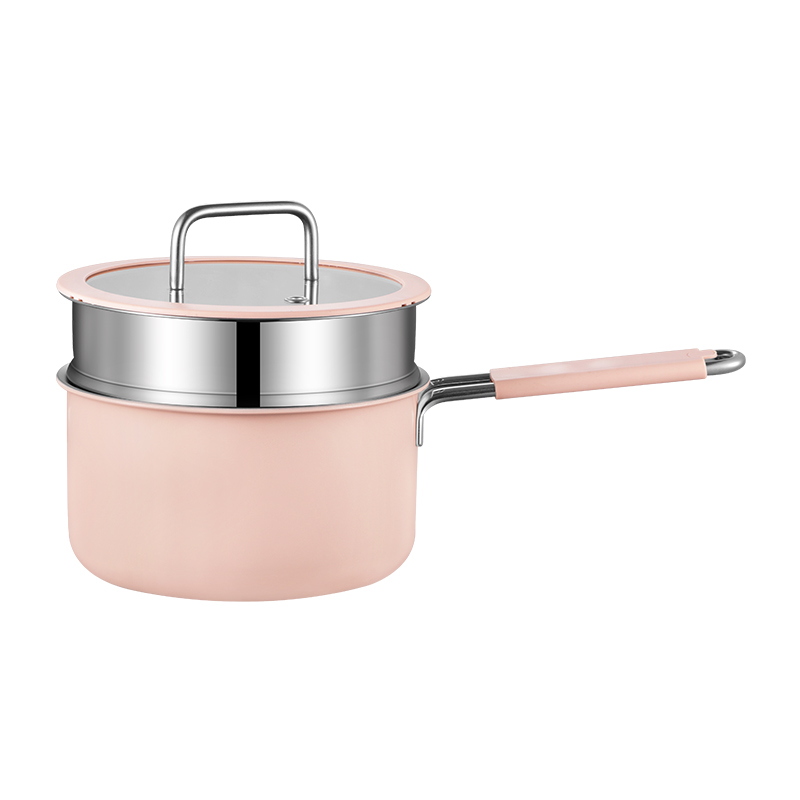
Why This Fits Their Persona: This saucepan features a 16cm diameter and 4000ml volume paired with a matching steamer basket, allowing you to boil soup noodles and steam fresh vegetables simultaneously. Its tri-ply 316 stainless steel interior ensures that acidic broths and salted sauces leave no lingering marks, while the pink ceramic-coated exterior adds a stylish touch to modern flat kitchens.
Eliminates pitting corrosion from salted cooking liquids thanks to the resilient 316 food-grade interior, while the silicone-rim glass lid seals steam quietly without rattling or spilling over the stovetop.
Full versatility across gas, induction, ceramic, and halogen hobs, combining a durable uncoated matte-polished interior for metal utensil resilience with an exterior ceramic finish that wipes clean effortlessly.
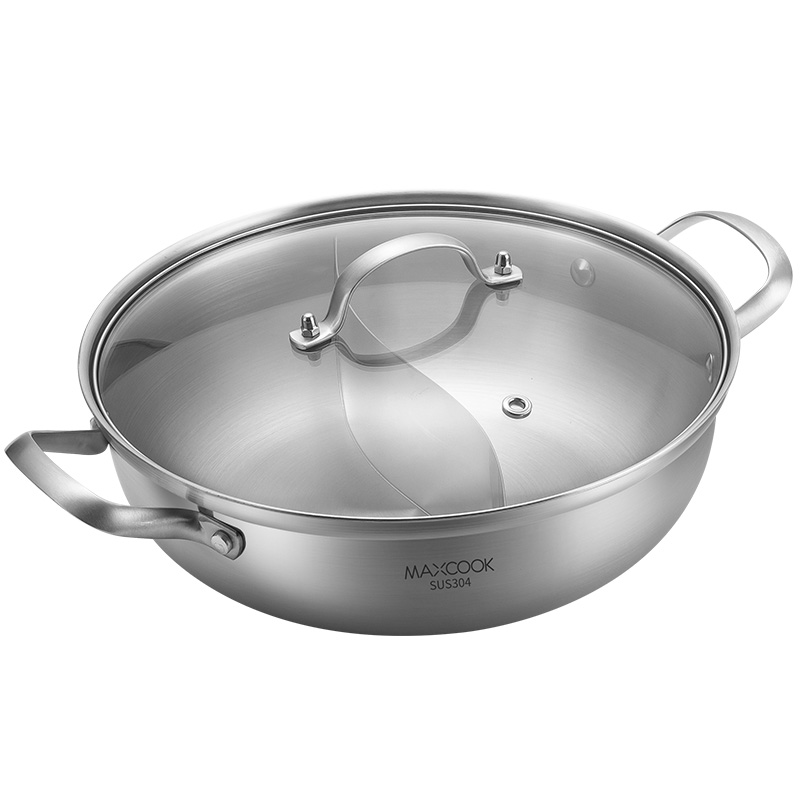
Why This Fits Their Persona: Spanning 28cm with sturdy dual handles, this communal dining vessel is built for table-top entertaining on induction or gas cooktops. The internal non-removable divider allows you to serve two contrasting broths at once, making it simple to cater to different heat preferences or dietary requirements in one shared pot.
Prevents messy flavour mingling and cross-contamination because the non-removable central barrier remains permanently sealed against vigorous boiling, avoiding the leaks common in multi-piece assemblies.
Full tri-ply 304 stainless steel construction ensures both divided soup compartments receive balanced, steady heat, avoiding sluggish simmer rates on either side of the pan.
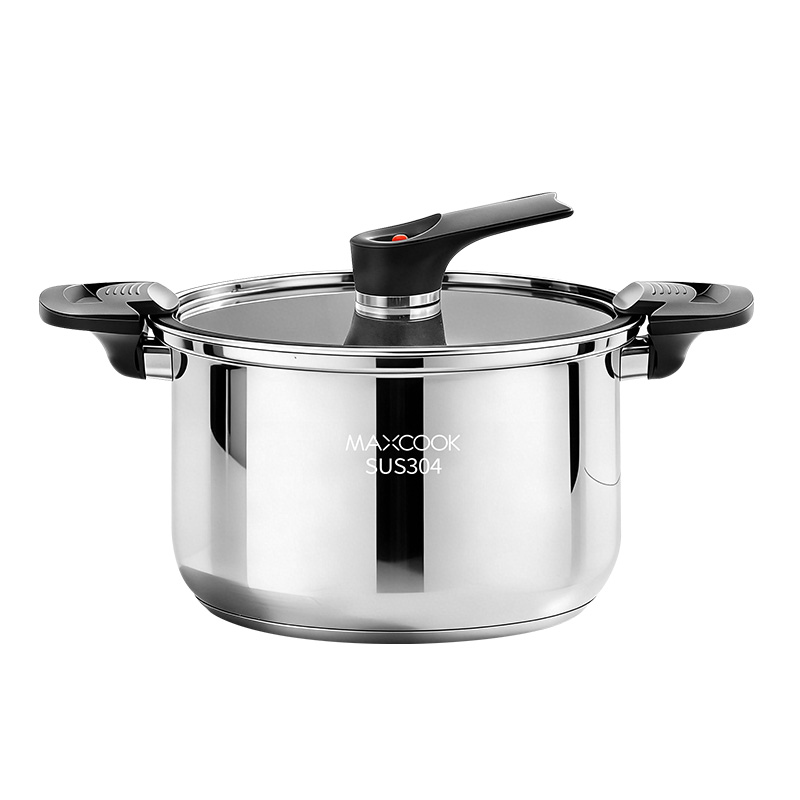
Why This Fits Their Persona: Offering a large 6L capacity inside a 24cm profile, this vessel is tailored for slow-simmered weekend beef broths, batch soups, and tenderising root vegetables. Its locking lid introduces controlled micro-pressure to speed up cooking times while retaining rich aromatic flavours, making weekly meal prep far more time-efficient.
Solves poor heat transfer on induction cookers through a heavy capsulated bottom that draws magnetic energy evenly into the pot, avoiding the scorch rings typical of thin, unweighted stockpots.
Rugged 304 stainless steel body provides dependable daily durability across gas, induction, electric, ceramic, and halogen hobs, with a secure locking mechanism that keeps moisture locked inside.
Warm the dry pan over medium heat for two to three minutes before adding cooking fat. Test the surface temperature with a tiny drop of water; when the droplet forms a smooth marble that glides across the metal rather than evaporating instantly, the micro-pores have closed. Add your oil, let it shimmer briefly, and then introduce ingredients so they sear cleanly without catching.
Standard stainless steel can tolerate dishwashing, but washing by hand using warm water, standard washing-up liquid, and a soft sponge is recommended to maintain the finish. Cookware featuring exterior ceramic coatings or specialized mechanical locking lids should always be hand-washed to protect sealing gaskets and keep the exterior looking pristine.
Rainbow discolouration and pale mineral patches are harmless results of heat exposure and dissolved minerals in tap water reacting with the protective chromium layer. You can clear these marks effortlessly by wiping the interior with a sponge soaked in ordinary white or malt vinegar, followed by a warm water rinse and immediate towel drying.