
24/7 全天候客户支持

免费退货

当日/次日达

品质保障

开启新人专享福利: 全场免邮 | 低至 2 折 | 免费试用 30 天 JoyPlus 会员
下载 Joybuy
As a Joybuy Product Recommendation Officer, my role is to help you navigate the crowded market of kitchen essentials. When it comes to stainless steel cookware, the promises of lifetime durability and flawless performance can often lead to disappointing purchases. Many UK households invest in new pots and pans only to find they don't live up to the hype.
Before you add that shiny new cookware set to your basket, let's look at a few common pitfalls. Understanding these can help you distinguish genuine quality from clever marketing and find pieces that truly serve your kitchen for years to come.
To ensure you're getting durable, high-performing and healthy cooking pans, focus on these key technical specifications.
The numbers on stainless steel refer to its composition, which directly impacts its longevity and performance.
Pure stainless steel is not a great conductor of heat on its own. The secret to a great pan lies in its core. Look for pans with a multi-layer or "tri-ply" construction, where a core of a highly conductive metal like aluminium or copper is sandwiched between layers of stainless steel. This construction, whether across the entire pan body or encapsulated in a thick base disc, is what ensures your food cooks evenly without scorching, especially on powerful induction hobs. A solid stock pot for induction or a responsive frying pan will always feature this type of composite base.
While a complete pots and pans set UK can offer great value and a uniform look, consider your actual cooking habits. Do you need three different-sized saucepans, or would your money be better spent on a high-quality wok with lid for stir-fries and a versatile steamer pot for healthy vegetables and dumplings? Sometimes, building a collection of individual, specialised pieces is a more practical approach than buying a set where some items may go unused.
Based on these practical criteria, here are a few options from our catalogue, matched to different cooking styles and household needs.
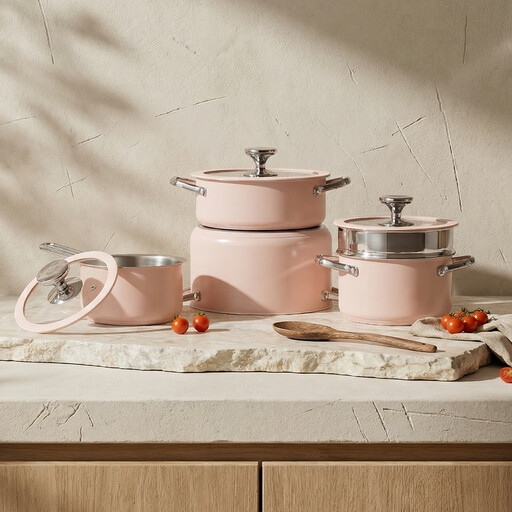
Why This Fits Their Persona: This set is ideal for families who prepare a variety of meals daily. It includes multiple pot sizes, one with a steamer insert, covering everything from boiling pasta to steaming vegetables for healthy dinners. The combination of a durable steel interior and an easy-clean ceramic exterior appeals to those prioritising both longevity and convenience.
The core construction is 304 stainless steel, avoiding the durability issues of lower-grade metals. Its base is designed for all hobs, providing the reliable, even heating needed for induction cooking.
A versatile cookware set with four essential sizes. The external ceramic coated finish resists discolouration and makes cleaning simpler.
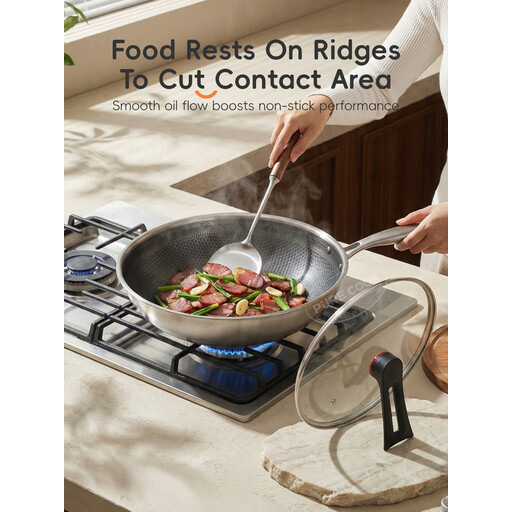
Why This Fits Their Persona: For the home cook who loves the high-heat, rapid cooking of Asian cuisine, a dedicated wok is essential. This 32cm model is large enough for family-sized stir-fries and its honeycomb texture is designed for searing with less oil, providing a great alternative to chemical non-stick coatings.
It tackles the "misleading non-stick" claim by offering a physical, textured surface that reduces sticking, rather than an invisible coating. Its three-layer composite structure ensures it avoids the "inefficient induction" pitfall, heating quickly and evenly.
The interior honeycomb pattern is scratch-resistant, allowing for the use of metal utensils. It comes complete as a wok with lid to trap steam for braising or steaming.
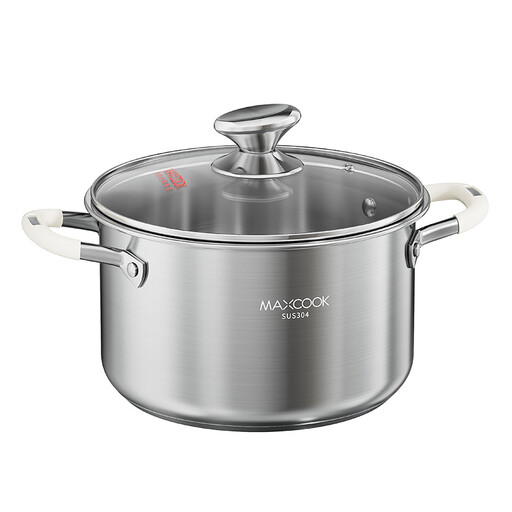
Why This Fits Their Persona: Perfect for those who love to meal prep or cook large family meals like stews, curries and soups. The 4.3-litre capacity is generous without being unwieldy and the silicone-wrapped handles provide a more secure grip when lifting a full, heavy pot from the hob.
This is a purpose-built stock pot for induction. Its solid 304 steel body and composite base are designed for durability and efficient heating, steering clear of the flimsy construction and poor performance of low-quality alternatives.
A practical, large-capacity pot for batch cooking. The heat-resistant silicone handles are a significant safety and comfort feature compared to standard steel handles.
We have compiled a complete, real-time list of products that fully satisfy these strict selection criteria and UK safety regulations.
1. Why does food stick to my new stainless steel pan? Unlike coated non-stick pans, stainless steel requires a little technique. For a low-stick surface, you must pre-heat the pan properly. Place the dry pan on a medium heat for a minute or two. Test its readiness by flicking a tiny drop of water onto the surface. If it sizzles and evaporates, it's not ready. If it forms a single, cohesive ball that glides around like mercury, the pan is at the perfect temperature. Now you can add your oil, let it warm for a few seconds and then add your food.
2. Is it safe to use metal utensils on stainless steel cookware? On uncoated stainless steel, yes. This is one of its main advantages over coated pans. You can use metal whisks, spoons and spatulas without fear of damaging the cooking surface or releasing harmful chemicals. While you might see minor cosmetic scratches over time, this will not affect the pan's performance or safety. For any pan with a ceramic or other non-stick coating, you should always use wood, silicone or nylon utensils to protect the surface.
3. How do I clean the rainbow-coloured stains from my pans? That rainbow or bluish tint is called "heat tint." It's a harmless and normal reaction of the chromium in the steel to high heat and does not affect the pan's safety or performance. To remove it and restore the original shine, simply wipe the inside of the pan with a cloth dipped in a small amount of white vinegar or lemon juice. Alternatively, a paste made from baking soda and water can be used as a gentle abrasive. Rinse thoroughly afterwards.