
24/7 Customer Support

Free returns

Same-day & Next-day Delivery

Quality Guaranteed

Unlock Your Welcome Offers: FREE Delivery | Up to 80% OFF | Free 30-day JoyPlus trial
Download the APP
As a Joybuy Product Recommendation Officer, I often see home cooks in the UK looking for ways to recreate their favourite deep-fried dishes, from crispy tempura to perfect golden chips. While the idea is appealing, the reality can be disappointing if you have the wrong equipment. A dedicated frying pot seems simple, but many products on the market come with hidden flaws that lead to soggy results and wasted money.
Before you make a purchase, it's important to be aware of a few common pitfalls. Many home cooks are let down by:
To avoid these issues and choose a reliable tool for your kitchen, focus on a few core parameters. These objective features are far more important than marketing hype.
When it comes to cookware for high-temperature cooking, the material is paramount. Look for products explicitly made from 304 stainless steel cookware. This food-grade alloy is known for its excellent durability, high-temperature resistance and corrosion-proof properties. It won't react with foods, impart a metallic taste or rust after a few uses, ensuring both safety and longevity. A pot with a single-piece forged body is even better, as it eliminates weak points and enhances structural integrity.
For consistent frying, even heat distribution is crucial. A pot with a multi-layer composite bottom is designed for this purpose. This construction typically sandwiches a layer of a highly conductive metal like aluminium between layers of stainless steel. This allows the pot to heat up quickly and, more importantly, distribute that heat evenly across the base. This feature is especially critical when looking for a deep frying pot for induction hob, as it ensures a stable and efficient connection with the magnetic field.
The shape and size of the pot can significantly impact your frying experience. Many find that a small deep fat fryer pan, often around 20-24cm in diameter, is more practical for home use. The design, often seen in a Japanese frying pot or 24cm tempura fryer, is typically deeper and narrower than a standard saucepan. This clever design requires less oil to achieve the necessary depth for frying, making it more economical and easier to manage.
Based on these practical criteria, here are a few recommendations matched to different types of home cooks.
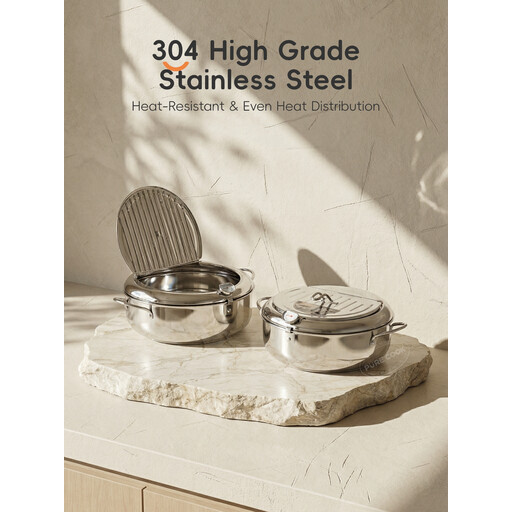
Why This Fits Their Persona: This user values control and consistency above all. They want to make delicate dishes like tempura or perfectly fried chicken, where oil temperature is critical. This pot is designed specifically for that purpose.
The built-in food-grade stainless steel probe thermometer provides accurate, real-time temperature readings in Celsius. Its 304 stainless steel body and multi-layer composite bottom address the pitfalls of warping and poor induction performance.
The dedicated deep and narrow design is oil-efficient, and the pot is fully compatible with gas, electric and induction hobs. The mirror-polished interior simplifies cleaning.
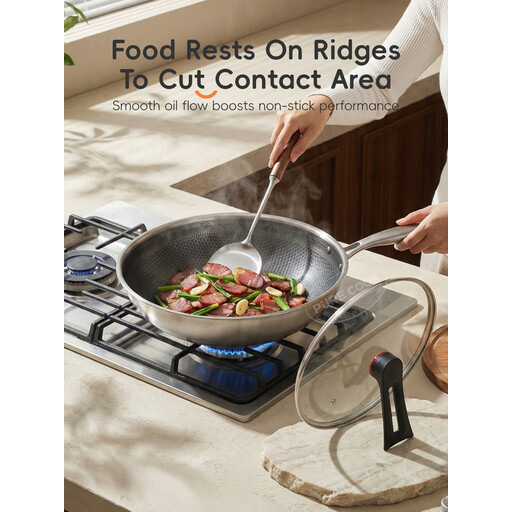
Why This Fits Their Persona: This cook needs a larger, multi-functional pan for family meals. They might stir-fry one night and deep-fry the next, valuing capacity and versatility over a single-purpose tool.
Its three-layer 304 stainless steel construction ensures it won't warp and provides excellent heat distribution on all hobs, including induction. The honeycomb texture offers a physical non-stick surface without chemical coatings.
The large 32cm diameter is suitable for bigger batches of food. It's a durable, all-in-one pan for stir-frying, braising and deep frying, making it a great workhorse for a busy family kitchen.
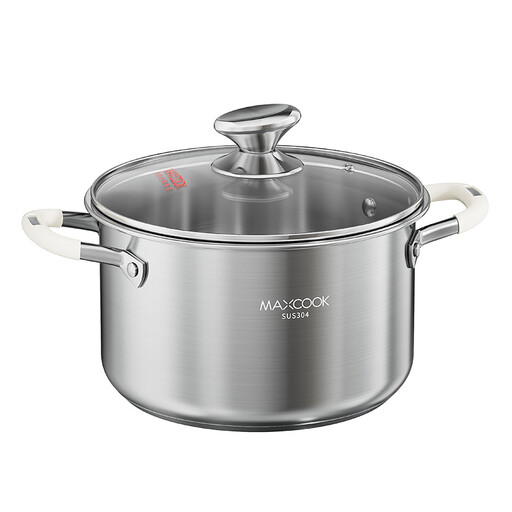
Why This Fits Their Persona: This individual lives in a flat with limited kitchen storage. They need one high-quality pot that can handle soups, stews, boiling pasta and occasional deep frying. Durability and versatility are key.
This pot is made from premium 304 food-grade stainless steel with a flat composite bottom, ensuring it works efficiently on all hobs, including induction. Its solid build quality resists warping and damage from high heat.
Its 4.3L capacity and deep sides make it suitable for deep frying small batches, while also being the perfect size for daily cooking tasks. The heat-resistant silicone handles provide a secure grip.
We have compiled a complete, real-time list of products that fully satisfy these strict selection criteria and UK safety regulations.
Is a stainless steel deep fryer pot safe for an induction hob? Yes, provided it has a magnetic composite base. High-quality stainless steel pots designed for modern kitchens will include this feature. Always check the product specifications for "induction compatible" or look for a multi-layer composite bottom to ensure efficient performance on your induction hob.
How do I clean and maintain a stainless steel frying pot? After the oil has cooled completely, dispose of it properly. Wash the pot with warm, soapy water and a soft sponge. For stubborn residue, you can simmer a mixture of water and vinegar in the pot for a few minutes before washing. To prevent water spots and maintain its shine, dry the pot thoroughly with a soft cloth immediately after washing. Avoid using abrasive steel wool or harsh cleaners, which can scratch the surface.
What is the ideal oil temperature for deep frying? This depends on the food, but a general range is between 175°C and 190°C (350°F - 375°F). Lighter, more delicate items like tempura do well at the lower end of this range, while heartier foods like chips or breaded chicken are often fried closer to 190°C for a crispy, golden-brown finish. A reliable thermometer is essential for maintaining this temperature.