
24/7 Customer Support

Free returns

Same-day & Next-day Delivery

Quality Guaranteed

Unlock Your Welcome Offers: FREE Delivery | Up to 80% OFF | Free 30-day JoyPlus trial
Download the APP
Stainless steel divided plates can simplify family meals, packed lunches, portion planning and outdoor dining. Separate sections help keep sauces away from dry foods, while metal construction is generally more resistant to breakage than ceramic or some lightweight plastics.
However, product listings do not always make the important differences clear. Before buying, check the construction, compartment layout and cleaning instructions rather than relying on broad phrases such as “premium”, “heavy duty” or “restaurant quality”.
“Stainless steel” is a broad description. The grade affects corrosion resistance, durability and suitability for food contact. Products made from 304 stainless steel are commonly selected for food-serving applications, but buyers should still check that the product listing clearly identifies the material and intended use.
Be cautious when a listing only says “metal” or “steel” without specifying the grade, finish or food-use suitability.
A 3-compartment plate may suit a main meal with a side dish and sauce, while a 5-compartment food tray offers more separation for mixed meals, snacks or nursery portions. A shallow tray may be awkward for sauces, whereas very deep sections can make smaller portions difficult to serve.
Look for the number of sections, approximate diameter, depth and whether the shape fits your cupboard, dishwasher and lunch bag.
Dishwasher-safe plates are convenient, but repeated washing can still affect polished or brushed surfaces over time. Abrasive scourers may leave visible marks, and water spots can appear if stainless steel is left wet.
Check the care instructions. A soft sponge, mild detergent and thorough drying are sensible habits, even when the product is listed as dishwasher safe.
For everyday family use, 304 stainless steel plates offer a practical balance of corrosion resistance and durability. The product description should identify the material as food-grade where applicable and explain whether the plate is intended for food serving.
Some listings refer to standards such as GB 4806.9 or US FDA requirements. These references should be read as information supplied for that product listing, not as a substitute for checking the seller’s documentation and UK food-contact suitability when buying for a business.
For cafés, canteens and catering operations, also consider whether the item is suitable for repeated commercial washing and whether replacement stock is available.
A seamless, one-piece design has fewer joints where food residue can collect. This can be useful for children’s meals, batch serving and busy catering environments. Brushed or satin finishes may make fingerprints less noticeable, while polished surfaces can create a more reflective table setting.
Look for a product with clearly stated construction details. “Scratch-resistant” should not be interpreted as scratch-proof: sharp utensils, abrasive pads and rough stacking can still mark the surface.
A larger divided dinner tray provides more room for a complete meal but may be less convenient for smaller tables or packed lunches. Lightweight designs are useful for camping plates and picnics, while thicker construction may feel more stable for catering and regular household use.
Remember that stainless steel conducts heat. A plate holding hot food may become hot to touch, so use care when serving children and allow freshly heated food to cool before handling. Stainless steel plates are also not suitable for microwave use unless the product instructions specifically state otherwise; metal should normally be kept out of microwaves.
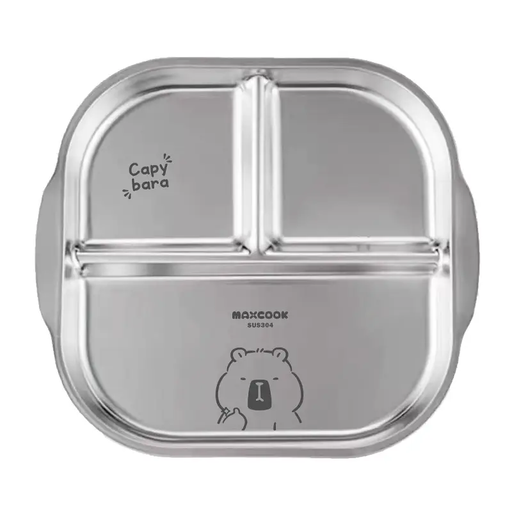
Why This Fits Their Persona: This square compartment dinner plate suits households wanting a straightforward format for mains, sides and sauces without moving to a larger five-section tray. It can also work for casual serving in cafés or small catering settings.
The listing identifies 304 stainless steel, three compartments and dishwasher-safe cleaning, making the key material and care details easier to verify.
Food-grade 304 stainless steel; three sections for separating a main course, sides and sauces; dishwasher safe according to the listing.
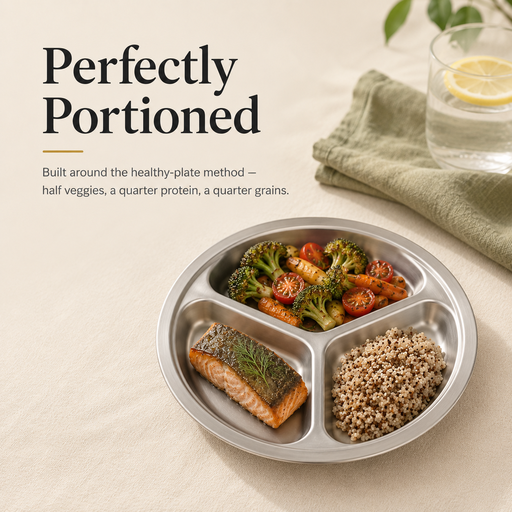
Why This Fits Their Persona: This two-piece set is suited to families, parents serving children’s meals and shoppers who want a reusable meal plate with a more considered finish for everyday dining.
The one-piece design avoids seams and gaps, while the care guidance specifically warns against abrasive cleaners that could damage the satin finish.
Two plates per set; 19.5cm diameter and 3.9cm height; three compartments; dishwasher and steriliser safe according to the product information.
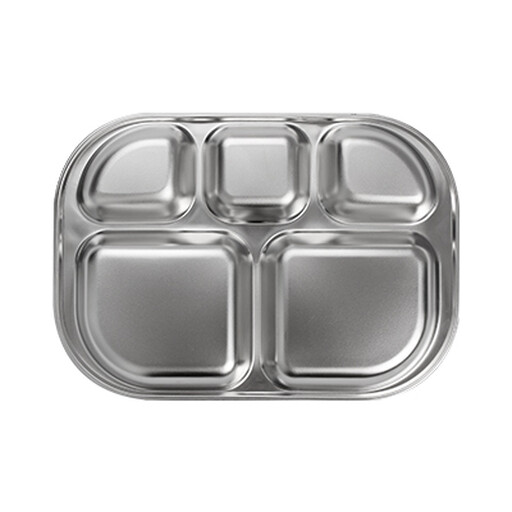
Why This Fits Their Persona: Five independent sections suit nurseries, family serving, camping groups, cafeterias and catering buyers who need several foods kept apart on one tray.
The product description specifies five independent compartments and a single tray, helping buyers confirm the layout instead of relying on generic “divided” wording.
304 stainless steel construction; five food sections; listed as dishwasher safe; suitable for household, outdoor and catering use.
We have compiled a complete, real-time list of products that fully satisfy these strict selection criteria and UK safety regulations.
Some are, but this must be confirmed in the individual listing. The products above are described as dishwasher safe. Use mild detergent where recommended, avoid abrasive pads and dry the plates after washing to reduce marks and water spots.
Generally, no. Metal can cause arcing and damage in a microwave. Check the product instructions, but assume a stainless steel plate is unsuitable for microwave use unless the manufacturer clearly states otherwise.
Their service life depends on the steel grade, thickness, finish, frequency of use and cleaning method. A one-piece 304 stainless steel plate has no ceramic surface to chip and is not prone to shattering, but it can still dent, scratch or develop cosmetic marks. Careful stacking and non-abrasive cleaning can help maintain its condition.