
24/7 Customer Support

Free returns

Same-day & Next-day Delivery

Quality Guaranteed

Unlock Your Welcome Offers: FREE Delivery | Up to 80% OFF | Free 30-day JoyPlus trial
Download the APP
For packed lunches, batch cooking and fridge organisation, stainless steel food storage containers can offer a reusable alternative to disposable plastic tubs. However, attractive product photos and phrases such as “airtight” or “leak-proof” do not always tell you whether a container will suit your routine.
The most useful comparison points are practical: material grade, lid construction, capacity, cleaning instructions and whether the shape works in your fridge, freezer or lunch bag. This guide highlights common buying pitfalls and matches suitable options to different household needs.
“Stainless steel” is a broad description. The product listing may not identify the grade, and different grades can have different resistance characteristics and intended uses. If material information matters to you, look for a clearly stated specification such as 304 stainless steel rather than relying on a generic metal description.
Also check which components touch the food. A stainless steel base may be paired with a plastic lid, silicone seal or polypropylene clips. These parts affect cleaning, odour retention and everyday durability.
An airtight food storage container is generally designed to restrict air exchange, while a leak-proof food container is intended to retain liquid when closed correctly. These descriptions can depend on the seal, clips and how full the container is.
For soups, sauces and dressings, examine whether the lid includes a removable silicone seal and secure latching clips. A loose-fitting cover may be adequate for dry snacks but unsuitable for a work bag or school rucksack.
A large set may appear economical, but unused sizes can take up cupboard space. Conversely, a container that is too small can lead to overfilling, damaged seals or food being packed separately.
Compare the stated millilitre capacity with the meals you actually prepare. Check the external dimensions too, particularly if you want stackable kitchen storage containers or need them to fit inside a narrow freezer drawer.
For buyers comparing 304 stainless steel containers, a stated 304 grade provides more specific material information than simply “stainless steel”. It is still sensible to check the full product specification and care instructions, including whether the lid and seal are suitable for food contact.
Avoid storing highly acidic or salty foods for unnecessarily long periods if the manufacturer’s instructions advise against it. Drying the container and seal thoroughly after washing can also help reduce lingering odours and moisture build-up.
Look for:
Stainless steel bases are not suitable for microwave use, so check the instructions before reheating. “Freezer-safe food containers” should also be used within the stated temperature and care limits.
A dual-compartment bento box can separate a main meal from snacks without requiring multiple tubs. For meal preparation, round containers in several sizes may be more flexible for leftovers, ingredients and portioning.
If you want dishwasher-safe food containers, confirm whether this applies to the complete product or only selected parts. Remove silicone seals where instructed, and allow all components to dry before reassembly. This helps prevent trapped food residue around the lid.
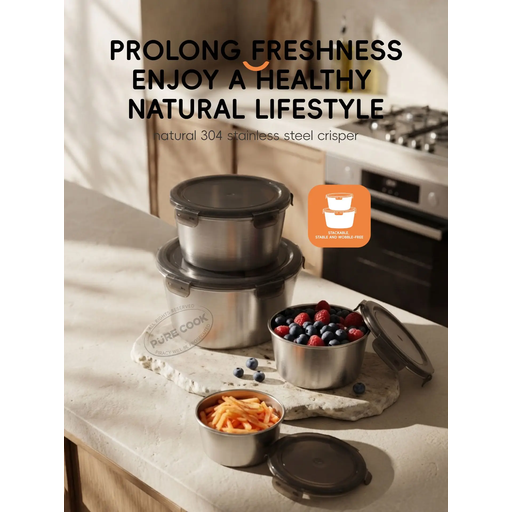
Why This Fits Their Persona: A four-pack gives new meal-preppers or smaller households several matching containers for leftovers, packed lunches and general fridge organisation.
The listing identifies 304 stainless steel and includes lids with clasps, giving buyers clearer information than a generic metal container with an unspecified closure.
Four round containers; 304 stainless steel bases; black transparent PP lids with clasps.
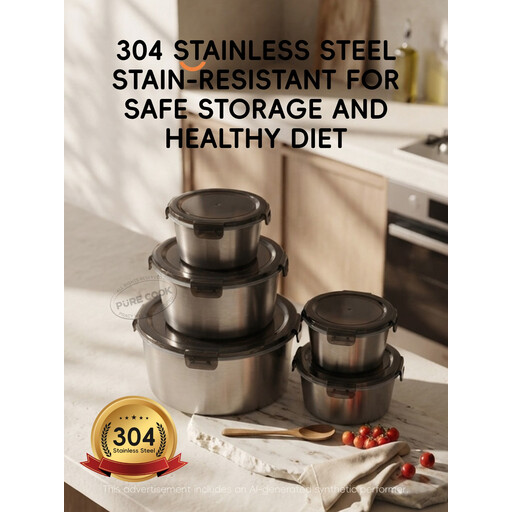
Why This Fits Their Persona: The range of capacities suits households that want one coordinated set for small portions, leftovers, bulk ingredients and freezer storage.
The set lists five sizes rather than relying on a single oversized tub: 350 ml, 600 ml, 1,000 ml, 2,000 ml and 3,500 ml. This can reduce mismatched storage needs.
Five stated capacities; 304 stainless steel; PP latching lids; listed as freezer- and dishwasher-safe.
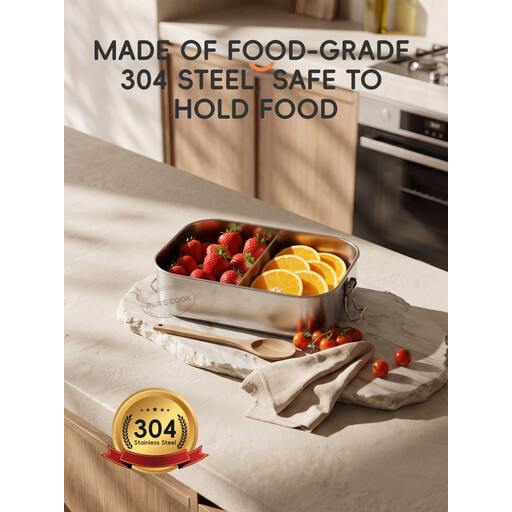
Why This Fits Their Persona: Its divided format is suited to office workers, schoolchildren and commuters who want a main meal and snack in one stainless steel lunch box.
The rectangular design has two compartments, while the product information specifies lockable clips and a removable silicone seal, addressing common separation and cleaning concerns.
Two compartments; 61.2 fl oz stated capacity; 18 × 15 × 6.7 cm dimensions; dishwasher-safe listing.
We have compiled a complete, real-time list of products that fully satisfy these strict selection criteria and UK safety regulations.
Some are listed as freezer-safe, but check the individual product instructions before use. Leave expansion space for liquids, avoid sudden temperature changes and make sure the lid is properly fitted once the food has cooled.
The steel body itself does not create an airtight seal. The result depends on the lid, silicone gasket and closure mechanism. Containers with latching lids may provide a more secure closure, but seals should be clean, correctly positioned and undamaged.
Lifespan depends on construction, frequency of use, food types, cleaning method and lid condition. Stainless steel bases can remain useful for a long time when cared for properly, while silicone seals and plastic lids may need replacing sooner if they become cracked, distorted or unable to close securely.