
24/7 全天候客户支持

免费退货

当日/次日达

品质保障

开启新人专享福利: 全场免邮 | 低至 2 折 | 免费试用 30 天 JoyPlus 会员
下载 Joybuy
Finding a reliable frying pan can feel like a never-ending quest. Many of us have experienced the disappointment of a pan that warps, loses its non-stick surface after a few months, or heats so unevenly that it burns food in one spot while leaving another undercooked. A high-quality stainless steel frying pan is a cornerstone of any serious home kitchen, offering durability, excellent heat control and versatility.
This guide is designed to help you navigate the options. We will look at the key features to consider before buying and highlight a few standout models that cater to different cooking styles and needs, from daily meals to more ambitious culinary projects.
Making the right choice comes down to understanding a few key details. Focusing on material, hob compatibility and surface type will ensure you invest in a pan that serves you well for years to come.
Not all stainless steel is created equal. The two most common grades used in cookware are 304 and 316.
Before you buy, always check that the pan is compatible with your hob. While most modern pans are versatile, it's a crucial detail to confirm.
The term "non-stick" can mean different things. Traditional coated pans offer convenience, while newer technologies provide chemical-free alternatives.
Here are a few recommendations that showcase the variety and quality available, selected to meet the needs of UK home cooks.
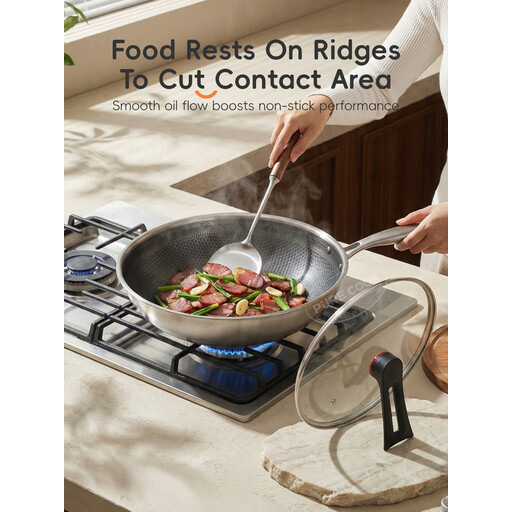
Why It Stands Out: This non-stick wok uses an innovative single-screen honeycomb texture on its interior. This creates a physical non-stick effect without a chemical coating, making it a durable, Teflon-free pan. Its three-layer steel construction ensures fast, even heating across gas, induction and electric hobs.
Pros:
Who is it for? The home cook who wants a large, versatile pan for a variety of cooking methods and prefers a durable, chemical-free non-stick surface.
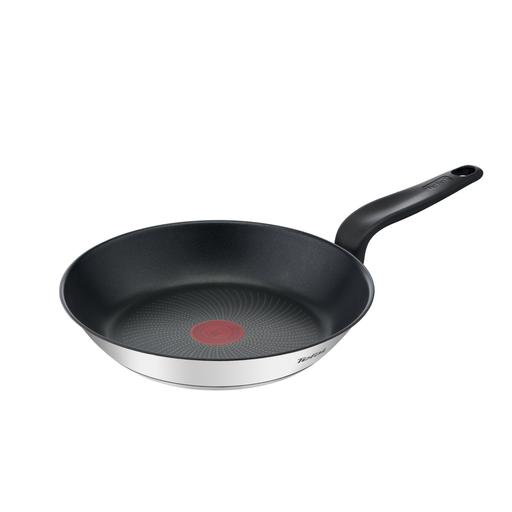
Why It Stands Out: This pan combines the reliability of a stainless steel body with the convenience of a traditional non-stick coating. As a large frying pan with a 30cm diameter, it’s perfectly suited for cooking family-sized meals, from fried breakfasts to pan-seared fish fillets.
Pros:
Who is it for? Anyone looking for a large, reliable pan with a conventional non-stick surface for hassle-free daily cooking.
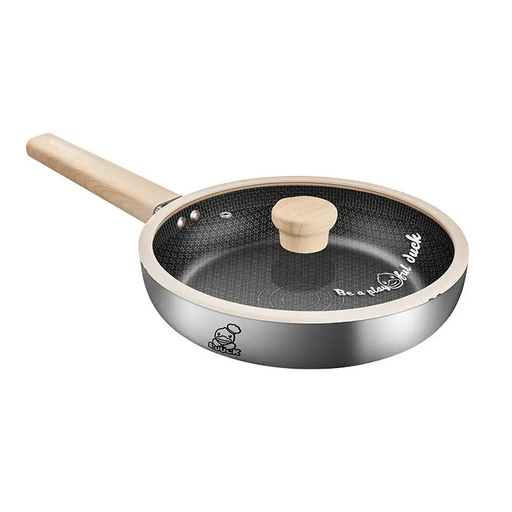
Why It Stands Out: This pan is constructed from premium 316 stainless steel, offering superior corrosion resistance and longevity compared to standard pans. Its uncoated surface is ideal for achieving a perfect sear on meats and vegetables. The playful B.Duck design adds a unique touch to the kitchen.
Pros:
Who is it for? The enthusiastic cook who prioritises material quality and durability, and who understands how to use an uncoated pan for superior searing performance.
If the models above aren't quite what you're looking for, there is a wide world of stainless steel cookware to discover. Whether you need a different size, a specific handle type or a complete pan set, you can find a solution that fits your kitchen perfectly.
Explore our full range of stainless steel induction hob compatible cookware to find the perfect match for your kitchen.
How do you stop food from sticking to a stainless steel frying pan? The key is proper heat management. First, pre-heat the pan over a medium heat for a minute or two. Add a thin layer of oil and let it heat until it shimmers. This creates a temporary non-stick layer. Adding food to a cold pan with cold oil is a common cause of sticking. Pans with textured surfaces, like a honeycomb pan, can also provide extra assistance.
Can you use metal utensils on a stainless steel pan? For uncoated stainless steel pans, yes. They are very durable and generally won't be damaged by metal spatulas or whisks. For pans with a traditional non-stick coating, it is best to use wood, silicone or nylon utensils to avoid scratching. For textured surfaces, check the manufacturer's guidance; some, like the PURE COOK wok, are designed to be scratch-resistant.
Is a stainless steel pan good for a gas hob? Absolutely. A pan for gas hob needs to be robust enough to handle direct flames, and stainless steel is an excellent choice. Its durability prevents warping, and a quality pan with a thick, multi-ply base will distribute the heat from the gas flame evenly across the cooking surface, preventing hot spots.