
24/7 Customer Support

Free returns

Same-day & Next-day Delivery

Quality Guaranteed

Unlock Your Welcome Offers: FREE Delivery | Up to 80% OFF | Free 30-day JoyPlus trial
Download the APP
Navigating the world of cookware can be a challenge. You invest in a new frying pan, hoping for perfectly seared steaks and flawlessly flipped pancakes, only to find it warps, develops hotspots or worse, isn't compatible with your induction hob. Finding a truly durable sauté pan that performs consistently shouldn't be a matter of trial and error.
As a Joybuy Product Recommendation Officer, my role is to help you find practical, high-quality items that fit your needs. This guide cuts through the clutter, focusing on the features that matter for a great cooking experience. We will explore some excellent options for a stainless steel induction frying pan, looking at different surfaces and sizes to help you make a confident choice.
Before we look at specific products, let's cover a few key considerations. Understanding these will help you identify the right pan for your kitchen.
The surface of your pan dictates how you cook and clean.
The build of the pan is crucial for performance, especially on an induction hob. Look for a pan with a thick, encapsulated base—usually a layer of aluminium or copper sandwiched between stainless steel. This construction ensures the pan heats quickly and evenly, eliminating hotspots that cause food to burn in one area while remaining undercooked in another.
Also, consider if you need an oven safe frying pan. This feature adds immense versatility, allowing you to sear a steak on the hob and then transfer the entire pan to the oven to finish cooking. Always check the maximum oven-safe temperature, especially for the handle.
Frying pans come in various sizes, and choosing the right one depends on your cooking habits. A 21cm frying pan is perfect for a single portion, frying a couple of eggs or making a small sauce. For family meals or cooking larger cuts of meat, a 24cm frying pan or larger offers more space and prevents overcrowding.
Here are a few standout options that balance performance, durability and value.
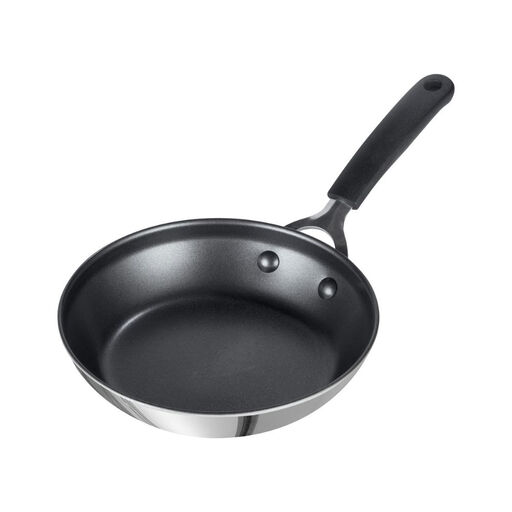
Why It Stands Out: This pan combines the durability of a stainless steel body with the convenience of a scratch-resistant non-stick interior. It’s a practical workhorse for everyday cooking.
Pros:
Who is it for? This is an excellent choice for home cooks who value convenience and easy cleanup for daily meals. It's particularly well-suited for cooking eggs, pancakes and other foods prone to sticking.
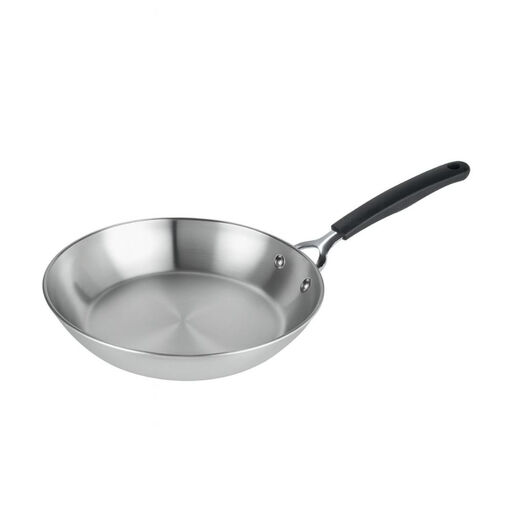
Why It Stands Out: For those who prefer a traditional cooking surface, this uncoated pan offers exceptional durability and high-heat performance, making it a piece of long lasting cookware.
Pros:
Who is it for? This skillet for induction hob is perfect for culinary enthusiasts who enjoy techniques like searing and pan-roasting and are comfortable with the preheating process required for uncoated stainless steel.
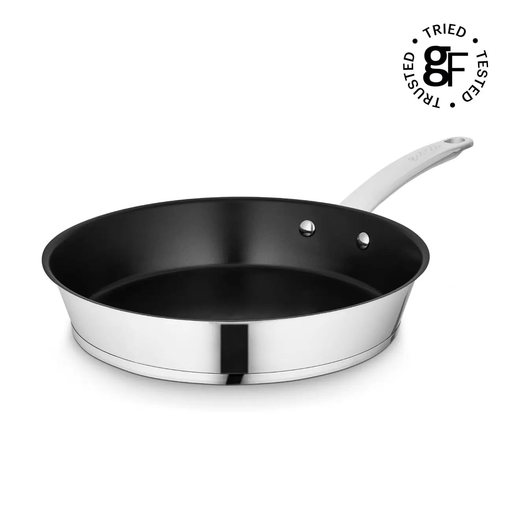
Why It Stands Out: This pan features a superior ceramic coating that is noted by the brand as being 10 times stronger than many traditional non-sticks. Its higher oven-safe temperature makes it incredibly versatile.
Pros:
Who is it for? This pan is for the home cook looking for a versatile, high-performance non-stick option that can handle high heat both on the hob and in the oven.
While a great frying pan is a kitchen cornerstone, a complete cookware collection ensures you're ready for any recipe. If you're also thinking about upgrading your ovenware, you might find what you need in our broader collection.
Explore our full range of durable stainless steel baking pans to complement your new stovetop hero.
1. How do I prevent food from sticking to an uncoated stainless steel pan? The key is proper heat management. First, heat the dry pan over a medium heat for a minute or two. Add a thin layer of oil and heat it until it shimmers. Now the pan is ready. This process, called creating a temporary non-stick surface, helps prevent food from sticking. Avoid placing cold food directly into the hot pan, as this can also cause sticking.
2. Are all stainless steel pans suitable for induction hobs? No, not all of them are. For a pan to work on an induction hob, its base must be magnetic. While stainless steel itself is not always magnetic, cookware designed for induction, like the pans recommended above, features an encapsulated base with a magnetic steel layer. Always look for the induction-compatible symbol (a coil icon) on the packaging or product description.
3. What is the main difference between a ceramic and a traditional non-stick coating? Both surfaces are designed for easy food release. Traditional non-stick coatings often use Polytetrafluoroethylene (PTFE). Ceramic coatings are made from a sand-derived silicon-based gel. They are often praised for their high-heat tolerance and are typically made without the use of chemicals like PFOA or PTFE. Both require care—avoiding metal utensils and harsh scouring pads will help prolong their life.