
24/7 Customer Support

Free returns

Same-day & Next-day Delivery

Quality Guaranteed

Unlock Your Welcome Offers: FREE Delivery | Up to 80% OFF | Free 30-day JoyPlus trial
Download the APP
A quality stainless steel frying pan is a cornerstone of any serious home kitchen. Prized for its durability and ability to deliver a perfect sear, it’s a true workhorse. However, the market is filled with options that look the part but fail to perform, especially on modern induction hobs. Many buyers find themselves with a pan that heats unevenly, warps after a few uses or causes food to stick relentlessly.
As the Joybuy Product Recommendation Officer, my role is to help you navigate these common issues. Before you invest, let's look at the key pitfalls to avoid.
To ensure you get a durable frying pan that performs beautifully, focus on these three core parameters.
The single most important feature for even heating is the pan's construction. Look for pans described as "tri-ply" or "fully clad". A tri-ply frying pan is made from a sandwich of materials:
This multi-layer construction distributes heat quickly and evenly across the entire base and up the sides, eliminating the hot spots common in cheaper, single-layer pans. This makes it a true pan for all hobs, from induction to gas.
Not all stainless steel is the same. The grade refers to its composition and properties.
This choice comes down to your cooking style and priorities.
Based on these practical criteria, here are a few options tailored to different needs and cooking styles.
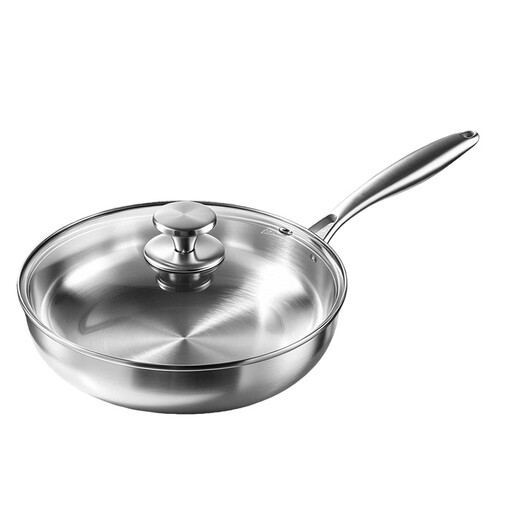
Why This Fits Their Persona: This is an ideal starting point for someone moving to quality cookware. The 22cm size is perfect for daily tasks like frying a couple of eggs or sautéing vegetables for one or two people, without taking up too much cupboard space.
It features a proper tri-ply integrated construction, directly addressing the pitfall of poor induction performance. The aluminium core ensures even heat distribution, preventing hot spots.
Provides the benefits of tri-ply construction and food-grade 304 stainless steel at an accessible price. It's a durable, dishwasher-safe pan for learning stainless steel cooking techniques.
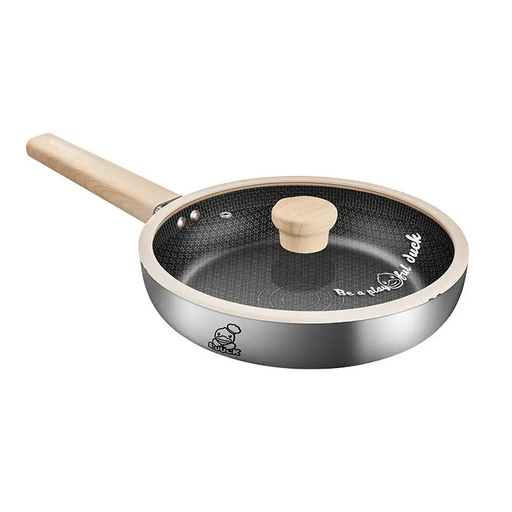
Why This Fits Their Persona: This user prioritises performance and longevity. The generous 28cm frying pan size is perfect for searing multiple steaks, preparing larger family meals or stir-frying. They appreciate premium materials for better cooking results and long-term value.
This pan is made from premium 316 stainless steel, avoiding the "vague material" trap. This ensures superior corrosion resistance and durability, even with frequent use and acidic foods.
The combination of top-tier 316 steel and a versatile 28cm diameter makes this a highly capable and durable frying pan for a wide range of cooking tasks.
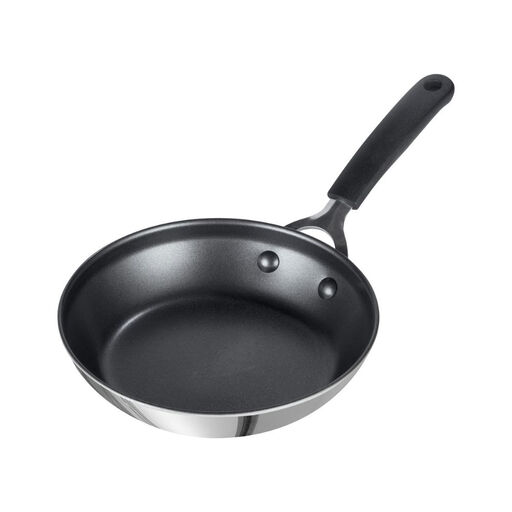
Why This Fits Their Persona: This cook values efficiency and easy clean-up. They want the solid feel and even heating of stainless steel but prefer the effortless food release of a non-stick surface for quick weekday meals.
It features a high-quality encapsulated steel base, which functions like tri-ply to ensure fast, even heating on induction hobs. This avoids the poor performance of cheap, thin-based pans.
This non-stick stainless steel pan offers the best of both worlds: a durable, mirror-polished steel body with a convenient, scratch-resistant coating. It is also dishwasher and oven safe frying pan up to 180°C.
We have compiled a complete, real-time list of products that fully satisfy these strict selection criteria and UK safety regulations.
The key is temperature control, known as the Leidenfrost effect. Heat the dry pan over medium heat for 1-2 minutes. To test if it's ready, drop a tiny splash of water into the pan. If it sizzles and evaporates immediately, it's not hot enough. If it breaks into several small beads that dance across the surface, it's too hot. If the water forms a single, mercury-like ball that glides around, the temperature is perfect. At this point, you can add your oil, let it heat for a few seconds, and then add your food.
For most home cooks, quality 304 stainless steel is perfectly adequate. However, if you are a culinary enthusiast who frequently cooks with acidic ingredients (like tomato sauces or wine reductions), or if you prioritise maximum longevity and corrosion resistance, the upgrade to 316 stainless steel cookware can be a worthwhile long-term investment.
On an uncoated stainless steel pan, yes. It is one of their main advantages. The surface is tough enough to handle metal spatulas and whisks without damage. However, on a non-stick stainless steel pan, you must avoid metal utensils as they will scratch and ruin the coating. Always use wood, silicone or nylon tools on coated surfaces.