
24/7 Customer Support

Free returns

Same-day & Next-day Delivery

Quality Guaranteed

Unlock Your Welcome Offers: FREE Delivery | Up to 80% OFF | Free 30-day JoyPlus trial
Download the APP
A stainless steel kitchen bin can make everyday waste disposal cleaner, quieter and more organised, but appearance alone does not indicate whether a model will suit your household. A narrow bin may save floor space yet hold too little for a busy family, while a large pedal bin may be awkward to open if it is positioned too close to a wall.
The most useful approach is to check capacity, access, cleaning design and available floor space before comparing colours or finishes.
A listed capacity such as 50L kitchen bin or 60L kitchen bin usually refers to the total internal volume. The usable space may be reduced by the inner bucket, lid mechanism or the shape of the container. A 50-litre bin is generally suitable for many family kitchens, but households that produce more packaging or cook frequently may prefer 60 litres.
For a dual-compartment recycling bin, pay attention to how the volume is divided. A 40L model with two 20L sections does not provide one 40L space for general waste. This is useful for sorting, but each compartment may need emptying more often.
Stainless steel is relatively straightforward to wipe clean, but not every surface has the same finish. Polished metal can show smudges quickly, especially in kitchens where the pedal is used frequently. If you want a lower-maintenance exterior, look for a fingerprint-resistant bin or a model described as having a smudge-resistant coating.
Avoid abrasive cleaners and steel wool unless the product instructions specifically permit them. A soft, damp cloth and mild detergent are generally more appropriate for coated surfaces.
A pedal bin is only convenient if the pedal opens the lid smoothly and the liner remains secure. Low-cost designs may leave bag edges visible, allow the liner to slip down or have a lid that closes abruptly.
A removable inner bucket makes liner changes and occasional cleaning easier. Bag holes or fixing rings can also hold the liner in place and create a tidier appearance. A soft-close bin is helpful in open-plan kitchens, flats and offices because the lid lowers slowly rather than slamming shut. However, the mechanism still needs clearance from walls and should not be forced closed by hand.
Measure the intended space, including clearance for the pedal and lid. The JOYFURNOS 50L models measure 43.2 x 37.1 x 63.2cm and require approximately 5cm of space from the wall during use. Their slim, upright format may work well beside a kitchen unit, but check the lid height before placing them beneath shelves.
A 60L bin can reduce how often you empty it, but it will normally occupy more floor space. For compact kitchens, tenants or shared offices, compare the external width and depth rather than relying on litre capacity alone.
A pedal bin or step-on rubbish bin allows you to open the lid while holding food waste, packaging or cleaning materials. Look for a stable base and a pedal positioned where it can be reached without moving the bin.
Some models also offer a 90-degree stay-open function, which is useful when emptying a fridge or cleaning the inner bucket. A soft-close mechanism reduces noise, but it is not the same as an odour seal. If containing smells is a priority, look specifically for an odour-seal rubbish bin and keep food waste in suitable liners.
A single large kitchen waste bin is simple to use, while a dual-compartment model can separate general waste and recycling in one footprint. Before choosing, check whether the two sections have separate pedals and lids, and whether the buckets can be lifted out independently.
Local council recycling collections differ across the UK, so confirm which materials your household separates. A divided bin supports sorting at home, but it does not replace checking your local collection guidance.
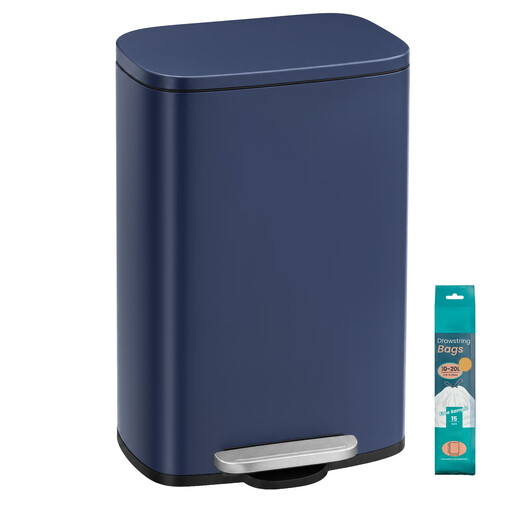
Why This Fits Their Persona: This 50L step-on rubbish bin offers a practical capacity for many UK homes while keeping a relatively slim footprint.
The removable plastic inner bucket and rear bag hole address difficult liner changes and untidy bag edges.
50L capacity, foot pedal, soft-close lid and stainless steel exterior; listed dimensions are 43.2 x 37.1 x 63.2cm.
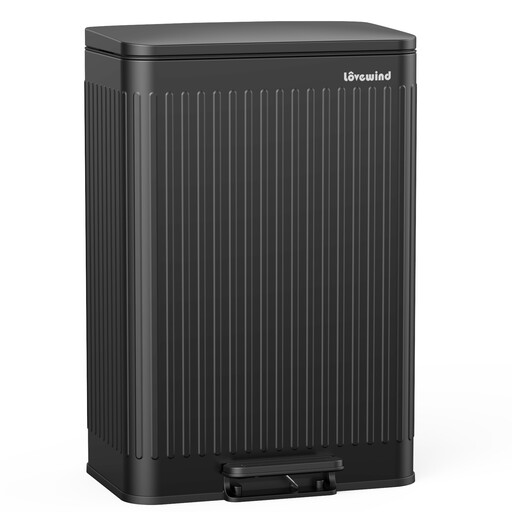
Why This Fits Their Persona: The 60L format and decorative exterior suit households wanting greater capacity without choosing a recycling split.
Its listed smudge-resistant coating helps address visible marks, while the removable buckets simplify liner replacement and cleaning.
60L single-body capacity, soft-close lid, removable inner buckets and 90-degree stay-open function.
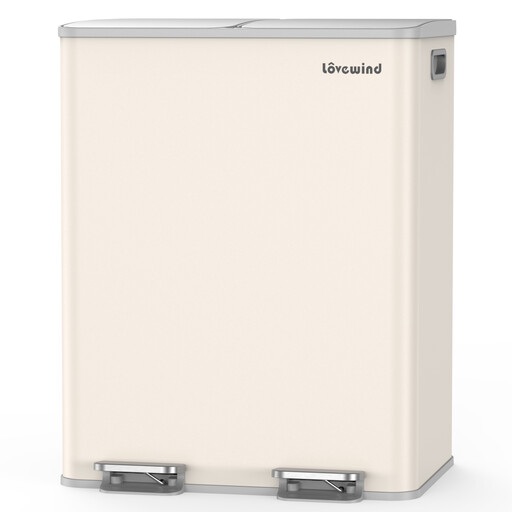
Why This Fits Their Persona: Two 30L sections give busy family kitchens, offices or shared homes a straightforward way to separate waste and recycling.
Separate pedals and inner buckets avoid mixing waste, while fixing rings reduce liner movement in each compartment.
60L total capacity, dual 30L buckets, two pedals, soft-close operation and a 90-degree stay-open lid position.
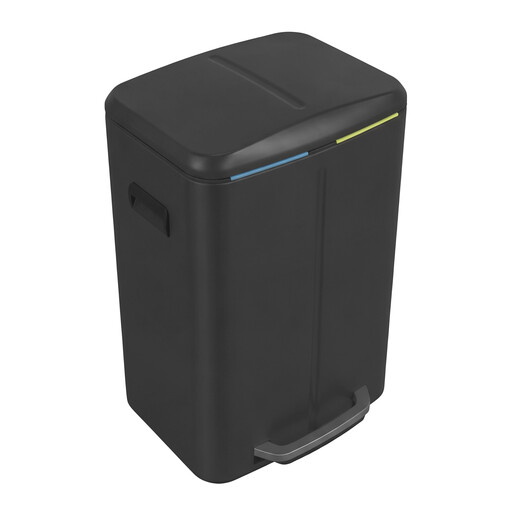
Why This Fits Their Persona: Two 20L compartments suit smaller kitchens, flats and tenants who want sorting without a large single-bin footprint.
The dual removable buckets and rear bag holes tackle awkward cleaning and loose liners; the lid can stay open at 90 degrees.
40L split capacity, soft-close lid, removable plastic buckets and 15 included rubbish bags.
We have compiled a complete, real-time list of products that fully satisfy these strict selection criteria and UK safety regulations.
A 50L kitchen bin can suit many families, depending on cooking habits, packaging use and collection frequency. If your household produces substantial waste between council collections, a 60L model may reduce emptying frequency. For recycling, consider the size of each compartment rather than total capacity alone.
Most are designed to be wiped with a soft, damp cloth. Fingerprint-resistant or smudge-resistant finishes may make marks less noticeable, but they still need routine cleaning. Removable inner buckets are particularly useful for dealing with spills and residue.
Not by itself. Soft-close controls the speed and noise of the lid; it does not necessarily form an odour barrier. For food waste, use suitable liners, empty the bin regularly and choose a model specifically described as an odour-seal rubbish bin if that feature is important.