
24/7 全天候客户支持

免费退货

当日/次日达

品质保障

开启新人专享福利: 全场免邮 | 低至 2 折 | 免费试用 30 天 JoyPlus 会员
下载 Joybuy
A stainless steel lunch box can simplify packed lunches, leftovers and meal preparation, but product pages often make similar containers appear interchangeable. The differences usually become clear only after purchase: lids that are difficult to clean, compartments that do not separate wet foods, or containers that cannot be used with the heating method you expected.
Before choosing, watch for three common buying pitfalls:
A considered purchase starts with material, closure design and practical capacity rather than attractive wording alone.
304 stainless steel is widely used for food storage and offers useful resistance to corrosion in everyday kitchen conditions. It is a practical choice for leftovers, packed lunches, meal preparation and fridge organisation.
316 stainless steel contains additional alloying elements and is commonly selected where greater resistance to saltier or more demanding environments is important. That does not automatically make a 316 stainless steel bento box suitable for every purpose, nor does it replace the need to check the lid, care instructions and food-contact information.
Material grade is only one part of the buying decision. Look for a clear specification rather than relying on vague terms such as “premium metal”. A stainless steel container should also be free from sharp edges, have a stable base and include care instructions.
For commuting, school lunches and outdoor use, check whether the product has:
An airtight food storage container may help reduce air exchange and contain food during fridge storage, but airtightness is not a universal guarantee against leaks while a box is tilted or shaken. For sauces, yoghurt or soup, choose a leak-proof lunch box with a clearly described seal and follow the instruction to close it fully.
A divided lunch box is useful when you want to keep fruit, sandwiches and snacks apart, while a single open container may be more convenient for pasta, salads or larger meal-prep portions. Compare the stated dimensions with your lunch bag and available fridge shelf space.
For households preparing several portions, reusable meal prep containers and stackable fridge storage boxes can reduce clutter. However, stacking is only useful when the lids remain secure and the shapes make efficient use of shelf space.
Also check whether the item is labelled as a dishwasher-safe lunch container. Even when the steel body can go in a dishwasher, plastic lids and silicone seals may require a different cycle or hand washing. The Maxcook 3-piece set, for example, is described as dishwasher safe, while hand washing is recommended to help preserve its appearance.
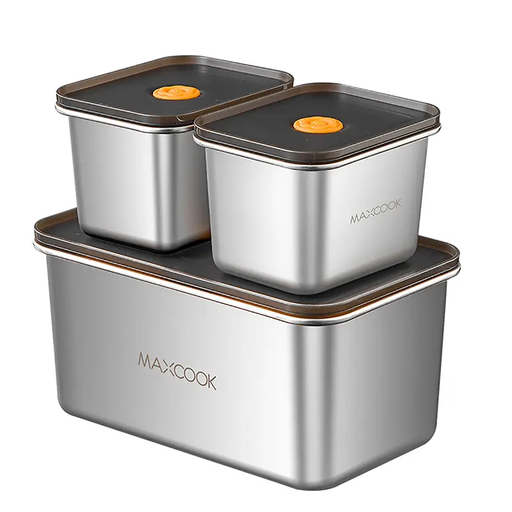
Why This Fits Their Persona: A three-piece set suits shoppers starting with packed lunches, leftovers or portioned meals without committing to one large container.
Its listed 304 stainless steel construction and secure-fitting lids provide clearer specifications than a generic metal container. It is not microwave or oven safe, so heating assumptions are avoided.
Three sizes, stackable construction and sealed lids; suitable for fridge storage, meal prep and camping.
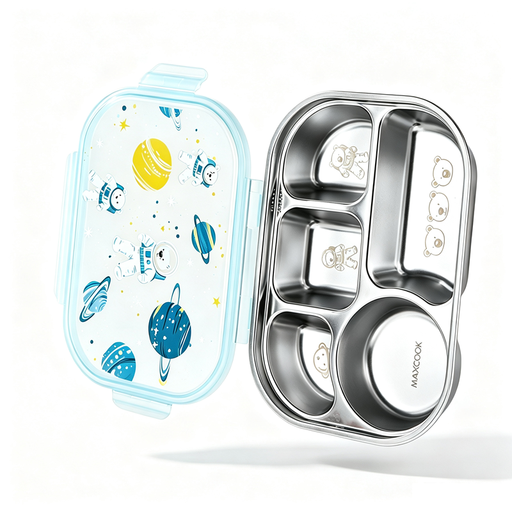
Why This Fits Their Persona: The 316 stainless steel specification and five-compartment layout suit buyers prioritising a more detailed material specification and organised lunches.
The product listing identifies the 316 grade and five separate compartments, helping shoppers compare tangible specifications rather than relying on broad durability language.
316 stainless steel construction and five compartments; portable format for office lunches, picnics and travel.
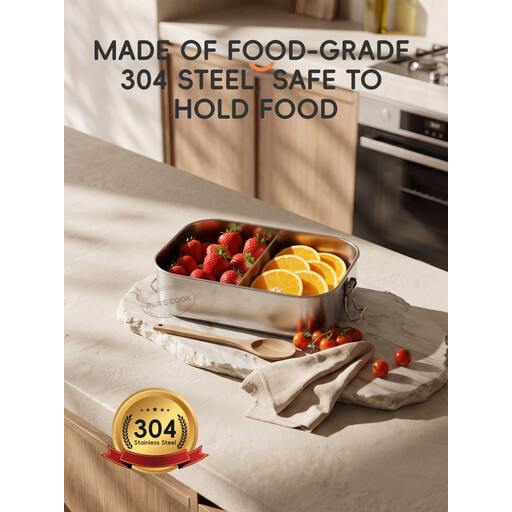
Why This Fits Their Persona: A 61.2 fl oz dual-compartment format is designed for a substantial packed lunch with separate food sections for work, university or school.
The listing specifies 304 stainless steel, dual compartments, lockable clips and a removable silicone seal, making the closure design easier to assess.
Dual compartments, reusable construction, lockable clips and a stated dishwasher-safe design.
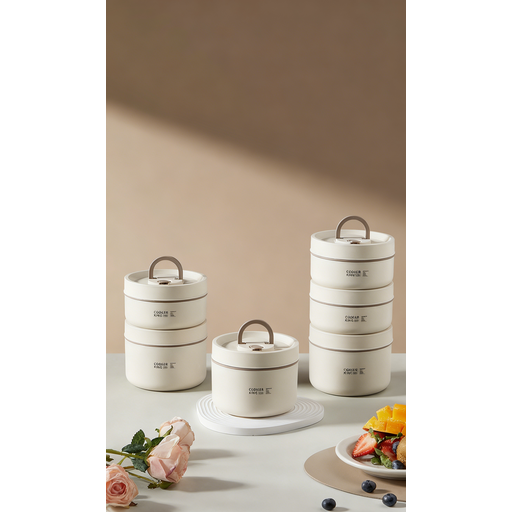
Why This Fits Their Persona: A four-piece set can suit households, campers and meal-prep users who need several containers for portions, leftovers or travel food.
The product name states 304 stainless steel, vacuum airtight construction and a four-piece set. Check the supplied instructions before using the oven or steam functions.
Four containers for batch preparation; listed vacuum airtight and oven steam safe features.
We have compiled a complete, real-time list of products that fully satisfy these strict selection criteria and UK safety regulations.
Yes, stainless steel is commonly used for packed lunches because it is reusable and does not retain the same level of odour as some softer materials. Confirm the product’s food-contact information, lid compatibility and care instructions before buying. A stainless steel box should not be placed in a microwave unless the manufacturer explicitly provides a safe, appliance-specific method—which is uncommon for metal containers.
The steel body can remain usable for many years when it is cleaned, dried and protected from dents. The lid, clips and silicone gasket may require replacement sooner, depending on daily use and washing. Choosing a container with a removable seal and clearly available maintenance instructions can make upkeep simpler.