
24/7 Customer Support

Free returns

Same-day & Next-day Delivery

Quality Guaranteed

Unlock Your Welcome Offers: FREE Delivery | Up to 80% OFF | Free 30-day JoyPlus trial
Download the APP
A packed lunch should make the day easier, not create a leaking bag, soggy sandwiches or another disposable container to replace. Stainless steel lunch boxes are widely considered for their reusable construction, but not every design suits every meal or routine.
Marketing descriptions can also make comparison difficult. A container labelled “leakproof” may still require the lid to be correctly closed, while a divided lunch box may have compartments that are too shallow for a substantial meal. Before buying, focus on the construction, closure system and intended use rather than appearance alone.
Many lunch boxes are designed for sandwiches, snacks and relatively dry foods. They may have clips or a silicone seal, but that does not automatically make them suitable for soup, curry or sauces. If you regularly carry liquid food, look for a leakproof lunch container with a clearly described sealing lid. A screw-top soup thermos or insulated food jar is usually more appropriate for hot, liquid meals.
A bento lunch box or lunch box with compartments can keep fruit, sandwiches and snacks organised. However, internal dividers may not prevent liquids moving between sections. Check whether the compartments are moulded into one tray or individually sealed. This distinction matters when packing yoghurt, dressing or juicy foods.
A removable silicone seal can make a lid more secure, but seals and crevices need regular cleaning and complete drying. Some stainless steel food containers are hand-wash only, while others may be dishwasher-compatible. Insulated models may need particular care around the lid and seal. A container that is difficult to clean can become inconvenient after the initial novelty wears off.
304 stainless steel is commonly used for reusable food storage and offers corrosion resistance for everyday lunches, leftovers and meal preparation. 316 stainless steel is also corrosion-resistant and is used in selected insulated food jars and food containers. Material grade alone does not determine whether a product is suitable for every cooking or storage method, so always follow the product instructions.
Avoid assuming that a metal container is microwave- or oven-safe. Stainless steel generally should not be placed in a microwave, and the product information should confirm whether heating is permitted. For example, the listed Maxcook 3-piece 304 stainless steel storage set is specifically marked not microwave or oven safe.
Consider how much food you usually carry and where the container needs to fit. A compact divided lunch box may suit a school bag or office drawer, while a 1.4-litre or 1.5-litre insulated food jar is more suitable for generous portions, hot pasta, stews or shared meals.
Check the external dimensions as well as the stated capacity. A wide container can be easier to fill and clean, but may not fit upright inside a narrow backpack. For commuters and pupils, weight also matters: a larger stainless steel container can be more durable but heavier than a plastic alternative.
Clips, latches and screw-top lids each have practical advantages. Double latches can distribute pressure across the lid, while a single-latch divided lunch box may be quicker to open. Look for a removable silicone seal if you want easier cleaning.
For hot or cold food, choose a vacuum-insulated lunch box or insulated food jar rather than a standard bento container. The Maxcook insulated models list a stated 4–6 hours of thermal retention, although actual performance can vary with starting temperature, filling level, opening frequency and ambient conditions. Pre-heating or pre-chilling the jar, as recommended in the product information, can help prepare it for use.
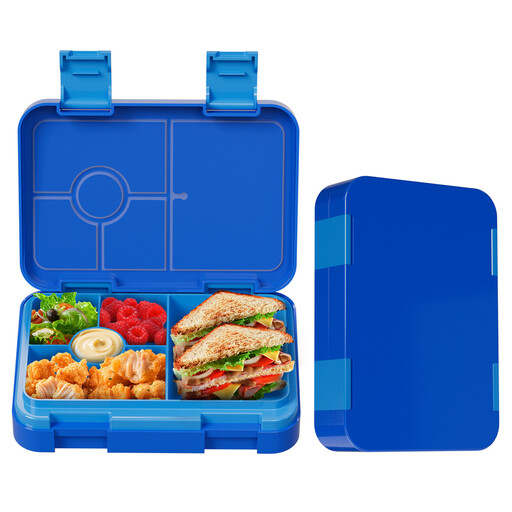
Why This Fits Their Persona: Five sections provide a straightforward way to separate sandwiches, fruit and snacks for work or school without carrying multiple boxes.
The double-latch format gives the lid two closure points. Treat the divided design as organisation rather than assuming each section is separately leakproof.
Five compartments; double-latch closure; suitable for varied packed lunches.

Why This Fits Their Persona: A 1.5-litre format suits commuters and office workers who prefer hot food in a single wide-mouth container.
The product information identifies vacuum insulation, a wide mouth and a tight-sealing lid. It also states that the jar should not be inverted or tipped over.
316 stainless steel; vacuum insulation; included carrying lunch bag; listed 4–6 hour thermal retention.

Why This Fits Their Persona: The large capacity is practical for outdoor workers, campers or anyone carrying a substantial hot meal.
The wide mouth makes filling and hand washing more manageable than a narrow flask. Its listed seal is intended for secure transport, but upright carrying remains advisable.
316 stainless steel; 1.5-litre capacity; vacuum-insulated construction; wide-mouth opening.
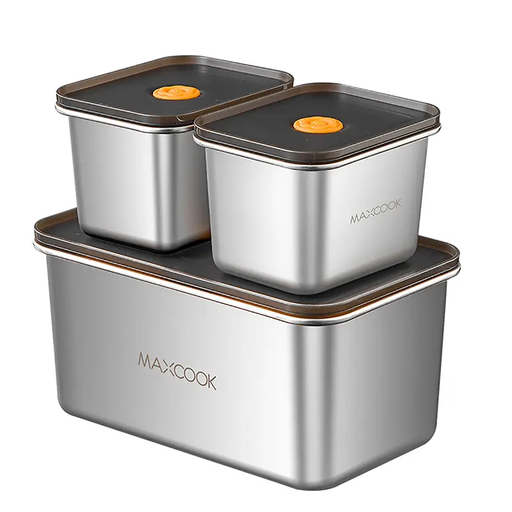
Why This Fits Their Persona: Three boxes in different sizes work for batch cooking, leftovers, packed lunches and refrigerator organisation.
The set is described as stackable with secure-fitting lids, helping reduce clutter. It is clearly marked not suitable for microwave or oven heating.
304 stainless steel; three-piece set; stackable design; sealed lids for storage.
We have compiled a complete, real-time list of products that fully satisfy these strict selection criteria and UK safety regulations.
Standard stainless steel lunch boxes can hold hot food, but they do not necessarily retain heat for several hours. For soup, curry or other hot meals, choose a vacuum-insulated food jar or soup thermos and follow its handling instructions.
Lifespan depends on the steel thickness, frequency of use, impact damage, seal condition and cleaning routine. The metal container may remain usable for a long time, but silicone seals and plastic lid components can wear sooner. Inspect the closure regularly and replace the container if it develops sharp edges, cracks or a seal that no longer closes securely.
Some can, but this varies by product and component. The Maxcook 3-piece set recommends hand washing to help preserve its appearance, while its product information notes that dishwasher use is possible but may affect the finish. Insulated jars should generally be hand washed, with prolonged soaking of the lid seal avoided. Always check the individual care instructions before using a dishwasher.