
24/7 Customer Support

Free returns

Same-day & Next-day Delivery

Quality Guaranteed

Unlock Your Welcome Offers: FREE Delivery | Up to 80% OFF | Free 30-day JoyPlus trial
Download the APP
Packing lunch for school, work or a commute should be straightforward. Yet many reusable containers create problems after only a few weeks: lids collect food residue, compartments are too shallow, seals loosen or the box does not fit inside an everyday bag.
The product description can also be misleading if you focus only on phrases such as “airtight”, “leakproof” or “premium stainless steel”. These terms are useful only when supported by a practical design that suits your food, portion size and cleaning routine.
This guide explains the main buying pitfalls and compares suitable options for UK households, office workers, students, campers and meal-prep users.
A locking clip does not automatically mean a container is suitable for soup, yoghurt or sauces. Check whether the lid includes a silicone seal, how firmly it closes and whether the product instructions limit liquid transport. Even a leak-resistant lunch box should be kept upright inside a bag unless the manufacturer clearly states otherwise.
For children, a simple closure may be easier to use, while adults carrying liquid food may prefer a dedicated insulated food jar with a screw-top seal.
A divided lunch box can keep fruit, sandwiches and snacks separate, but fixed sections may reduce usable capacity. They can also make it difficult to pack larger portions such as pasta, salads or leftovers.
A bento lunch box with several sections suits users who prefer separated foods. A single-compartment or removable-divider design is generally more flexible for meal prep and larger portions.
Stainless steel may be dishwasher-compatible, while the lid, clips or silicone seal may require different care. Some containers are suitable for dishwasher and freezer use, but are not microwave- or oven-safe. Always check the full product instructions, particularly when a set combines metal containers with plastic lids.
304 stainless steel food containers are commonly selected for everyday storage because they offer a durable, corrosion-resistant metal construction. They are suitable for many lunch, fridge and pantry applications when used according to the manufacturer’s instructions.
316 stainless steel food containers contain an additional alloying element and are commonly associated with increased corrosion resistance. This may be useful for users who regularly store salty or acidic foods, although the overall quality also depends on the lid, seal, welds and construction.
The steel grade alone does not confirm that a product is suitable for every use. Look for clear material information, food-contact details and warnings about microwaves, ovens and open flames.
Capacity is usually shown in millilitres or litres. As a practical guide:
Measure your lunch bag before ordering. A wide container may hold more food but still be awkward to carry in a narrow work or school bag.
Before purchasing, confirm whether the container is:
For airtight food storage containers, inspect the seal after washing and dry all parts fully. This helps reduce lingering odours and water spots.
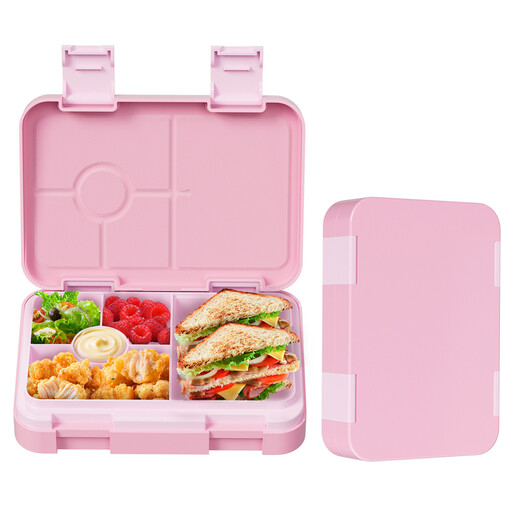
Why This Fits Their Persona: A practical starting point for parents, students or office workers who prefer separate sections for sandwiches, fruit and snacks without buying several individual tubs.
The five-compartment layout makes the capacity easier to organise, while double latches provide two closure points. Check the seal and transport guidance before packing wet foods.
Five fixed compartments; double-latch closure; suitable for organised packed lunches.

Why This Fits Their Persona: A multi-size choice for shoppers who want reusable containers for packed lunches, fridge storage and meal preparation.
The set states its 316 stainless steel construction and provides 600ml, 1,100ml and 2,200ml sizes, avoiding a one-size-fits-all purchase.
Three stated capacities; secure-fitting lids; listed as dishwasher- and freezer-safe; not for microwave use.

Why This Fits Their Persona: Designed for commuters, campers and workers carrying soup, stew or other hot and cold meals without access to a kitchen.
The wide-mouth format is easier to fill and clean than a narrow flask, while the product description specifies vacuum insulation and a leak-resistant lid. Keep it upright as instructed.
1.4-litre capacity; 304 stainless steel; vacuum insulation; wide mouth; stated 4–6-hour temperature-retention period.
We have compiled a complete, real-time list of products that fully satisfy these strict selection criteria and UK safety regulations.
They can be suitable when the size, closure and weight match the child’s bag and ability to open the lid. Divided designs help organise dry foods, but check the seal before packing sauces or runny foods.
They are designed for repeated use and are less prone to staining and odour retention than some plastic tubs. Lifespan depends on denting, seal wear, cleaning habits and whether the container is used within its temperature limits.
Some are listed as both freezer-safe and dishwasher-safe, but this is product-specific. Check the container, lid and seal instructions separately, and never assume that freezer-safe means microwave- or oven-safe.