
24/7 全天候客户支持

免费退货

当日/次日达

品质保障

开启新人专享福利: 全场免邮 | 低至 2 折 | 免费试用 30 天 JoyPlus 会员
下载 Joybuy
Packing lunch for work, school, commuting or a day outdoors can save money, but the wrong container quickly becomes frustrating. A lid that loosens in a backpack, a seal that retains food smells or a box that is too shallow for a proper meal can make an apparently good purchase poor value.
Stainless steel lunch containers are available as reusable bento lunch boxes, insulated jars and meal-prep containers. However, product listings often use similar terms for very different designs. Before choosing, look beyond the headline claims and check the construction, capacity, seal and cleaning instructions.
A standard stainless steel meal prep container is suitable for sandwiches, salads, pasta, fruit and snacks, but it will not provide the same temperature retention as a vacuum-insulated food jar. Conversely, a tall soup thermos may keep food warm but offer less convenient access for sandwiches or separated ingredients.
Choose according to the meal you normally carry rather than the product name alone:
A leakproof lunch container depends on the lid, silicone seal and how it is packed. Some designs are intended to remain upright, while others have locking clips or a screw-top closure. Even a tight-sealing lid may leak if the silicone gasket is incorrectly fitted, damaged or left with food residue.
Check whether the listing identifies a removable silicone seal, locking clips or a screw-threaded lid. Also look for care instructions. The Maxcook insulated food jars, for example, advise users not to invert or tip the container, so they should be transported upright.
“Stainless steel” describes the main material, not the whole product. Lids, gaskets, coatings and vacuum insulation may have separate cleaning requirements. A listing may describe a lunch box as dishwasher-safe while recommending hand washing for an insulated jar.
For regular use, confirm:
304 stainless steel is widely used for reusable food containers and offers a practical balance of durability and cost. It is suitable for everyday lunches, snacks and meal preparation when cared for correctly.
316 stainless steel contains additional alloying elements and is often selected for greater resistance in demanding environments. The grade alone does not determine the overall quality of a container: lid design, welds, hinges, seal construction and cleaning instructions also matter.
For either grade, check that the food-contact surfaces are clearly identified. Avoid assuming that a stainless steel exterior means every internal component is made from stainless steel.
Capacity should match both your appetite and your storage space. A compact lunch box can fit more easily into a work or school bag, while a large jar may suit a full meal or shared portion but add weight.
Useful measurements to compare include:
A rectangular container can use space efficiently in a lunch bag. A wide-mouth food jar is generally more practical for eating soups and stews directly from the container.
For a leakproof lunch container, inspect the closure system and gasket rather than relying on the label. Lockable clips can make a rectangular box easier to secure, while a screw-top lid can suit an insulated jar.
A vacuum-insulated food jar uses a double-wall construction with reduced air between the walls. The Maxcook jars supplied for this selection list 4–6 hours of thermal retention, although actual results depend on the starting temperature, quantity of food, opening frequency and surrounding conditions. Pre-heating or pre-chilling the jar, as advised in the product information, can help prepare it for use.
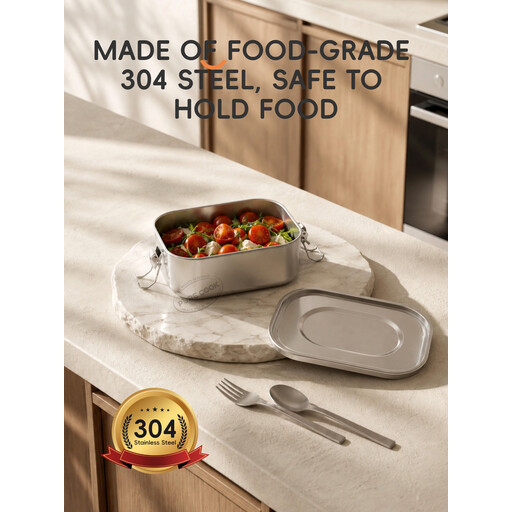
Why This Fits Their Persona: A straightforward option for office lunches, school meals and snacks, with a rectangular format that can sit neatly inside many lunch bags.
The listing identifies lockable clips and a removable silicone seal, addressing common concerns about loose lids and difficult cleaning.
304 stainless steel construction; listed capacity of 61.2 fl oz; single compartment for simple meal packing.
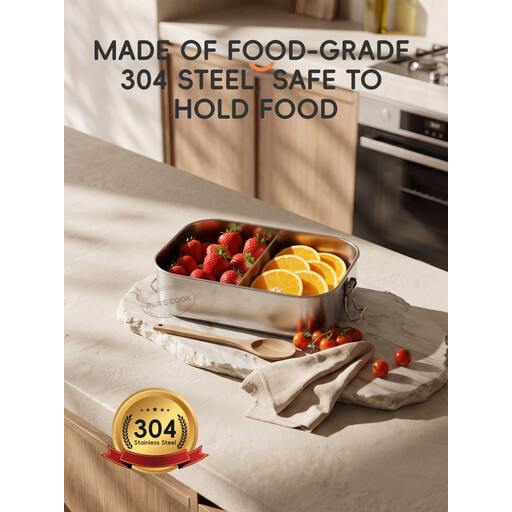
Why This Fits Their Persona: Useful for separating a main dish from fruit, snacks or salad during a working day, school day or picnic.
Two compartments reduce the need for separate disposable tubs and help prevent different foods from mixing during transport.
304 stainless steel; removable silicone seal listed; lockable clip closure and a 61.2 fl oz stated capacity.

Why This Fits Their Persona: A large insulated format for commuters, outdoor users or households carrying substantial portions of hot or cold food.
The wide mouth makes filling and cleaning more manageable than a narrow bottle-style opening, while the stated design includes a tight-sealing lid.
316 stainless steel; vacuum insulation; wide mouth; product title lists a 1.5-litre capacity.
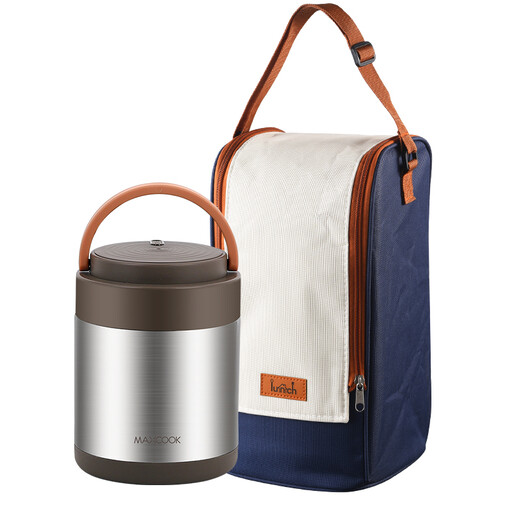
Why This Fits Their Persona: The 1.4-litre format is suited to larger meal portions, batch cooking, outdoor days and sharing food away from home.
The wide opening supports easier portioning and washing, while the product information specifies a leakproof lid and advises upright transport.
304 stainless steel; vacuum-insulated construction; stated 1.4-litre capacity; 4–6 hours of listed thermal retention.
We have compiled a complete, real-time list of products that fully satisfy these strict selection criteria and UK safety regulations.
Rinse containers soon after eating, particularly after soups, sauces and dairy-based foods. Remove silicone seals where the design allows and clean beneath them to reduce odour build-up. Dry the lid separately before reassembling.
For an insulated food jar, fill it with hot or cold water for a few minutes before use, then empty it and add the food. This preparation step is included in the Maxcook care guidance. Do not place an insulated jar in a microwave, and check the product instructions before using a dishwasher. Inspect seals periodically; a stretched or cracked gasket can affect leak resistance.
Standard stainless steel lunch boxes can carry hot food, but they are not necessarily insulated. For soups, stews or porridge that need to remain warm during a commute, choose a stainless steel food thermos or vacuum-insulated food jar and follow the stated thermal-retention guidance.
A stainless steel body can remain usable for many years if it is not badly dented or exposed to unsuitable cleaning methods. Seals, clips and lids may wear sooner and are the parts to monitor. A container that smells persistently, no longer closes securely or develops a damaged gasket may need a replacement seal or a new lid.
The running cost depends on the purchase price, frequency of use and care. Reusable containers avoid repeated purchases of disposable tubs and can suit packed lunches throughout the working or school week. Compare capacity, seal quality and cleaning requirements rather than choosing solely on the lowest initial price.