
24/7 Customer Support

Free returns

Same-day & Next-day Delivery

Quality Guaranteed

Unlock Your Welcome Offers: FREE Delivery | Up to 80% OFF | Free 30-day JoyPlus trial
Download the APP
A stainless steel kitchen pedal bin can make everyday waste disposal cleaner and more convenient, but attractive finishes and phrases such as “large capacity” do not always tell the full story. UK households often discover that a bin is too deep for its intended space, difficult to empty or noisy when the lid closes.
Before buying, look beyond the exterior. The most useful checks are capacity, lid and pedal construction, inner-bucket design and whether the dimensions suit your kitchen layout.
A 30 litre kitchen bin may suit a couple, flat, home office or smaller kitchen, but capacity alone does not show how much floor space it occupies. A tall, narrow design may fit beside a cupboard, while a square bin can work better in a corner.
For larger households, a 60 litre kitchen bin reduces how often the liner needs changing. However, it also needs enough clearance for the lid and pedal. Measure the available width, depth and height, then allow room to open the lid without hitting a wall or cupboard.
A soft-close kitchen bin should lower quietly rather than slam, which is useful in open-plan homes and during night-time use. Yet the mechanism still needs sufficient clearance and regular care. Some designs also offer a stay-open position, which is helpful when preparing food or changing the liner.
Check whether the bin has a genuine foot pedal, whether the lid can remain open when needed and whether the rear needs to sit away from the wall. For example, one listed pedal bin advises leaving at least 5 cm between its back and the wall.
A removable inner bucket is more than a convenience feature. It can make liner changes easier and help contain spills, but only if it has practical handles or a way to secure the bag. Without a liner holder, the bag may slip into the bin when heavier rubbish is added.
For recycling, also check whether the compartments are genuinely separate. A dual compartment recycling bin can simplify sorting, but the two sections may not have equal capacity.
Choose capacity according to household size and collection routine:
Do not rely on litre capacity alone. Compare the external dimensions with the space beneath worktops, beside appliances or near the back door. A large kitchen rubbish bin may hold more, but it can become inconvenient if the pedal is difficult to reach.
Stainless steel is commonly selected for its wipe-clean surface and resistance to everyday kitchen marks. A fingerprint-resistant waste bin may require less frequent polishing than a standard smooth finish, although no coating eliminates all marks.
Look for clear material information. Some bins combine a stainless steel outer body with a PP or ABS plastic inner bucket. This is normal, but it means the removable section should be checked for handles, rigidity and ease of washing. Use a soft, damp cloth on the exterior and avoid steel wool or abrasive cleaners that may scratch the finish.
A hands-free rubbish bin is practical when handling food, provided the pedal feels stable and the base does not slide. Non-slip pads can help prevent movement, particularly in homes with pets or children.
A removable inner bucket should lift out without forcing the lid or pedal mechanism. Bag-fixing holes, handles and a neat rim are useful details that reduce loose liners and make emptying less messy. Keep the pedal and hinge area clear of obstructions, place the bin on a stable surface and avoid overloading it.
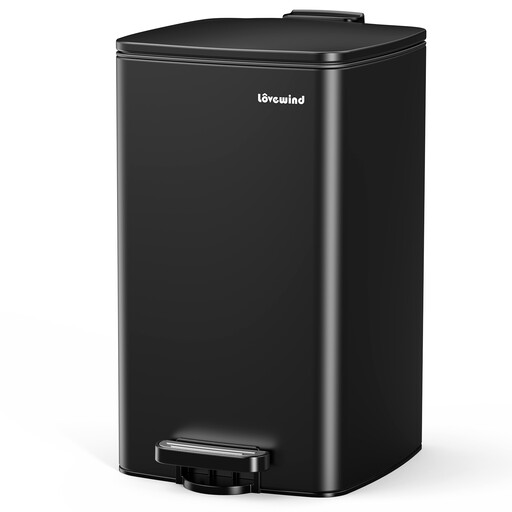
Why This Fits Their Persona: The 30-litre capacity and compact square shape suit smaller UK kitchens, flats, bedrooms and home offices where floor space matters.
Its listed removable inner bucket addresses the problem of awkward liner changes and makes the bin easier to clean after spills.
Stainless steel body, foot-pedal operation, soft-close lid and compatibility with standard 8-gallon bags.
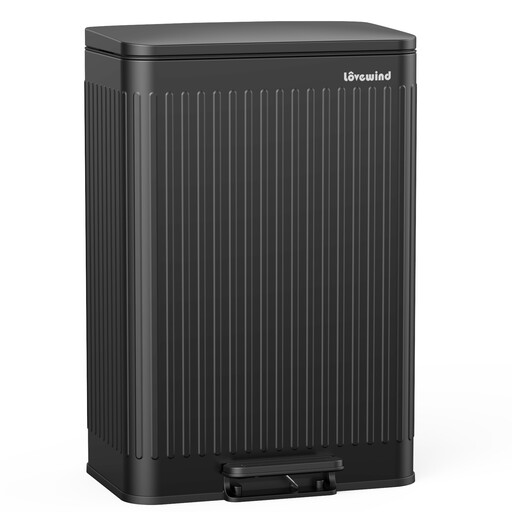
Why This Fits Their Persona: Its larger capacity and smudge-resistant coated finish are suited to family kitchens where frequent use makes cleaning and emptying important.
The listing specifies a fingerprint-resistant coating, removable inner buckets and a 90-degree stay-open function, rather than relying only on appearance-based claims.
Listed 60-litre capacity, two removable inner buckets, reinforced stainless steel pedal and soft-close lid.
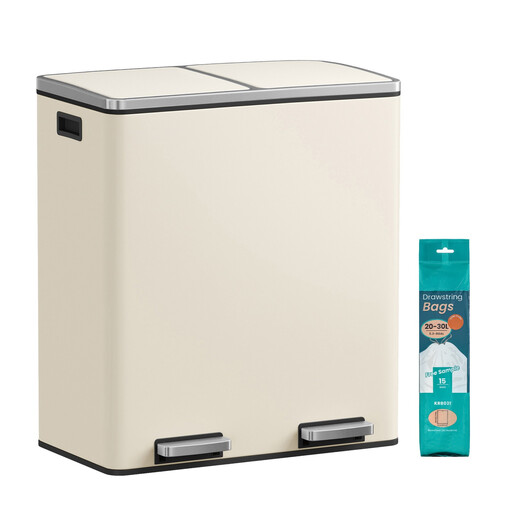
Why This Fits Their Persona: Households sorting recycling and general waste can use the two pedal-operated compartments without touching the lids.
Separate removable buckets make sorting more direct and reduce the need to keep multiple loose bins around the kitchen.
Dual compartments, handles on the inner buckets, soft-close lids and a steel outer body.
We have compiled a complete, real-time list of products that fully satisfy these strict selection criteria and UK safety regulations.
A pedal-operated bin allows disposal without touching the lid, which can help reduce contact with the outer surface during cooking. Hygiene still depends on regular liner changes, cleaning spills promptly and washing the removable bucket where the design permits.
Lifespan depends on weight, frequency of use, cleaning and the pedal mechanism. One 30-litre listing states that its stainless steel pedal was tested for more than 200,000 uses; this is a product specification rather than a guarantee of service life. Avoid forcing the pedal, overloading the bucket or allowing moisture to collect around hinges.
The bin itself does not use electricity unless it has a powered sensor, so an ordinary pedal bin has no electrical running cost. Ongoing expenses mainly come from liners and cleaning supplies. A 60-litre design may require larger bags, while a 30-litre model may use less expensive liners but need emptying more often. Compare bag size, local collection frequency and available floor space before deciding.