
24/7 Customer Support

Free returns

Same-day & Next-day Delivery

Quality Guaranteed

Unlock Your Welcome Offers: FREE Delivery | Up to 80% OFF | Free 30-day JoyPlus trial
Download the APP
A stainless steel skimmer spoon can handle everything from hotpot ingredients and noodles to fried food and cooking oil. However, a low-quality design may bend, retain residue or leave your hand too close to hot oil. Choosing by appearance alone can result in a utensil that is awkward to use and difficult to maintain.
This guide explains the practical details worth checking before you buy, including material, mesh design, handle length and the difference between a spider strainer, slotted spoon and oil draining spoon.
The term stainless steel covers a range of grades and constructions. A utensil may look polished but still be thin, flexible or prone to distortion under pressure. 304 stainless steel is a commonly used material grade valued for its resistance to corrosion, but the grade alone does not tell you whether the handle, welds or spoon head are suitably robust.
Also check whether the product is one-piece forged or solidly constructed, as joins and weak welding points can affect long-term durability.
A fine mesh strainer is useful for filtering foam, flour or smaller particles, but it may clog when used with noodles or battered food. A spider strainer with larger, evenly spaced openings allows cooking liquid and oil to drain quickly while retaining dumplings, vegetables and meatballs.
For everyday draining, a slotted spoon may be more versatile. For deep frying or hotpot cooking, a rounded kitchen skimmer ladle or frying skimmer can offer more capacity and better control.
A long or hollow handle can keep your hand further from boiling water and hot oil, but it does not remain cool indefinitely. Metal conducts heat during prolonged cooking, especially when the utensil is left resting in a pan.
Use a long-handle skimmer carefully, avoid leaving it in hot cookware and use oven gloves when the handle becomes warm. Always follow the product’s care and safety instructions.
Look for a clearly stated material specification rather than a generic description. Products made from 304 stainless steel are suitable for shoppers seeking a metal utensil with a smooth, corrosion-resistant surface. However, care still matters: salt, acidic sauces and alkaline residues should not be left on the surface for long periods.
A one-piece construction can reduce the number of seams where food residue may collect. Rounded edges and a polished finish also make a stainless steel strainer easier to rinse and wipe clean.
Match the head design to your cooking habits:
If you frequently cook fried food, an oil draining spoon with evenly spaced holes can help remove food from oil without lifting excessive liquid. It should still be handled slowly to reduce splashing.
A longer handle provides more distance from a wok or fryer, but an excessively long utensil may be difficult to store or control in a small kitchen. Check the stated length and consider the diameter of your pans.
A pot-rim hook can be useful during hotpot meals because it allows the utensil to rest on a bowl or pot edge. A hanging hole supports air-drying and keeps cooking utensils accessible between uses.
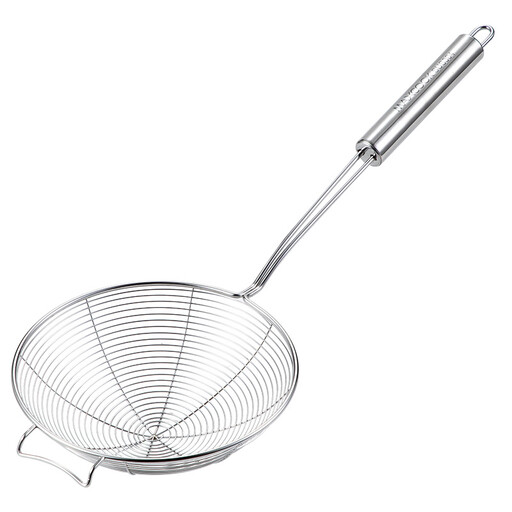
Why This Fits Their Persona: A practical single utensil for home cooks who want one tool for hotpot, noodles, dumplings, soup and oil-residue filtering.
Its stated 304 stainless steel construction, widened spoon head and fixed pot-rim hook provide clearly described features rather than vague durability claims.
Hollow handle, rounded edges, hanging hole and a 16cm spoon head designed for scooping and draining.
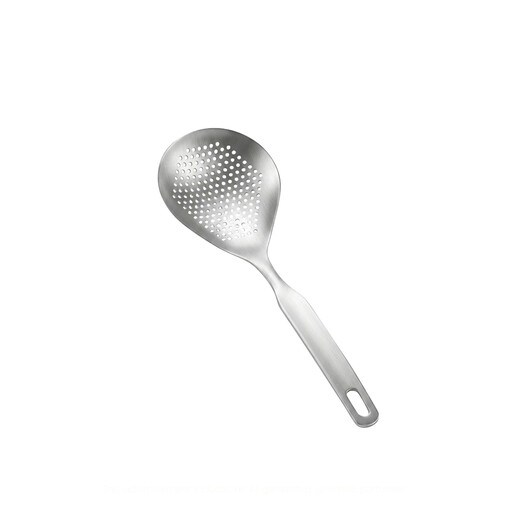
Why This Fits Their Persona: Suited to cooks who regularly use a wok, deep fryer or large pan and prefer a longer, sturdier utensil.
The listing specifies a one-piece forged build, 304 stainless steel and a large mesh head, making the intended use easier to assess.
The 32.6cm length keeps hands further from heat, while the 10.7cm head is designed for noodles, dumplings, vegetables and fried food.
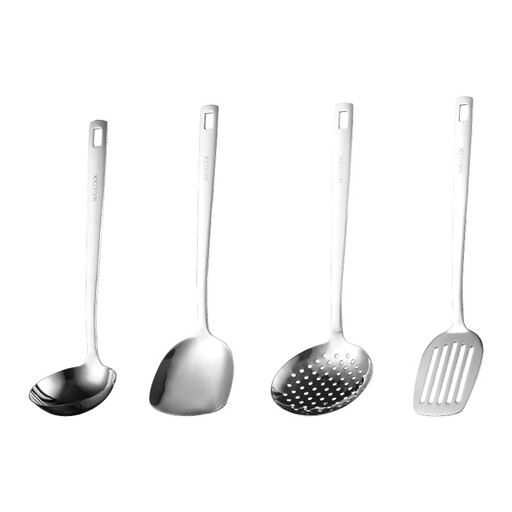
Why This Fits Their Persona: A convenient option for setting up a kitchen or replacing several daily cooking utensils at once.
The set identifies its solid one-piece construction and uniform mesh holes, helping shoppers compare structure and drainage rather than focusing only on appearance.
Includes a skimmer spoon, soup ladle, slotted turner and wok spatula, with a 9.5cm head and 3cm depth stated for the skimmer.
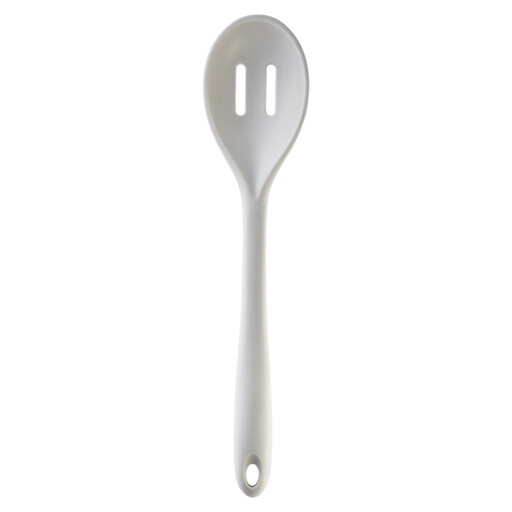
Why This Fits Their Persona: A suitable alternative for people using non-stick pans who want a softer head for lifting and draining food.
The silicone head is specified as suitable for non-stick cookware, while the product warning advises avoiding direct contact with open flames.
Heat-resistant silicone, ergonomic grip, hanging loop and a 28cm length for everyday serving and draining.
Before first use, follow the manufacturer’s cleaning instructions. Some stainless steel products advise removing polishing residue with boiling water and vinegar, followed by thorough rinsing. For routine care:
A dishwasher-safe statement applies only where the product listing specifically provides it. Wooden handles generally require hand washing and should not be soaked for long periods.
We have compiled a complete, real-time list of products that fully satisfy these strict selection criteria and UK safety regulations.
Yes, a suitably sized frying skimmer can lift chips, dumplings and other food from hot oil while allowing oil to drain through the holes. Choose a long handle and avoid leaving the utensil in the fryer. Move slowly to reduce splashing and always follow the product’s safety guidance.
A spider strainer usually has a rounded wire or mesh head, making it useful for retrieving several ingredients from boiling water, hotpot broth or oil. A slotted spoon generally has a flatter, more familiar spoon shape for serving and draining individual portions. The right choice depends on the pan depth, food size and amount you normally lift.
There is no fixed lifespan because usage, construction and maintenance differ. A one-piece utensil with a thickened head may resist bending during regular use, while prompt cleaning and thorough drying can help reduce staining and corrosion. Replace the skimmer if the handle loosens, mesh breaks or sharp edges develop.