
24/7 Customer Support

Free returns

Same-day & Next-day Delivery

Quality Guaranteed

Unlock Your Welcome Offers: FREE Delivery | Up to 80% OFF | Free 30-day JoyPlus trial
Download the APP
A stainless steel skimmer spoon can drain dumplings, lift noodles, remove fried food and serve hot pot ingredients with less mess. However, not every slotted spoon or kitchen skimmer is equally practical. A utensil that looks sturdy in a product photograph may have a handle that becomes uncomfortable over a hob, holes that release smaller ingredients or a bowl that is too shallow for busy cooking.
This guide from the Joybuy Product Recommendation Officer focuses on the details that matter before you buy, helping you avoid common product traps and match a stainless steel strainer spoon to the way you cook.
The term stainless steel describes a material family rather than one universal specification. Some products identify the grade, such as 304 stainless steel, while others simply state “metal” or “stainless steel” without further information. A clearly listed material makes comparison easier, particularly if the utensil will be used regularly with boiling water, soup or hot oil.
The finish also affects maintenance. Brushed or polished surfaces can be simple to wipe clean, but manufacturers may still recommend hand washing and prompt drying. Salt, acidic ingredients and long periods of soaking can leave marks on metal utensils, so care instructions should not be overlooked.
A traditional slotted spoon is useful for lifting larger pieces while allowing liquid to drain through. A spider strainer or wire frying skimmer usually has a broader mesh or perforated bowl, making it more suitable for noodles, dumplings and fried food.
A fine mesh strainer catches smaller particles and foam but may be less convenient for lifting heavy pieces. Conversely, large holes may allow rice, small pasta or loose ingredients to escape. Consider the food you handle most often rather than choosing purely by appearance.
A compact utensil is easy to store but may place your hand close to hot oil or steam. A longer handle can provide more working distance, although it may feel less balanced in a small saucepan. Hooks, hanging holes and pot-rim rests are useful features, but they do not replace safe handling. Metal handles can become hot during prolonged use, so use caution and oven mitts where appropriate.
For frequent cooking, look for a clearly stated stainless steel grade. Several options in this selection use 304 stainless steel, which is also commonly listed as the primary material for kitchen utensils. Check whether the product has a one-piece construction, welded joints or a hollow handle, as these details affect cleaning and handling.
A smooth, rounded surface is easier to rinse than a design with deep seams or exposed joins. Avoid abrasive cleaners and steel wool when the care instructions advise against them.
Match the head to the task:
The head diameter and depth also influence capacity. A larger bowl can collect more food per lift, while a smaller spoon offers greater control in narrow cookware.
Compare the overall length with the pans and pots you use. For reference, the Maison by Premier Hera slotted spoon measures 33cm, while the Maxcook spider strainer options are listed at 16cm and 20cm. A hanging loop or hole helps the utensil dry and keeps it within reach, while a pot-rim hook can be useful during hot pot preparation.
Always follow the supplied care guidance. Some products recommend hand washing, whereas the PURECOOK set is listed as dishwasher safe. Dry stainless steel utensils thoroughly after cleaning, particularly if they are stored in a drawer.
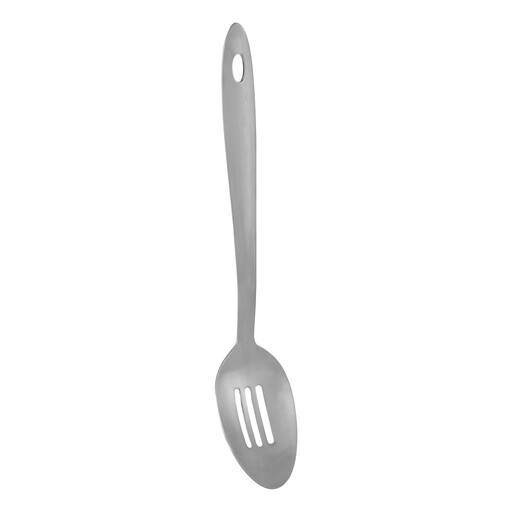
Why This Fits Their Persona: A straightforward choice for UK households wanting one everyday utensil for draining and serving without a specialised mesh design.
Its 33cm length is stated clearly, helping shoppers avoid an unexpectedly short handle. The integrated hanging hole also supports practical storage.
Stainless steel construction, brushed silver finish and a curved handle listed for everyday use.

Why This Fits Their Persona: A practical multi-size set for cooks who regularly switch between saucepans, stockpots, frying pans and hot pot dishes.
The listing specifies 304 stainless steel, dense woven mesh and three included sizes rather than relying only on appearance.
Three skimmers, hanging holes, single-piece forged construction and a dishwasher-safe care option.
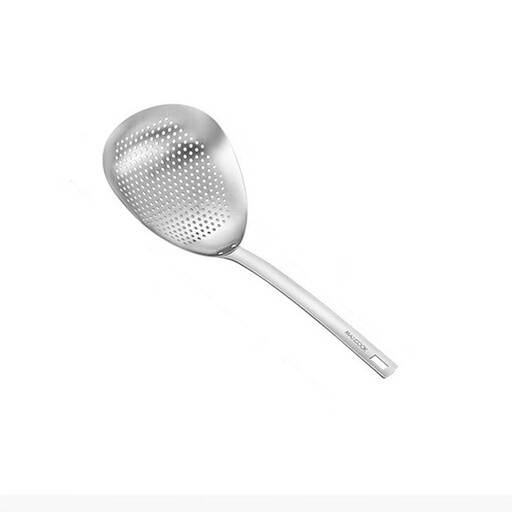
Why This Fits Their Persona: Suitable for cooks who need a broad skimmer for soups, stews, frying and larger portions of food.
The listing provides a 304 stainless steel specification, even filter holes and a thickened structure, addressing uncertainty around material and drainage.
Widened spoon head, extended handle, hanging holes and a smooth polished surface.
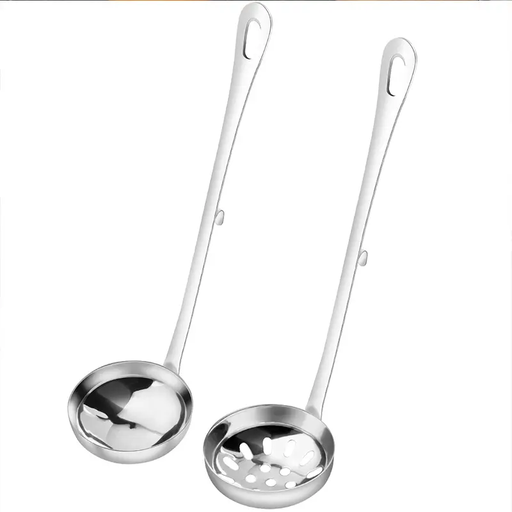
Why This Fits Their Persona: A two-piece combination for households that serve broth and retrieve solid ingredients from the same pot.
The set separates serving and draining tasks, so one utensil does not have to handle every job.
Includes a deep soup ladle and perforated leaky spoon, with stainless steel construction and hanging holes.
We have compiled a complete, real-time list of products that fully satisfy these strict selection criteria and UK safety regulations.
Yes, a perforated or wire frying skimmer can lift fried food while allowing oil to drain. Choose a handle long enough to keep your hand away from splashes and never leave the utensil sitting in hot oil for extended periods. Metal handles may heat up during use.
Lifespan depends on construction, frequency of use and care. A clearly specified stainless steel utensil can remain useful for regular cooking, but prompt cleaning, thorough drying and avoiding abrasive products can help preserve its surface. Inspect mesh, holes, joins and handles periodically for damage.
They perform different jobs. A slotted spoon or slotted ladle is convenient for lifting larger food from liquid, while a fine mesh strainer is more effective for small particles, foam or fine filtering. If you prepare varied meals, a two-piece set or several sizes may reduce the need to compromise.